Machina Labs raises $124 million Series C from Toyota and Lockheed Martin venture arms to build a 50-cell robotic metal-forming plant
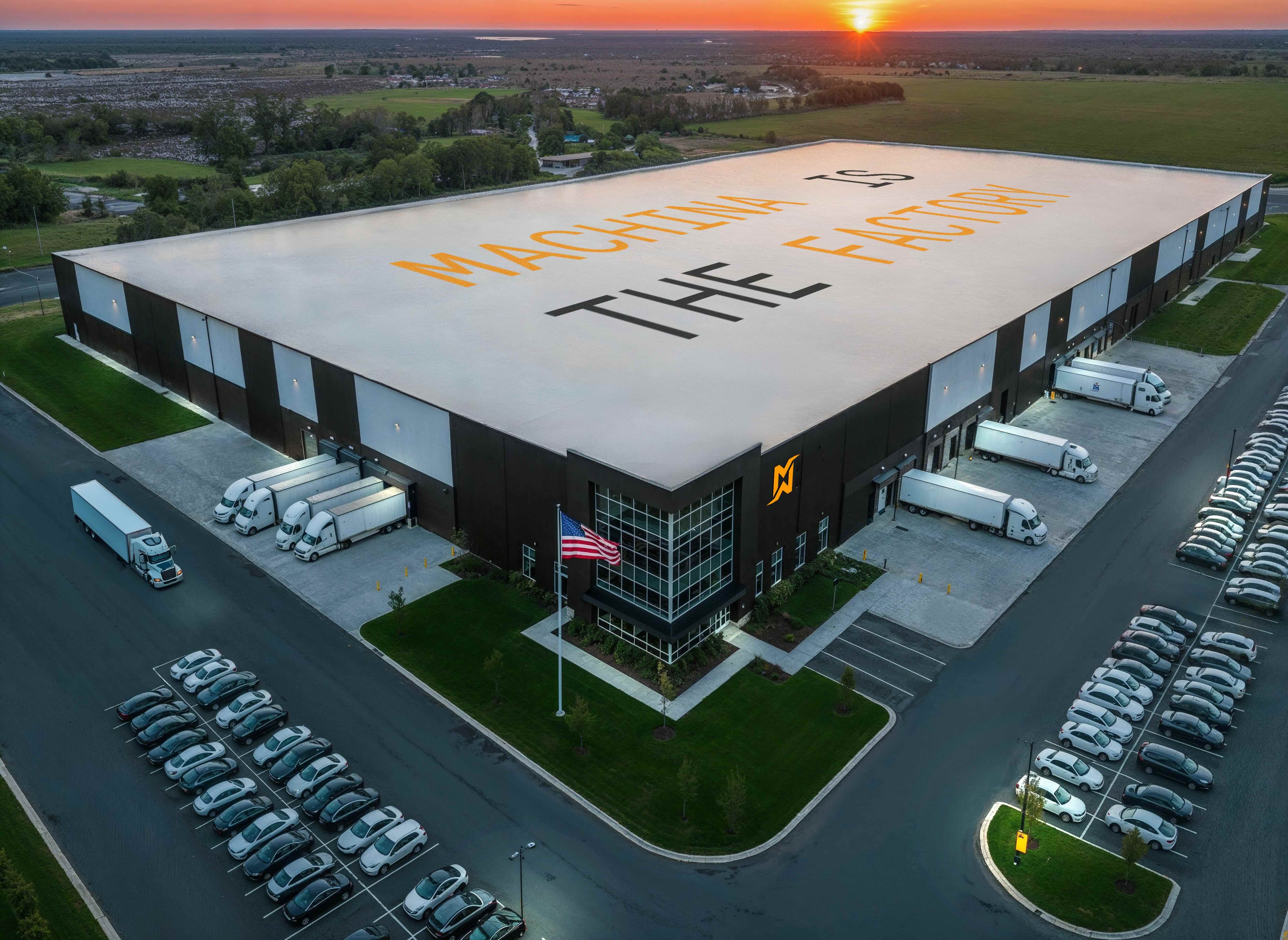
Los Angeles-based Machina Labs closed a $124 million Series C on 4 February 2026 with Woven Capital, Lockheed Martin Ventures, Balerion Space Ventures and the Strategic Development Fund. The money funds a 200,000-square-foot US factory for up to 50 RoboCraftsman cells making defense and aerospace structures. No lead investor or valuation was disclosed.
Machina Labs, a Los Angeles company that shapes aerospace-grade metal with robots instead of fixed dies, said on 4 February 2026 that it had closed a $124 million Series C and would use the money to build its first large-scale 'Intelligent Factory' in the United States.
The round drew Woven Capital, Toyota's growth-stage venture arm, Lockheed Martin Ventures, Balerion Space Ventures and the Strategic Development Fund (SDF), according to the company's release. Machina Labs did not name a lead investor and did not disclose a valuation. The Series C is almost four times the $32 million Series B that NVIDIA's venture arm NVentures led in October 2023, when the company said it had raised $45 million in total.
What the money buys
The plant will cover 200,000 square feet and is designed to hold up to 50 RoboCraftsman cells, Machina Labs said, with output planned at thousands of complex structural assemblies a year for defense and aerospace customers. The company did not give a site or an opening date. Its pitch is that a customer can take a digital design to a finished part inside one building, cutting lead times from months to days.
The company said it already holds contract awards from the US Air Force Research Laboratory and the Air Force Rapid Sustainment Office, and that it is working with an unnamed leading defense prime on metal structures for missiles and hypersonics. It also continues to develop production-quality automotive body panels with Toyota. Contract values were not disclosed.
How RoboCraftsman works
Conventional sheet-metal parts are stamped between matched dies that are cut for one shape. Machina Labs uses incremental sheet forming instead, in which robot arms press a blank into shape step by step along a computed path, so a new geometry needs new code rather than new steel tooling. In a September 2025 release on its Toyota Motor North America pilot, the company said traditional tooling can weigh more than 20 tons and that its RoboForming process removes the need for dedicated tooling for each model variation. The company describes RoboCraftsman as a combination of advanced robotics, machine learning and its proprietary RoboForming process.
Who is backing it and why
The cap table reads like a map of the demand. Lockheed Martin Ventures brings a missile and aircraft maker that needs short runs of hard-to-form parts. Woven Capital ties the company to Toyota's search for cheaper low-volume vehicle variants. Balerion Space Ventures and SDF add defense and space exposure. Chief executive and co-founder Edward Mehr said in the release that advanced designs are 'held back by 20th-century factories' and that the round lets Machina scale infrastructure 'at the speed of software'.
Where it sits among peers
Machina's round landed in a quarter crowded with large US and European robotics raises. Munich's RobCo closed a $100 million Series C on 29 January, Apptronik added $520 million to its Series A on 11 February, and Rivian spinout Mind Robotics raised $500 million on 11 March, according to those companies. Those firms sell or rent robots to factories. Machina is closer to a contract manufacturer whose machines never leave its own floor, which puts it in the defense supply chain alongside casting and forging houses rather than in the cobot market.
- Machina Labs
- US
- Series C
- 124,000,000
- 2026-02-04
- 2019
- RobCo
- DE
- Series C
- 100,000,000
- 2026-01-29
- No data
- Standard Bots
- US
- Series C
- 200,000,000
- 2026-06-09
- No data
- Apptronik
- US
- Series A extension
- 520,000,000
- 2026-02-11
- 2016
- Mind Robotics
- US
- Series A
- 500,000,000
- 2026-03-11
- No data
Amounts as disclosed by each company; no estimates. Founding year shown as — where not verified.
As of Oct 1, 2026
Risks and open questions
Building a 200,000-square-foot plant is a different business from running pilot cells. Machina has not said what the factory will cost, how much revenue its Air Force work brings in, or whether the 50 cells will be filled at opening or over several years. Incremental forming is slower per part than stamping, so the economics depend on staying in low-volume, high-mix work where die costs dominate. The absence of a named lead and of a valuation also leaves outsiders with little to benchmark.
MEKAWIRE analysis
Machina Labs is betting that US defense buyers will pay for factory capacity that behaves like software, and the Series C turns that bet from a lab claim into a capital project.
The evidence is in who paid. A missile maker's venture arm and Toyota's growth fund are both customers in waiting, and the spending goes to a plant, not to sales teams. The Air Force awards and the hypersonics work show the demand is real enough to justify capacity.
The strongest counter-argument is that capacity is easy to announce and hard to fill. Defense qualification cycles are long, and a plant with up to 50 cells can sit underused for years while parts are certified.
Bull case: qualified parts for missiles and hypersonics move into production programmes, the plant fills, and Machina becomes a second source that primes cannot do without. Toyota then adds a commercial volume base for body panels.
Bear case: qualification drags, the plant carries fixed costs before revenue, and Machina needs another large round on weaker terms. Stamping and additive suppliers cut prices and hold the low-volume work.
Signals to watch:
- The site and opening date of the 200,000-square-foot factory, which the 4 February 2026 release did not give.
- Any award values for Machina in US federal contract records for fiscal 2026, which ended on 30 September 2026.
- Whether the Toyota Motor North America pilot announced on 30 September 2025 turns into a production order.
- Series B
- 32,000,000
- 2023-10-06
- NVentures (NVIDIA)
- 45,000,000
- Series C
- 124,000,000
- 2026-02-04
- No data
- 169,000,000
Cumulative = $45M total stated at Series B + $124M Series C; any undisclosed rounds not included. Series C has no named lead.
As of Oct 1, 2026
- Series C, $124 million
- 2019, Los Angeles
- 4 February 2026
- Woven Capital, Lockheed Martin Ventures, Balerion Space Ventures, Strategic Development Fund
- Not disclosed
- 200,000 sq ft, up to 50 RoboCraftsman cells
- First large-scale US Intelligent Factory
- $32 million Series B led by NVentures, October 2023
- US Air Force Research Laboratory, Air Force Rapid Sustainment Office, Toyota
Why it matters
Most robotics money in early 2026 went to companies that sell robots or robot brains. Machina Labs raised $124 million to keep its robots in-house and sell formed metal instead, which makes it one of the few venture-backed robotics firms whose revenue line is parts, not machines.
The round also tests whether defense demand can carry a robotics start-up through the expensive step from pilot cells to a full plant. If it can, other robotic manufacturing firms will copy the structure.
Rival analysis
Machina's competition is mostly not other robot makers. It is the die shops, stampers, spin formers and forging houses that supply aerospace primes today, plus metal additive manufacturers that also promise tool-free production. Against stamping it wins on changeover and loses on cycle time; against additive it can offer wrought sheet properties on large thin parts.
Among robotics peers, RobCo ($100 million Series C in January) and Standard Bots ($200 million Series C in June) sell automation to factories, while Machina runs the factory. That difference means its margins look more like a contract manufacturer than a robot vendor.
Valuation context
No valuation was disclosed, so no step-up can be calculated. The disclosed numbers allow only one comparison: the Series C equals 2.76 times all capital raised through the 2023 Series B ($124 million divided by $45 million), and 3.9 times the Series B itself.
Without a lead investor or a price, the round reads as a strategic syndicate rather than a priced growth round. Investors should treat later disclosures as the first real mark.
Supply-chain implications
The plant sits on top of aluminium, titanium and steel sheet supply and on industrial robot arms, which Machina does not make. Its edge is software and process know-how, so its exposure to robot arm vendors is moderate while its exposure to aerospace material qualification is high.
For defense primes, a domestic tool-free source for missile and hypersonic structures shortens a supply chain that today often waits months for dies.
Signals to watch
Watch for the factory location and opening, for contract values appearing in federal records, and for the defense prime named in the release to be disclosed. Each would show the move from awards to production revenue.
On the commercial side, a Toyota production order for body panels would prove the platform outside defense.
Analyst view
Thesis: Machina Labs is one of the clearer cases of robotics capital flowing into production capacity tied to defense demand. Confidence: medium. Reasons: strategic investors and named Air Force awards support demand, but cost, timing and contract values are undisclosed.
We would raise confidence on evidence of a qualified flight or missile part in serial production, and cut it if the factory opening slips without new orders.
Questions you should be asking
What does the 200,000-square-foot plant cost, and how much of the $124 million does it consume?
How many RoboCraftsman cells are running today, and what is the per-part cycle time against stamping?
Which defense prime is the missile and hypersonics customer, and are those parts in qualification or production?