Curexo ships first CUVIS-joint robot batch to Italy under Permedica supply contract
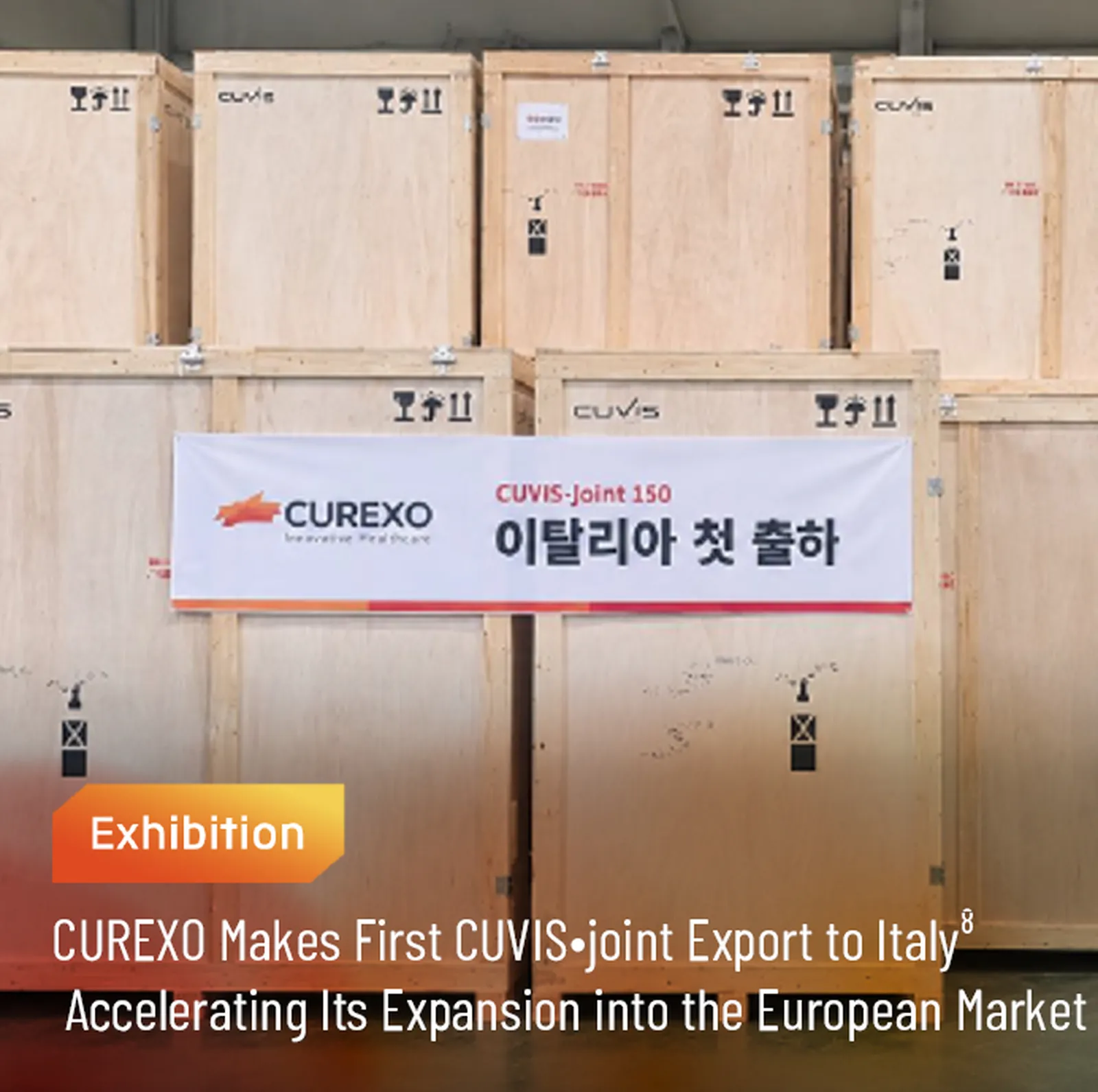
Korean surgical robot maker Curexo said in a press release on Nov 25 that it has exported its CUVIS-joint joint replacement robot to Italy for the first time, the first batch under a supply contract with Italian orthopaedic implant maker Permedica.
Curexo calls it its first commercial sale in Europe since it obtained CE MDR certification and US FDA 510(k) clearance. It did not disclose the number of units or the contract value.
Curexo said in a press release on Nov 25 that it has shipped its CUVIS-joint joint replacement robot to Italy for the first time. The shipment is the first batch under a supply contract with Permedica, an orthopaedic company founded in 1986 that designs, manufactures and distributes joint implants and has its production site in Merate in northern Italy. Curexo did not disclose how many robots were shipped, the value of the contract or when it was signed.
What Curexo says the Italian order means
Curexo describes the shipment as its first commercial sale in Europe since it obtained certification under the EU Medical Device Regulation (CE MDR) and 510(k) clearance from the US Food and Drug Administration. It plans to use Permedica's sales network and hospital contacts to start in Italy and then extend supply to the rest of Europe and to North Africa.
With CUVIS-joint, planning software turns the patient's preoperative CT scan into a three-dimensional image, the surgeon makes the surgical plan on it, and the robot then cuts the bone automatically according to that plan, the company says.Curexo stresses that the system is an open platform that is not tied to one brand of implant, so surgeons can choose the implant and the company can work with local implant makers. A Curexo official said the company wants to build European references quickly and also speed up its entry into the US, where the robot is cleared.
MEKAWIRE context: the export push in numbers
- Sept 29
- CUVIS-joint supplied to Brazil and Paraguay this year
- Curexo release
- Nov 13
- Q3 revenue KRW 14.7bn (down 14.4%), operating loss KRW 1.88bn
- Q3 report, DART
- Nov 25
- Curexo announces first CUVIS-joint batch shipped to Italy for Permedica
- Curexo release
Italy follows Brazil and Paraguay, where Curexo said in a Sept 29 release that it had supplied the robot this year. In its third-quarter report filed with DART on Nov 13, Curexo posted revenue of KRW 14.7bn, down 14.4% from a year earlier, and an operating loss of KRW 1.88bn, as MEKAWIRE reported on Nov 14. Nine-month revenue was KRW 54.5bn. That leaves KRW 39.7bn for the first half, an average of KRW 19.9bn a quarter, so Q3 revenue was about 26% below that average (MEKAWIRE calc.). The report's business overview shows that revenue also includes an implant distribution business and a trade business in food raw materials, so the figures are not robot sales alone.
MEKAWIRE analysis
Curexo is entering Europe through an implant maker rather than against one, and the open platform is what makes that possible.
A local implant company with its own hospital relationships gives Curexo a sales channel it could not build quickly on its own. The counter-argument is scale: a first batch of undisclosed size says little about demand, and the company has not given a unit count for Italy. For context on the market Curexo is entering, see our surgical robots explainer.
What to watch: whether Curexo or Permedica names the first Italian hospitals, whether a further European market is announced, and whether the US entry the company mentions produces a first installation. Curexo's full-year report will show whether overseas sales lift revenue after the weak third quarter.
- Permedica, Italian implant maker, founded 1986
- First CUVIS-joint batch to Italy, announced Nov 25, 2026
- CE MDR certification and US FDA 510(k) clearance
- KRW 14.7bn, down 14.4%
- Loss of KRW 1.88bn
- About 26% lower (MEKAWIRE calc.)
Why it matters
Curexo describes the first CUVIS-joint batch shipped to Italy under its Permedica contract as its first commercial sale in Europe since obtaining CE MDR certification and US FDA 510(k) clearance. The shipment marks a commercial step in Europe, but Curexo gave no unit count or contract value, leaving the initial scale and revenue contribution unclear.
Rival analysis
Permedica already makes and distributes joint replacement implants, giving Curexo a partner with an established business in the same surgical segment. The available information identifies no competing systems and gives no comparative pricing, clinical outcomes or installed base figures. It also leaves open whether the robot can be used with implants from other suppliers.
Valuation context
Curexo is publicly listed, but its market capitalization is unavailable in the supplied information. There is no disclosed company valuation for Curexo or Permedica, and the shipment announcement gives no contract value. The available figures do not support a valuation estimate for either company.
Related papers
The supplied sources include no research papers or comparative clinical data on CUVIS-joint. The regulatory milestones establish its clearance and certification status, while the sources leave comparative outcomes and procedure economics unanswered.
Supply-chain implications
Korean manufacturer Curexo supplies CUVIS-joint to Italy under a contract with Permedica, which designs, manufactures and distributes joint replacement implants. The available information leaves installation, training, maintenance and spare-parts responsibilities unspecified.
Signals to watch
Look for named hospital installations, first procedures and repeat orders from Permedica. Check later filings for European revenue and when Curexo recognizes sales under the agreement.
Analyst view
Curexo reported Q3 revenue of KRW 14.7 billion, down 14.4% and about 26% below its first-half quarterly average by MEKAWIRE's calculation. It posted an operating loss of KRW 1.88 billion. The Italian shipment confirms a commercial milestone, while its potential to improve operating results depends on order volumes and margins that remain undisclosed.
Questions you should be asking
How many robots were in the first batch, and what revenue will Curexo recognize from it? Does the agreement include minimum purchase commitments or territorial exclusivity? Who bears the cost of installation, training and ongoing service?