FFR robot unit made $2.3M in nine months at 26% margin; 832 robots left to hit 2026 goal
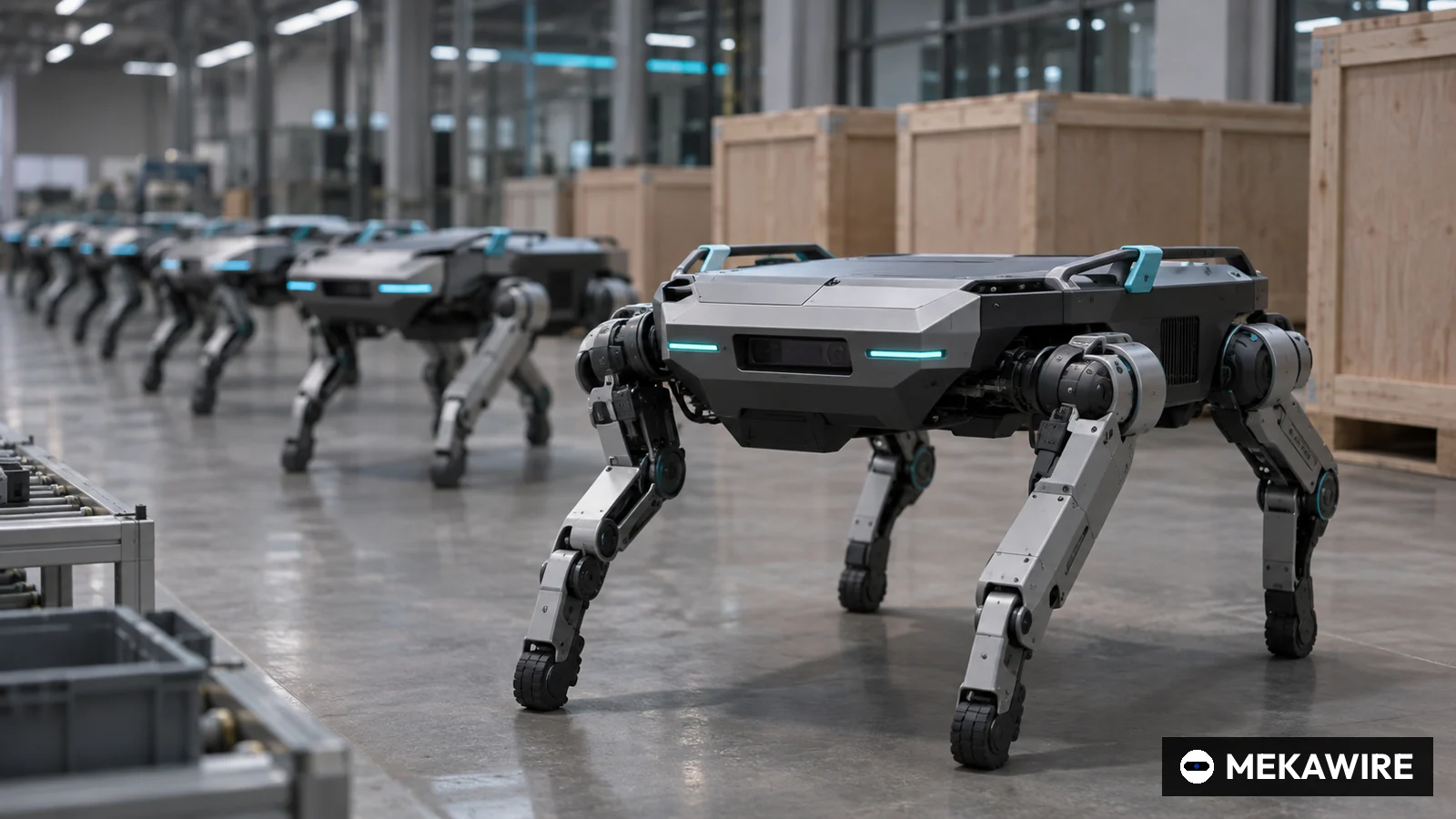
FF EAI Robotics Ecosystem (Nasdaq: FFR) said in a release filed with the SEC on Nov 13 that the robotics business it bought from Faraday Future generated about $2.3 million of unaudited revenue and $593,000 of gross profit in the nine months to Sept.
30, a gross margin of about 26%. It shipped a record 351 robots in October, 1,168 in total, and kept its goal of about 2,000 units for 2026, which leaves about 832 for November and December by MEKAWIRE's calculation.
FF EAI Robotics Ecosystem, the Nasdaq-listed company that took over Faraday Future's robotics business on Oct 23, disclosed the first financial figures for that business in a Nov 12 release attached to an 8-K filing dated Nov 13. For the nine months ended Sept. 30, the acquired business had unaudited standalone revenue of about $2.3 million and gross profit of about $593,000, a gross margin of about 26%. Research and development made up 26.2% of operating expenses. Because the deal closed after the quarter, none of this is in FFR's consolidated third-quarter accounts.
The numbers behind the guidance
FFR said robot sales and shipments reached 351 units in October, a monthly record, and 1,168 units in total through the end of October. It reaffirmed guidance of about 2,000 robots sold and shipped in 2026 for the acquired business on a standalone basis, with positive unit gross margins. The company said the business came over with no borrowings or convertible debt. Its plans include a Physical Cloud platform and a Productivity Token to be introduced around CES, a 100-city robotics education programme for K-12 schools, a proof of concept in a real industrial setting in the first quarter of 2027, and RoboShare rental operations in Chicago and Dallas. RoboShare lists more than 100 robots from ten third-party companies, the release said.
- Oct 12
- Purchase price for Faraday Future robotics business
- about $200M, all stock
- Oct 15 release
- Oct 15
- FF Nova developer humanoid price
- $2,490
- Oct 15 release
- Oct 26
- October units expected
- more than 300
- Oct 26 release
- Nov 12
- October units shipped
- 351
- Q3 release, 8-K
- Nov 12
- 9M 2026 revenue
- about $2.3M
- Q3 release, 8-K
- Derived
- Purchase price to annualised 9M revenue
- about 65x
- MEKAWIRE calc.
- Derived
- 2027 revenue target to annualised 9M revenue
- about 15x
- MEKAWIRE calc.
Annualised revenue = $2.3M / 9 x 12 = about $3.1M. Ratios are MEKAWIRE calculations from disclosed figures, as of Nov 14, 2026.
MEKAWIRE analysis
FFR is priced as a growth platform, but the first audited-style numbers describe a small education and developer hardware business.
MEKAWIRE's calculation: 2,000 minus 1,168 leaves about 832 robots for November and December, or about 416 a month, 19% above October's record. Annualising nine-month revenue gives about $3.1 million, so the $200 million purchase price set in October is roughly 65 times that run rate, and the $45.2 million 2027 revenue target FFR gave on Oct 26 is about 15 times it. A 26% gross margin is consistent with low-priced developer kits such as the $2,490 FF Nova covered by MEKAWIRE on Oct 15. The counter-argument is that October alone shipped 351 units, so fourth-quarter revenue may exceed the whole nine months. What would change our view: December unit numbers above 2,000 for the year, audited fourth-quarter revenue, and a first paid industrial customer. Earlier coverage: the deal close and guidance on Oct 27 and the Nova launch on Oct 15; see the company page for Faraday Future.
- about $2.3M, unaudited, standalone
- about 2,000 units (reaffirmed)
- 351, monthly record
- about $593,000, margin about 26%
- 26.2%
- about 832 in Nov and Dec (MEKAWIRE calc.)
- 1,168
Why it matters
FFR's acquired robotics business reported about $2.3 million in unaudited standalone revenue and $593,000 in gross profit for the nine months through September, implying about 26% gross margin. Reaching its reaffirmed goal of about 2,000 units requires roughly 416 shipments per month in November and December, about 19% above October's record 351. That makes shipment acceleration the immediate execution test; gross profit alone does not establish operating profitability.
Rival analysis
The supplied material names no competing robot vendors and provides no comparable pricing, shipment or margin data, so a competitive ranking is unsupported. Faraday Future is identified as the seller and an affiliate of FFR, rather than an independent rival. Investors need product mix and customer data to assess whether FFR's shipment growth reflects a durable competitive position.
Valuation context
Nasdaq listings do not establish either company's market capitalization; no share prices or share counts are supplied. No disclosed valuation, acquisition price or valuation estimate is provided. The unaudited standalone robotics revenue cannot support a defensible valuation multiple without a valuation numerator and clarity on the acquired business's scope.
Related papers
No research papers are supplied; the evidence consists of FFR's results release and SEC filing. These sources support analysis of reported financials and shipments, but provide no research evidence for robot capability, reliability or technical differentiation.
Supply-chain implications
The supplied material identifies no component suppliers, manufacturing capacity, inventory levels or procurement commitments. Meeting the annual shipment goal requires a higher monthly pace than October's record, but the evidence does not establish whether production, inventory availability or customer demand constrains delivery.
Signals to watch
Watch November and December shipments against the approximately 832 units still needed, a MEKAWIRE calculation. Track whether subsequent revenue and gross margin improve alongside shipment growth, while recognizing that the supplied revenue ends in September and shipments extend through October. R&D accounts for 26.2% of operating expenses, but absolute spending and cash burn are missing.
Analyst view
The reported gross profit and record October shipments are encouraging early operating signals, but they do not establish scalable profitability. The next decision point is whether FFR can sustain shipments above October's pace while preserving margins. Customer concentration, repeat orders and cash consumption are not disclosed in the supplied material, limiting confidence in the growth trajectory.
Questions you should be asking
How much of the remaining approximately 832-unit shipment requirement is covered by firm customer orders? What are the product mix, customer concentration and payment terms behind reported revenue and shipments? What acquisition consideration, absolute operating expenses and cash requirements accompany the robotics business?