Figure retires Figure 02 after an 11-month BMW run tied to 30,000 cars, handing the job to Figure 03 and a 12,000-a-year BotQ line
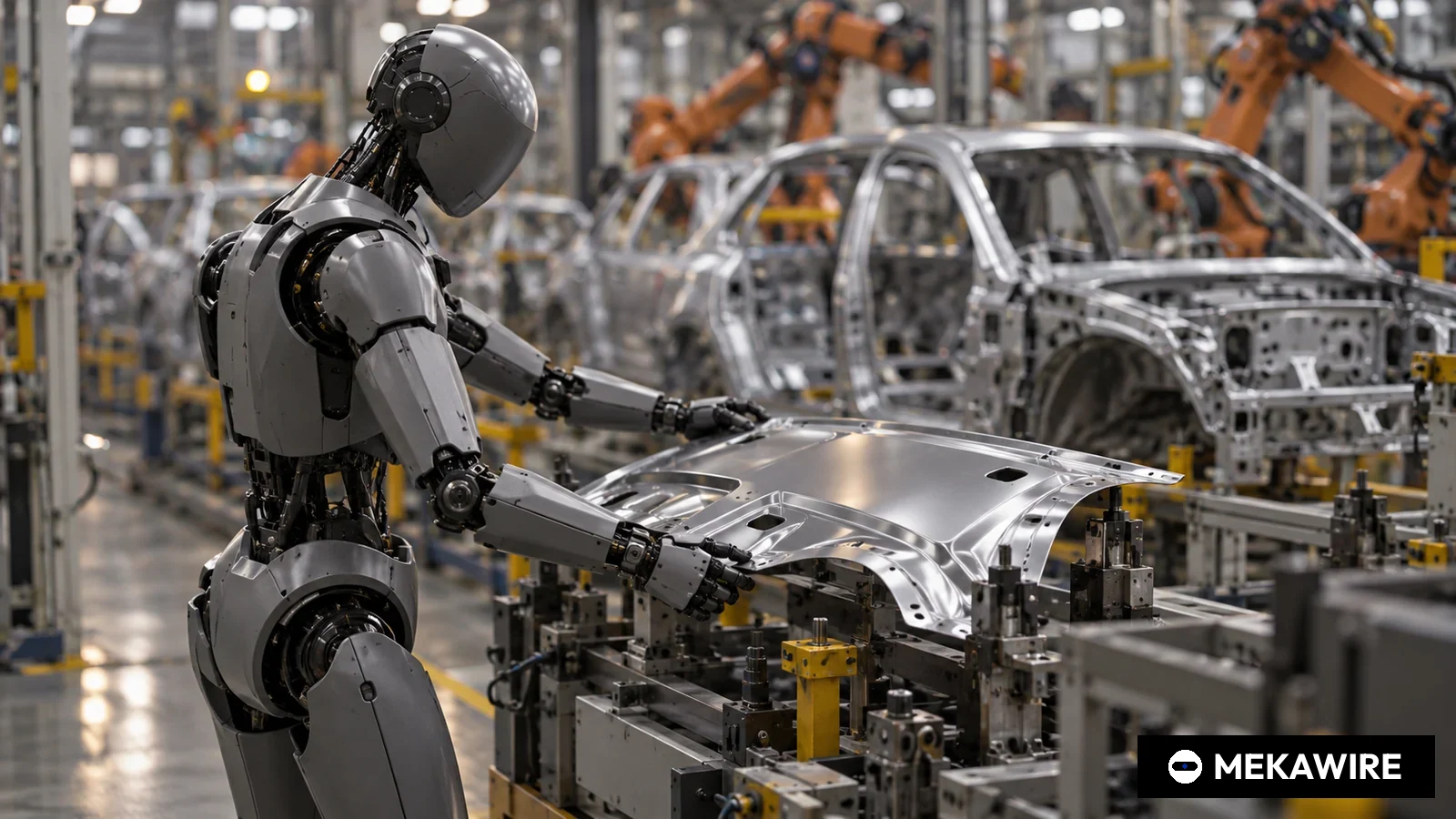
Figure AI said its Figure 02 humanoid contributed to the production of more than 30,000 BMW X3 vehicles over an 11-month deployment at Spartanburg before being retired. The company is replacing it with Figure 03, launched on 9 October 2025 with faster cameras, palm cameras, 3-gram tactile fingertips and 2 kW wireless charging, built for a BotQ line rated at up to 12,000 robots a year.
Figure AI said on 19 November 2025 that it had retired its Figure 02 humanoid after an 11-month deployment at BMW Group Plant Spartanburg in South Carolina, where the robots contributed to the production of more than 30,000 BMW X3 vehicles. The disclosure came six weeks after the company unveiled its third-generation robot, Figure 03, on 9 October, and it is the most detailed public account any humanoid maker has given of a sustained shift pattern on a running car line.
According to Figure, Figure 02 worked 10-hour shifts from Monday to Friday, logged more than 1,250 hours of runtime, loaded more than 90,000 parts and took more than 1.2 million steps, which the company put at more than 200 miles. The station had an 84-second cycle time, of which 37 seconds were allotted to loading. Figure said the target was better than 99% placement success per shift, with parts set to a 5-millimetre tolerance in about 2 seconds, and that its goal was zero human interventions per shift. It named the forearm as the subsystem that failed most often.
What Figure 03 changes
Figure describes Figure 03 as built around Helix, its in-house vision-language-action model, and around use in the home. The company said the new camera system runs at twice the frame rate of the previous generation, with one quarter of the latency and a 60% wider field of view per camera, in a smaller package. Each hand now carries a palm camera with a wide field of view, and redesigned fingertips are softer and carry tactile sensors that Figure said can register forces as small as 3 grams. A 10 Gbps millimetre-wave link lets robots offload large volumes of data from the fleet for training.
The body is 9% lighter than Figure 02 and takes up noticeably less volume, Figure said, without publishing height, weight or payload. Hard machined covers have given way to soft textiles over multi-density foam at pinch points, and the fabric can be removed and washed without tools. The battery pack has protection at cell, interconnect, battery management system and pack level and has been certified to the UN38.3 transport standard. The robot charges by stepping onto a stand that delivers 2 kW by induction. Figure said the actuators run up to twice as fast with better torque density, and the speaker is twice the size and nearly four times as powerful.
The BMW write-up links one of those changes directly to the factory experience. Because the Figure 02 forearm was the weakest point, Figure said it re-architected the wrist electronics on Figure 03, removing a distribution board and the dynamic cabling that ran through the joint so that each motor controller talks directly to the main computer.
Built for volume
Figure said Figure 03 was engineered for tooled processes such as die casting, injection moulding and stamping instead of CNC machining, with fewer parts and assembly steps, and that it designs its actuators, batteries, sensors, structures and electronics in-house. Its BotQ plant will start with a first-generation line able to build up to 12,000 humanoids a year, the company said, with a goal of 100,000 robots over the next four years. Figure said each unit costs dramatically less to build than its predecessor but did not give a figure, a price or a delivery date.
The launch followed a Series C round that Figure announced on 16 September 2025, which drew more than $1 billion in committed capital at a $39 billion post-money valuation, led by Parkway Venture Capital, according to the company. That made it the most highly valued humanoid developer with a disclosed price among US peers, roughly 26 times the $1.5 billion that Skild AI disclosed for its 2024 Series A.
- Figure AI
- US
- Series C
- 1000
- 39
- 2025-09-16
- Dyna Robotics
- US
- Series A
- 120
- No data
- 2025-09-15
- Apptronik
- US
- Series A additional close
- 53
- No data
- 2025-03-18
- Skild AI
- US
- Series A
- 300
- 1.5
- 2024-07-09
- 1X Technologies
- US
- Series B
- 100
- No data
- 2024-01-13
- Agility Robotics
- US
- Series B
- 150
- No data
- 2022-04-22
Company-disclosed figures from each round announcement; — where no post-money valuation was disclosed. Apptronik's February 2025 Series A was $350m before the $53m additional close. Figure to Skild post-money multiple = 39.0 / 1.5 = 26x.
As of Nov 19, 2025
Rivals are pursuing the same customers with different bets. Tesla is building Optimus for its own plants, Agility Robotics has put Digit into logistics sites, Apptronik is working with automotive partners on Apollo, and 1X Technologies is pitching its NEO directly at households. Figure is the only one of the group that has published shift-level output data from a carmaker, although none of its numbers have been independently confirmed by BMW in the same release.
- Deployment length
- 11
- months
- Shift length
- 10
- hours, Monday to Friday
- Runtime
- 1,250
- hours (more than)
- Vehicles produced with contribution
- 30,000
- BMW X3 (more than)
- Parts loaded
- 90,000
- parts (more than)
- Robot steps
- 1,200,000
- steps (more than)
- Cycle time
- 84
- seconds
- Load time within cycle
- 37
- seconds
- Placement tolerance
- 5
- millimetres
- Placement success target
- 99
- % per shift (greater than)
As published by Figure AI on 19 November 2025; not independently confirmed by BMW. Values marked more than are lower bounds.
As of Nov 19, 2025
The technical choices map onto how a vision-language-action model learns. A policy that reads images and outputs joint commands reacts faster when frames arrive more often and with less delay, and palm cameras cover the moment when the hand blocks the head cameras during a grasp. Tactile fingertips give the model a signal about slip and contact force that vision alone cannot provide. Wireless charging and high-bandwidth offload remove two chores that otherwise need a person, plugging in the robot and pulling its logs, which matters for a fleet that is meant to train on its own data.
The gaps in the disclosure are material. Figure has not said what Figure 03 costs, when it ships, or who the first customers will be, and it has not published height, weight, payload or runtime. The BMW figures describe one station on one line, and the phrase contributed to the production of 30,000 cars says nothing about how many human workers the robots replaced or what the station cost per part. The home pitch also runs ahead of evidence, since Figure has not described any household deployment.
The next markers are whether Figure names a commercial customer for Figure 03 and puts robots back into Spartanburg, whether BotQ output reaches a disclosed four-digit annual run rate, and whether a home pilot with paying users is announced in 2026.
MEKAWIRE analysis
Figure has moved the humanoid race from demos to documented duty cycles, but its Figure 03 bet rests on a manufacturing ramp and a home market that it has not yet shown.
The evidence for the first half is unusually concrete. Eleven months, 1,250 hours, 90,000 parts and an 84-second cycle are the kind of numbers factory buyers ask for, and the wrist redesign shows field data flowing back into hardware within one product generation. The commitment to die casting, moulding and stamping, together with a 12,000-unit line, is a manufacturing statement that only a company with a $39 billion valuation and more than $1 billion in fresh commitments could make in 2025.
The strongest counter-argument is that 1,250 hours across 11 months is modest utilisation. Ten-hour shifts five days a week would add up to roughly 2,400 hours for one robot over that period, so the published total implies either a small fleet running part time or long stretches of testing. Without BMW's own confirmation or a unit count, the record is a vendor case study.
Bull case. If BotQ reaches even half of its first-line capacity in 2026, Figure would be building several thousand robots a year with a model trained on fleet data that no rival can match, and the cost curve from tooled parts would let it price below a fully loaded shift worker in the US.
Bear case. Tooling up before the design is proven in volume locks in costs if Figure 03 needs another major revision, and a home product invites safety, privacy and liability scrutiny that factory pilots never face. A $39 billion valuation leaves little room for a slow ramp.
Signals to watch:
- First named commercial customer and deployment site for Figure 03, expected in the first half of 2026
- Any disclosure of BotQ output or a unit count shipped by the end of 2026
- A paid home pilot or a published household safety approach during 2026
- 2x frame rate, 1/4 latency, 60% wider field of view per camera
- more than 1,250 hours, 10-hour shifts Monday to Friday
- 2 kW wireless inductive
- more than 30,000 BMW X3 (contributed to)
- 84 s, of which 37 s loading
- more than 90,000
- up to 12,000 robots a year; goal 100,000 in four years
- 9 October 2025
- register forces as small as 3 g
- 11 months at BMW Group Plant Spartanburg
Why it matters
The BMW record is the first time a Western humanoid maker has put shift-level duty numbers on a production line into the public domain. Buyers in automotive and logistics have been asking for cycle times, intervention rates and uptime, not videos, and Figure has now set a reference format that rivals will be measured against.
The pairing with Figure 03 matters because it shows the loop that every humanoid company claims and few demonstrate: a field failure in the forearm drove a wiring redesign in the next generation. For investors the story moves from model quality to manufacturing discipline, which is where the cost curve will be decided.
Rival analysis
Tesla has the deepest manufacturing base and its own factories as captive customers, but has not published Optimus duty data of comparable detail. Agility Robotics has the longest commercial record with Digit in logistics and an industrial focus that avoids home safety questions. Apptronik has paired with automotive partners and raised $403 million across its 2025 Series A closes, a fraction of Figure's war chest.
1X is the most direct rival for the home pitch, while Chinese makers such as Unitree and UBTech compete on price and unit volume. Figure's differentiation is a vertically integrated stack with its own model, actuators and batteries, which raises margins if volume comes and raises risk if it does not.
Valuation context
At $39 billion post-money after its September 2025 Series C, Figure is valued at about 26 times the $1.5 billion post-money Skild AI disclosed in 2024, the only other US peer in our dataset with a disclosed post-money figure from that period. The valuation implies investors are pricing Figure as a platform company, not a robot vendor.
The 100,000-unit four-year goal gives a rough frame. Even at that volume, the valuation equals $390,000 per robot planned, which only works if each robot carries recurring software or service revenue well beyond its hardware price. Figure has disclosed no price, so any revenue model remains an assumption.
Supply-chain implications
Figure says it designs actuators, batteries, sensors, structures and electronics in-house, and it is moving from CNC machining to die casting, injection moulding and stamping. That shifts sourcing from precision machine shops to tooling vendors and casting houses that serve the car industry, and it reduces dependence on off-the-shelf servo and reducer suppliers.
The open questions are cells, magnets and bearings, which Figure has not named suppliers for. UN38.3 certification of the pack is a prerequisite for shipping robots by air and sea, so it is also a sign that Figure expects to move units across borders.
Signals to watch
The first named Figure 03 customer and site, which Figure has not disclosed, will show whether the factory or the home comes first. A return of robots to Spartanburg with Figure 03 would confirm that BMW sees value beyond the pilot.
BotQ output is the second test. A disclosed unit count in 2026, or new tooling and site announcements, would show whether the 12,000-a-year line is running. A third signal is any household pilot with paying users, with a published safety case.
Analyst view
Thesis: Figure has the strongest evidence among US humanoid makers that its robots can hold a production cycle, and Figure 03 is a credible design for volume, but its valuation front-runs both the factory ramp and the home market. Confidence: medium.
Reasons for medium rather than high: the BMW numbers are self-reported, the fleet size behind 1,250 hours is unknown, and Figure 03 has no published price, payload or ship date. Reasons not to go lower: the engineering changes are specific and traceable to field data, and the capital base gives Figure several years of runway to fix a slow start.
Questions you should be asking
How many Figure 02 robots worked at Spartanburg, and how did their uptime compare with the 10-hour shift schedule? What did BMW pay, and does it intend to deploy Figure 03?
What is Figure 03's height, weight, payload and runtime per charge, and what is the target price for commercial and home buyers? Which suppliers provide cells, magnets and castings, and where will BotQ's second line be built?