Figure raises more than $1 billion in Parkway-led Series C at a $39 billion valuation, 15 times its 2024 price
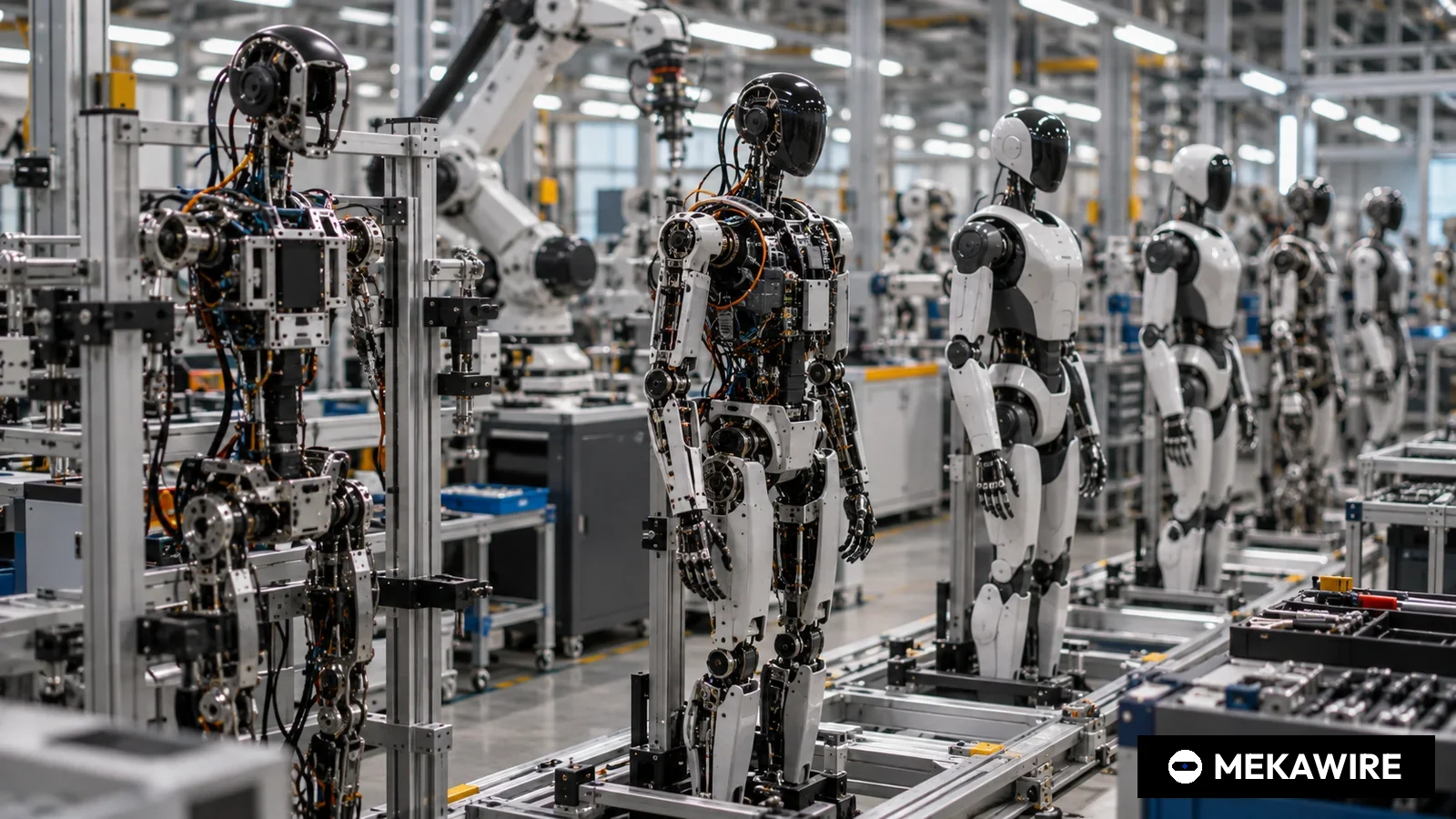
Figure AI said on 16 September 2025 it had secured more than $1 billion in committed Series C capital at a $39 billion post-money valuation, with Parkway Venture Capital leading and NVIDIA, Brookfield, Intel Capital, Qualcomm Ventures and LG Technology Ventures among the named backers.
The company will spend the money on BotQ production, GPU infrastructure for its Helix model and large-scale collection of human video data.
Figure AI said on 16 September 2025 that it had secured more than $1 billion in committed capital in a Series C round at a post-money valuation of $39 billion. The price sets a new reference point for privately held humanoid robot developers and is far above any valuation its named US rivals have published.
Parkway Venture Capital led the round, according to Figure's announcement. The company listed Brookfield Asset Management, NVIDIA, Macquarie Capital, Intel Capital, Align Ventures, Tamarack Global, LG Technology Ventures, Salesforce, T-Mobile Ventures and Qualcomm Ventures as the other significant investors. Figure did not give a final round size, describing the amount only as more than $1 billion in committed capital, and it did not say how the total was split between new and returning backers or whether it would be paid in tranches.
The valuation is 15 times the $2.6 billion figure Figure cited when it raised a $675 million Series B on 29 February 2024; that earlier release did not specify whether the number was pre-money or post-money. Parkway says on its own portfolio page that it also led Figure's $70 million Series A in 2023. Adding the three priced rounds, Figure has disclosed at least $1.745 billion of equity funding since founding.
Figure said the new money would go to three areas, all aimed at expanding the abilities of Helix, its AI system for embodied intelligence. The first is scaling humanoid robots into homes and commercial operations by expanding production at its BotQ manufacturing operation and widening real-world deployments. The second is building next-generation GPU infrastructure for training and simulation, which the company said would power Helix's core models for perception, reasoning and control. The third is a push to collect human video and multimodal sensory data so that its robots can work in complex, changing settings.
Figure was founded in 2022 by Brett Adcock, according to Parkway. Its Series B release in 2024 said the company had signed a commercial deployment agreement with BMW Manufacturing, would use Microsoft Azure for AI infrastructure and had entered a research collaboration with OpenAI. Microsoft, the OpenAI Startup Fund, NVIDIA, Bezos Expeditions, Parkway, Intel Capital, Align Ventures and ARK Invest were named in that round. Parkway, NVIDIA, Intel Capital and Align Ventures appear on both lists, which points to continued support from part of the earlier syndicate.
Helix, unveiled on 20 February 2025, splits robot control into two parts, according to Figure. A 7 billion parameter vision language model, which Figure calls System 2, interprets the scene and instructions at 7 to 9 Hz, while an 80 million parameter transformer, System 1, turns that into motor commands at 200 Hz across a 35 degree of freedom upper body. Figure said the model was trained on about 500 hours of teleoperated data and runs on two low-power embedded GPUs inside the robot. The new data collection plan, built on human video, is designed to reduce reliance on that slower and costlier teleoperation route.
BotQ, announced on 15 March 2025, is Figure's in-house production operation. The company said its first line would have capacity for up to 12,000 humanoids a year and that its supply chain could grow to support 100,000 robots, or 3 million actuators, within four years. Figure makes actuators, hands and batteries and handles final assembly itself, and it said it had moved its next robot design from CNC machining to injection moulding, die casting, metal injection moulding and stamping.
No US rival has published a comparable price. Apptronik raised a $350 million Series A in February 2025 and added $53 million in March; Agility Robotics last disclosed a $150 million Series B in April 2022; 1X Technologies raised a $100 million Series B in January 2024; and Skild AI, which builds a general robot model rather than its own humanoid, raised $300 million at a $1.5 billion post-money valuation in July 2024. Tesla develops its Optimus humanoid inside a listed carmaker and does not price it separately, while Chinese developers such as Unitree, UBTech and AgiBot have relied on domestic strategic investors and, in UBTech's case, the Hong Kong stock market.
- Figure AI
- Series C
- 2025-09-16
- 1,000,000,000
- 39,000,000,000
- Figure AI (prior round)
- Series B
- 2024-02-29
- 675,000,000
- 2,600,000,000
- Apptronik
- Series A
- 2025-02-13
- 350,000,000
- No data
- Skild AI
- Series A
- 2024-07-09
- 300,000,000
- 1,500,000,000
- Agility Robotics
- Series B
- 2022-04-22
- 150,000,000
- No data
- 1X Technologies
- Series B
- 2024-01-13
- 100,000,000
- No data
Latest round each company disclosed before 16 September 2025, from company announcements. Figure Series C amount is a floor: Figure reported more than $1 billion in committed capital. Valuations are post-money where disclosed; Figure's Series B release gave $2.6 billion without stating pre or post. Apptronik added $53 million on 2025-03-18 (not included). Derived: step-up = 39 / 2.6 = 15x; Figure Series C vs Skild AI Series A = 39 / 1.5 = 26x. Figures disclosed, not estimated; — = not disclosed.
As of Sep 16, 2025
The investor list reads like a map of Figure's supply needs. NVIDIA, Intel Capital and Qualcomm Ventures sit in the chip stack that Helix depends on for training and onboard inference. T-Mobile Ventures brings connectivity, Salesforce enterprise software, and LG Technology Ventures links to a Korean electronics group. Brookfield Asset Management and Macquarie Capital, both active in infrastructure finance, add investors used to funding physical assets at scale.
The announcement left several questions open. Figure did not disclose revenue, the number of robots delivered or paying customers beyond the BMW agreement named in 2024, nor did it say how much of the committed capital had been paid in. Home deployment, which Figure lists alongside commercial work, would expose its robots to safety and liability rules that factory pilots do not face. And the 500 hours of teleoperation behind the first Helix release is small next to the data volumes that language models use, which is why the human video effort matters to the valuation case.
MEKAWIRE analysis
Figure's $39 billion price is a bet that compute, data and in-house manufacturing reinforce one another faster than rivals can assemble them, and the Series C syndicate was built to supply all three.
The evidence sits in the use of funds and the cap table. The money is aimed at GPUs, human video data and BotQ output, and the named investors include three chip groups, a telecom operator, an enterprise software company and two infrastructure financiers. A 15-fold step-up in about 19 months, against a $2.6 billion valuation in February 2024, shows investors are paying for that integration rather than for disclosed sales.
The strongest counter-argument is that nothing in the announcement measures demand. Figure gave no revenue, no fleet size and no customer count, and the only named commercial user remains BMW, disclosed in 2024. A valuation of this size assumes that general-purpose humanoids will reach volume, and the 12,000-unit BotQ line has not yet reported output.
Bull case. If human video can stand in for most teleoperation, Helix improves at the pace of compute rather than the pace of human operators, and Figure's GPU spending becomes its moat. A vertically integrated line with in-house actuators, hands and batteries would then let Figure cut unit costs faster than rivals that buy those parts.
Bear case. Humanoid deployments have so far been pilots, and a single large customer can stall a ramp. If home robots meet safety hurdles or factory buyers stay with cheaper wheeled machines and robot arms, Figure would carry a $39 billion price on a cost base swollen by GPUs and a factory.
Signals to watch:
- 31 December 2025: whether Figure states a final Series C close and how much of the committed capital has been paid in.
- 15 March 2026: one year after BotQ was announced, any disclosed output against the 12,000-unit annual capacity.
- First half of 2026: named paying customers beyond BMW, and any home deployment terms or pricing.
- Series C
- 16 September 2025
- Parkway Venture Capital
- $675 million Series B at a $2.6 billion valuation, 29 February 2024
- More than $1 billion (final size not disclosed)
- 15x ($39bn / $2.6bn)
- $39 billion
- Up to 12,000 humanoids a year
- Brookfield Asset Management, NVIDIA, Macquarie Capital, Intel Capital, Align Ventures, Tamarack Global, LG Technology Ventures, Salesforce, T-Mobile Ventures, Qualcomm Ventures
- At least $1.745 billion ($70m + $675m + $1bn floor)
Why it matters
The round resets the price of a humanoid developer. At $39 billion post-money, Figure is valued at 26 times Skild AI's July 2024 post-money and 15 times its own February 2024 figure, and every later humanoid round will be read against it. Investors in rivals now have a public marker for what a vertically integrated humanoid company with its own model and factory can command before it reports revenue.
It also shows where the money in physical AI is flowing. Figure's three stated uses are manufacturing, compute and data, and they depend on one another. Spending on GPU infrastructure and human video data treats the robot as a vehicle for a learning system, while BotQ is the route to cheaper hardware. Rivals that have only one of those three will find it harder to raise at similar terms.
Rival analysis
Apptronik is the closest US comparison on model and capital: a general-purpose humanoid aimed at logistics and manufacturing, financed with a $350 million Series A in February 2025 and a $53 million addition in March, without a disclosed valuation. Agility Robotics has the longest commercial record with its Digit robot in warehouses but last disclosed new equity in 2022. 1X Technologies, backed by the OpenAI Startup Fund in 2023, is aiming at homes, the same segment Figure now names first in its use of funds.
Tesla is the rival that cannot be priced. Optimus is funded from a carmaker's balance sheet, has access to Tesla's own AI training clusters and can be deployed in Tesla plants. In China, Unitree, UBTech and AgiBot compete on cost and volume with deep domestic component supply chains. Figure's response is to own the model and the factory, a strategy that requires capital on the scale of this round.
Valuation context
Figure's disclosed rounds rose from $70 million in 2023 to $675 million at a $2.6 billion valuation in February 2024 and to more than $1 billion at $39 billion now. Taking the $1 billion floor, new investors bought roughly 2.6% of the company ($1bn / $39bn), a small dilution for the amount raised. That ratio points to a market where a few humanoid leaders can raise large sums without giving up much ownership.
The comparison set is thin. Skild AI's $1.5 billion post-money from July 2024 is the only peer post-money in our verified data, and Apptronik, Agility and 1X have not disclosed valuations for their latest rounds. The 15-fold step-up should also be read with care, because Figure's 2024 release did not say whether $2.6 billion was pre-money or post-money, and committed capital may not be fully paid in.
Supply-chain implications
BotQ concentrates Figure's supply chain around parts it builds itself: actuators, hands, batteries and final assembly. Figure said in March 2025 that its supply chain could support 100,000 robots or 3 million actuators within four years, which implies roughly 30 actuators per robot by its own arithmetic. Moving from CNC machining to injection moulding, die casting, metal injection moulding and stamping shifts the bottleneck to tooling and to suppliers of gears, bearings, magnets and motor components.
The chip side of the cap table matters as much. Helix runs on dual embedded GPUs onboard, and training depends on large GPU clusters, so NVIDIA's presence is strategic. Intel Capital and Qualcomm Ventures give Figure relationships with alternative chip suppliers for onboard compute. LG Technology Ventures connects Figure to a Korean group with batteries, displays and motor know-how.
Signals to watch
The first signal is the paid-in amount. Figure described more than $1 billion as committed capital, so any later statement of a final close, or the timing of tranches, will show how firm the round is. The second is BotQ output; the company gave capacity, not production, and the first reported delivery numbers will test the factory claims.
The third is the data program. If Figure publishes results showing Helix policies trained mainly on human video, that would support the thesis that data, not teleoperators, limits progress. The fourth is customers: named buyers beyond BMW, and any home pilot with pricing, would give the first demand-side evidence for the valuation.
Analyst view
Thesis: Figure has bought time and compute to prove that a single learned model on in-house hardware can generalise across homes and workplaces, and the $39 billion price assumes it succeeds. Confidence: medium. The confidence is not high because Figure disclosed no revenue, fleet size or customer count, the round size is a floor of committed capital, and the earlier valuation basis is unspecified.
The confidence is not low because the facts that were disclosed are specific and consistent. Helix has a documented architecture with stated rates and parameter counts, BotQ has a stated capacity and in-house component list, and the syndicate includes the chip supplier the company depends on. Those details are what investors are paying for, and they can be checked against output over the next 12 months.
Questions you should be asking
How much of the more than $1 billion in committed capital has been paid in, and are there milestones attached to later tranches? What share of the round came from Parkway and from new investors such as Brookfield, Salesforce and T-Mobile Ventures?
How many robots has BotQ built since March 2025, and when will Figure report deliveries? Will the home segment, listed first in Figure's use of funds, be sold, leased or offered as a service, and under which safety standards? How many hours of human video does Figure plan to collect, and how will it measure transfer from video to robot behaviour?