Korea opens bidding for a 9.7bn won humanoid robot safety certification centre in Daegu
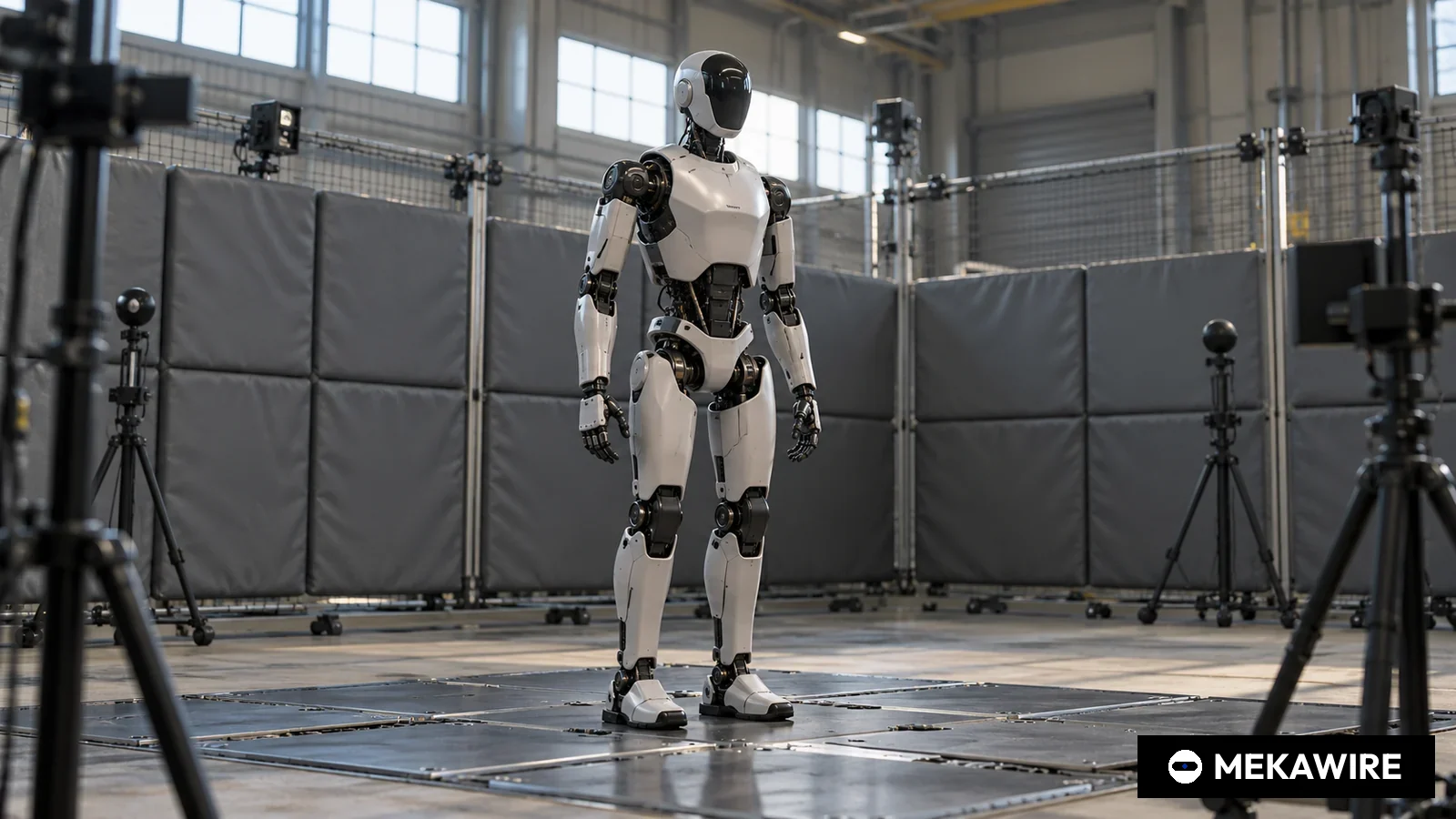
South Korea's Ministry of Trade, Industry and Energy on 23 March 2026 invited proposals to build a dedicated safety and security certification centre for humanoid robots, with up to 9,681 million won of government funding over 2026 to 2030.
The lead institution must secure cash or in-kind backing from a Daegu-area local government, and by the final year the centre is expected to set three group standards and win KOLAS accreditation.
South Korea's industry ministry has opened bidding for the country's first testing and certification facility built specifically for humanoid robots. In notice No. 2026-217, published on 23 March 2026, the Ministry of Trade, Industry and Energy (MOTIE) called for proposals to build a Humanoid Robot Safety Certification Center, a five-year infrastructure project that the ministry says will support safety and security certification of domestic humanoids and help the industry respond to global regulation.
The money is modest by the standards of Korean industrial policy. The notice caps total government funding at 9,681 million won over 2026 to 2030, of which up to 872 million won is available in the first year, running from April to December 2026. Government funds may cover no more than 70 percent of total project cost excluding construction, and the participating institutions and other backers must contribute at least 30 percent. MOTIE will fund a single project, classified as infrastructure rather than research and development.
The geography is fixed in advance. According to the notice, the lead institution must obtain a written commitment of cash or in-kind support from a local government in the Daegu area, either Daegu Metropolitan City or the relevant district. Only non-profit bodies, meaning research institutes, universities and associations, may apply as lead or partner institutions. Proposals were accepted from 15:00 on 23 March to 18:00 on 21 April 2026, and evaluators score them on clarity of objectives (30 points), organisation and strategy (20), capability of the applicant (20), diffusion of results (20) and budget adequacy (10).
The request for proposals sets out what the centre must build. It lists four systems: a dynamic stability rig that tests walking, static posture and the distribution of support forces; an AI model reliability system that checks behavioural consistency and performance on data the model has not seen in training; a security evaluation system that probes components and communication protocols for vulnerabilities; and a testbed that simulates real factory, logistics, household and outdoor environments.
The final-year targets are specific. By 2030 the centre is expected to operate at least three types of equipment at a utilisation rate of 60 percent or more, serve at least 12 companies through shared use, earn 200 million won in equipment fees, handle at least 60 testing, evaluation and certification cases, establish at least three group standards, obtain one accreditation as a KOLAS testing laboratory and issue at least three KOLAS test reports.
MOTIE's rationale, as stated in the request for proposals, is that humanoids heading into factories, services and homes need their own safety criteria and a certification system and infrastructure to verify them before they arrive. The document names AI errors, collisions and malfunctions as the safety problems it expects. Among the expected effects it lists faster localisation of humanoid-specific core components, higher public trust through environment-by-environment safety and security checks, and new demand linked to hard physical work and an ageing society.
Daegu already hosts Korea's main robot industry agency. The Korea Institute for Robot Industry Advancement (KIRIA) is headquartered on Nowon-ro in Daegu's Buk district, runs a certification centre at an adjoining address and offers certification, standardisation, test evaluation and KC conformity assessment, including a safety certification for outdoor mobile robots, according to its website. The notice does not name a preferred applicant.
The project sits inside a broader industrial push. MOTIE launched the K-Humanoid Alliance on 10 April 2025 with more than 40 organisations, including Rainbow Robotics, Doosan Robotics, LG Electronics and Holiday Robotics, and set targets that include a shared robot AI foundation model by 2028 and humanoid hardware weighing 60 kg or less with more than 50 degrees of freedom, a payload of at least 20 kg and speed of 2.5 m/s. The government's Manufacturing AX (M.AX) Alliance, launched in September 2025, counts about 1,000 companies, institutes and universities in 11 divisions, one of them dedicated to humanoids, according to a government policy briefing on 27 February 2026.
International rule-making is moving at the same time. ISO technical committee TC 299 approved a new project on 22 May 2025 for ISO 25785-1, safety requirements for dynamically stable industrial mobile robots, a category that explicitly includes legged machines. In Europe, Regulation (EU) 2023/1230 on machinery becomes mandatory on 20 January 2027, replacing the Machinery Directive, according to the European Commission. Korean humanoid makers that want to sell into Europe will need to show conformity with that regime.
Several questions remain open. The notice does not specify which certification marks the centre will issue, how its group standards will relate to ISO work in progress, or whether certification will be voluntary or tied to public procurement. A budget averaging under 2 billion won a year buys test rigs and staff, not a large proving ground, and the 200 million won revenue target implies the facility will depend on government money through 2030.
MEKAWIRE analysis
Korea is trying to own the referee function for humanoids before the rules are written, and the bet is cheap but strategically sound.
The evidence is in the design. MOTIE did not fund another robot; it funded measurement: stability, AI reliability and cybersecurity, the three areas where humanoids differ most from caged industrial arms and where ISO 25785-1 is still being drafted. Writing three group standards and earning KOLAS accreditation by 2030 gives Korean makers a domestic route to test reports they can cite abroad.
The strongest counter-argument is scale. At 9,681 million won over five years the centre is small, and a certificate from a new Daegu lab carries no weight in Brussels or Washington unless it maps onto harmonised European standards or recognised ISO documents. Buyers in Europe will ask for conformity with Regulation (EU) 2023/1230, not a Korean group standard.
Bull case: the centre becomes the default pre-compliance lab for the K-Humanoid Alliance members, its AI reliability and security test methods feed into ISO 25785 work, and Korean humanoids reach European customers with test evidence already in hand when the Machinery Regulation applies in January 2027.
Bear case: the facility opens late, issues a handful of reports, and its group standards diverge from ISO. Korean companies then pay foreign notified bodies anyway, and the centre ends up as a regional subsidy rather than a gatekeeper.
Signals to watch:
- 21 April 2026: close of applications, followed by MOTIE's choice of lead institution and Daegu's funding commitment.
- 8 July 2026: end of the comment period on the ISO 25785-1 committee draft, the first look at what international humanoid safety rules will require.
- 20 January 2027: Regulation (EU) 2023/1230 becomes mandatory, the first hard test of whether Korean test reports help exporters.
- Equipment utilisation rate
- 60
- %
- Equipment built
- 3
- types (minimum)
- Companies sharing equipment
- 12
- companies (minimum)
- Equipment fee revenue
- 200
- million won
- Testing, evaluation and certification support
- 60
- cases (minimum)
- Group standards established
- 3
- cases (minimum)
- KOLAS testing laboratory accreditation
- 1
- cases (minimum)
- KOLAS test reports issued
- 3
- cases (minimum)
Targets from the MOTIE request for proposals for notice No. 2026-217; figures disclosed, not estimated. Revenue in million won; other counts are minimums except accreditation (1).
As of Oct 1, 2026
- Humanoid Robot Safety Certification Center
- MOTIE (Korea)
- Certification infrastructure
- 2026-03-23
- 9681
- 872
- ISO 25785-1 (dynamically stable industrial mobile robots)
- ISO/TC 299
- International safety standard, project approved
- 2025-05-22
- No data
- No data
- Regulation (EU) 2023/1230 on machinery
- European Union
- Binding regulation, mandatory application
- 2027-01-20
- No data
- No data
- K-Humanoid Alliance
- MOTIE (Korea)
- Industry alliance launch
- 2025-04-10
- No data
- No data
Key date = notice date, ISO project approval, EU mandatory application date and alliance launch. Funding shown only where disclosed. Average annual funding 9,681 / 5 = 1,936 million won; first-year share 872 / 9,681 = 9.0%.
As of Oct 1, 2026
- Ministry of Trade, Industry and Energy (notice No. 2026-217)
- 23 March 2026
- Government up to 70% of non-construction cost; others at least 30%
- 23 March to 21 April 2026
- 60+ cases supported, 3+ group standards, 1 KOLAS accreditation
- Up to 872 million won (April to December 2026)
- Up to 9,681 million won, 2026 to 2030
- Cash or in-kind commitment from a Daegu-area local government
Why it matters
Safety certification is becoming the gating item for humanoid deployment outside research labs. A humanoid that walks among people cannot rely on the fences and light curtains that made industrial arms acceptable, so buyers, insurers and regulators will ask for evidence of dynamic stability, predictable AI behaviour and resistance to tampering. MOTIE's notice is the first Korean government instrument that funds measurement of exactly those three properties.
The notice also signals sequencing. Korea's 2025 alliance targets focused on building robots and a shared foundation model; this project adds the verification layer that lets those robots be sold. For companies such as Rainbow Robotics, Doosan Robotics and LG Electronics, a domestic accredited lab could shorten the loop between design changes and test evidence.
Rival analysis
The relevant competition is between testing regimes rather than robot makers. ISO/TC 299 approved ISO 25785-1 on 22 May 2025 for dynamically stable industrial mobile robots, and European buyers will judge machines against Regulation (EU) 2023/1230 from 20 January 2027. A Korean centre that writes its own group standards risks producing documents that neither framework recognises unless its methods are fed into ISO work.
Within Korea, KIRIA in Daegu already runs certification and KC conformity services, including a safety certification for outdoor mobile robots. The notice requires a Daegu local government commitment but does not name the lead institution, so the practical question is whether the new centre extends KIRIA's existing capability or creates a parallel one.
Valuation context
This is a government infrastructure grant, not an equity event, so there is no valuation. The scale is the useful number: 9,681 million won over five years averages about 1,936 million won a year, and the first-year cap of 872 million won is 9.0 percent of the total, consistent with a nine-month start in 2026 and heavier equipment spending later.
The revenue target of 200 million won in equipment fees by the final year is about 10 percent of the average annual grant. That ratio says MOTIE expects the centre to remain primarily publicly funded through 2030, which matters for its independence and pricing.
Supply-chain implications
The request for proposals ties certification to component localisation, listing faster localisation of humanoid-specific core parts as an expected effect. Stability rigs that measure support force distribution and posture will generate data on actuators, reducers and sensors under load, which is where Korean suppliers are trying to replace imports.
The security evaluation system targets components and communication protocols. For Korean humanoid makers that buy chips, motor drivers or radio modules abroad, vulnerability testing could become a procurement filter, favouring suppliers that can document firmware provenance.
Signals to watch
The close of applications on 21 April 2026 and MOTIE's subsequent selection will show which institution leads and how much Daegu commits in cash or in kind. The size of the local contribution is the clearest early indicator of ambition beyond the minimum 30 percent non-government share.
On the international side, the ISO 25785-1 committee draft comment period closing on 8 July 2026 and the EU Machinery Regulation's mandatory date of 20 January 2027 will show whether the centre's three planned group standards align with what export markets demand.
Analyst view
Thesis: the centre is a low-cost, correctly targeted move that will matter only if its test methods are recognised outside Korea. Confidence: medium. The design (stability, AI reliability, security, real-environment testbed) matches the gaps that international standard-setters are working on, which supports the thesis. The budget is small and the KOLAS accreditation target arrives only in the final year, which limits how quickly it can help exporters facing the January 2027 EU deadline.
We would raise confidence if the lead institution announces participation in ISO/TC 299 work or mutual recognition talks with a European notified body. We would lower it if the group standards are written without reference to ISO 25785 drafts.
Questions you should be asking
Will certification from the centre be voluntary, or will MOTIE link it to public procurement or demonstration subsidies for humanoids?
How will the three group standards relate to ISO 25785-1 and to harmonised standards under Regulation (EU) 2023/1230?
Will KIRIA, which already runs robot certification in Daegu, lead the consortium, and how will the new equipment be shared with existing test facilities?