Skild AI buys Zebra's former Fetch Robotics unit for $20 million, five years after Zebra paid $301 million for it
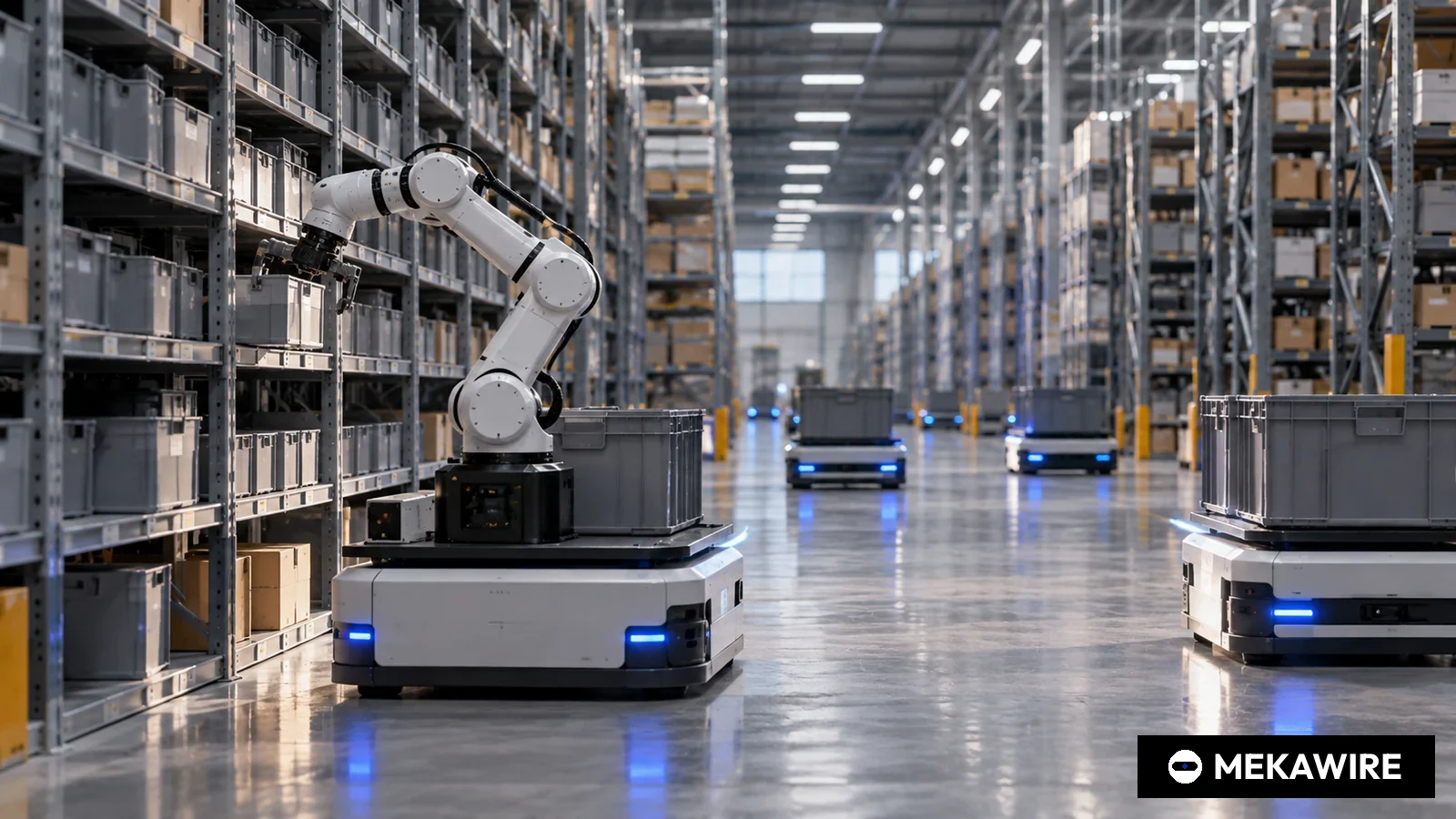
Skild AI said on April 15, 2026 that it had acquired the robotics division of Zebra Technologies, the business Zebra bought as Fetch Robotics in 2021. Zebra's quarterly SEC filing shows the sale closed on March 27 for $20 million in cash, escrow and a minority stake in Skild, against the $301 million Zebra recorded when it bought Fetch.
Skild AI, the robot foundation model developer valued at $14 billion in January, has bought the warehouse robotics business that Zebra Technologies acquired as Fetch Robotics in 2021, the startup said on April 15, 2026. The deal hands Skild a fleet platform already running in customer warehouses and gives its general purpose "Skild Brain" software a commercial channel into fulfillment operations.
Skild did not disclose terms. Zebra did, in its quarterly report on Form 10-Q for the period ended April 4, 2026, filed with the U.S. Securities and Exchange Commission on May 12. According to the filing, Zebra completed the sale of its robotics automation business to Skild AI on March 27, 2026 for total consideration of $20 million. That consisted of $9 million in cash, a $9 million long-term investment representing a minority ownership stake in Skild AI, and about $2 million held in escrow against possible indemnity claims, to be released after one year less any claims.
Zebra said the business carried $15 million of net assets at the time of sale, made up of $6 million of allocated goodwill, $3 million of technology intangibles, $3 million of inventories and $3 million of other net assets. It booked a net gain of $5 million on the sale within "other expense, net". The filing does not break out the unit's revenue or head count.
The price contrasts sharply with what Zebra paid. Its annual report for 2021 states that the company acquired Fetch Robotics on August 9, 2021 for purchase consideration of $301 million, comprising $290 million in cash net of cash acquired and $11 million representing the remeasured fair value of the minority stake Zebra already held. On those disclosed figures, the 2026 sale price equals about 6.6% of the 2021 consideration.
- Cash
- 290
- 9
- Equity component
- 11
- 9
- Escrow
- No data
- 2
- Total consideration
- 301
- 20
Source Zebra Technologies Form 10-K for 2021 and Form 10-Q for the quarter ended April 4, 2026. 2021 cash is net of cash acquired; 2021 equity component is the remeasured fair value of Zebra's prior minority stake in Fetch; 2026 equity component is Zebra's minority stake in Skild AI. Sale price as share of 2021 consideration = 20 / 301 = 6.6%. Figures disclosed, not estimated.
As of Oct 1, 2026
According to Skild's announcement, the purchase covers the warehouse robotics platform Fetch built and Zebra's Symmetry Fulfillment orchestration software, which coordinates mobile robots and pickers on warehouse floors. Skild said it intends to place its Skild Brain on top of that installed base so that robots in those facilities can make decisions rather than follow fixed instructions, with the aim of automating end to end fulfillment. The company did not say how many robots, customers or employees moved with the business.
Skild was founded in 2023 and is led by cofounder and chief executive Deepak Pathak. It raised a $300 million Series A at a $1.5 billion valuation in July 2024 and a $1.4 billion Series C at a $14 billion post-money valuation announced on January 14, 2026. In March 2026 it announced partnerships with ABB Robotics and Universal Robots to deploy its software across industrial arms, alongside NVIDIA. The company describes the Skild Brain as "omni-bodied", meaning one model is meant to control quadrupeds, humanoids and mobile manipulators without prior knowledge of the robot's body.
The acquisition puts Skild on a different path from most foundation model rivals. Physical Intelligence, Google DeepMind and NVIDIA's GR00T team largely license or publish models and rely on hardware partners to reach customers. Figure AI and Agility Robotics build their own humanoids and sell robot labor. Skild now owns a deployed autonomous mobile robot line competing in a warehouse market where Locus Robotics, Symbotic, AutoStore and Amazon's in-house robotics already operate at scale.
In plain terms, the deal joins a learning based control model to an established fleet stack. Fetch's robots and Symmetry Fulfillment already handle navigation, task assignment and integration with warehouse management systems. Skild's model is trained across many robot bodies and is meant to add perception and manipulation decisions on top. If it works, a warehouse operator could add new tasks through software updates instead of new hardware or bespoke programming.
The main open questions concern the economics. Zebra's write down from $301 million to a $20 million exit signals how hard it was to make money from autonomous mobile robots inside a scanner and mobile computer company. Skild has not said whether it will keep selling Fetch hardware, convert the base into a data collection network, or both. Customers will also want to know who supports existing fleets under service contracts signed with Zebra.
MEKAWIRE analysis
Skild has bought a deployed warehouse fleet at close to asset value, which makes this a data and distribution acquisition far more than a hardware bet.
The evidence sits in Zebra's own numbers. The business changed hands for $20 million against $15 million of book net assets, and $9 million of the price was paid in Skild equity, so Skild spent only $9 million in cash plus $2 million in escrow. For a company that raised $1.4 billion in January, that is a small cheque for a live customer base, an orchestration product and robots that generate real warehouse data every shift.
The strongest counter argument is that Zebra, a well capitalised operator with deep logistics customer relationships, could not make this business work, and a foundation model does not fix hardware margins, service costs or long enterprise sales cycles. Owning a robot line also exposes Skild to the capital intensity that pure software rivals avoid.
Bull case. Skild uses the Fetch installed base to prove that its model raises throughput on existing fleets, turns Symmetry Fulfillment into the delivery channel for software upgrades, and converts the fleet into a proprietary source of real world training data that rivals have to pay partners for.
Bear case. The robots age, customers churn during the ownership change, and Skild's engineers are pulled into supporting a legacy product. The acquisition becomes a distraction that adds operating losses without lifting model performance.
Signals to watch.
- Zebra's 10-Q for the quarter ending in early 2027, which should show whether the $2 million escrow was released in full around March 27, 2027.
- Any Skild disclosure of named warehouse customers running the Skild Brain on former Fetch robots during the second half of 2026.
- Skild's next funding or revenue disclosure, and whether it attributes recurring revenue to the warehouse business.
- Skild AI
- 2023
- Series C
- 1400
- 14
- 2026-01-14
- Figure AI
- No data
- Series C
- 1000
- 39
- 2025-09-16
- Apptronik
- 2016
- Series A extension
- 520
- No data
- 2026-02-11
- Agility Robotics
- 2015
- Series B
- 150
- No data
- 2022-04-22
- Physical Intelligence
- No data
- Series B
- No data
- No data
- 2025-11-20
Company or lead investor announcements. Skild valuation step up from Series A ($1.5bn, July 2024) to Series C = 14 / 1.5 = 9.3x. — means not disclosed. Figures disclosed, not estimated.
As of Oct 1, 2026
- Skild AI
- About $2 million, released after one year less claims
- Zebra Technologies (NASDAQ: ZBRA)
- April 15, 2026 (Skild AI)
- March 27, 2026 (Zebra 10-Q)
- $9 million
- $5 million
- $20 million
- $9 million
- $301 million
Why it matters
This is the first time one of the richly valued robot foundation model companies has bought an operating robot business with an installed customer base. Until now the sector's capital has gone into compute, data collection and model training, with deployment left to hardware partners. Skild's move tests whether a model company is better off owning the endpoint.
The price also resets expectations for autonomous mobile robot assets. Zebra's filings show a fall from $301 million of consideration in 2021 to $20 million in 2026 for the same business, net of whatever was built or written off in between. Other owners of AMR lines will now be benchmarked against that number.
Rival analysis
Physical Intelligence and Google DeepMind remain model suppliers; both reach robots through partners and research collaborations. NVIDIA supplies GR00T models plus the Jetson Thor compute and Isaac simulation stack and depends on robot makers to commercialise. Figure AI and Agility Robotics are vertically integrated humanoid companies that write their own models.
Skild's acquisition places it between these camps. It keeps an omni-bodied model strategy and partnerships with ABB Robotics and Universal Robots, but now also holds its own wheeled platform and fulfillment software. In warehouses it will meet Locus Robotics, Symbotic, AutoStore and Amazon's internal robotics teams, each of which already controls large fleets and the customer relationship.
Valuation context
Skild raised $1.4 billion at a $14 billion post-money valuation in January 2026, a 9.3x step up from its $1.5 billion Series A valuation in July 2024. Against that, the $20 million deal is immaterial to Skild's balance sheet; the cash and escrow element is $11 million.
Zebra's $9 million minority stake implies, if marked at the Series C post-money valuation, roughly 0.06% of Skild (9 / 14,000). The filing does not state the share count or the price per share used, so this is an illustration of scale, not a disclosed ownership figure.
Supply-chain implications
Zebra's filing shows $3 million of inventories moved with the business, which suggests a modest stock of finished robots and parts rather than a large manufacturing operation.
The heavier dependency for Skild sits in compute. Its March 2026 industrial partnership announcement was made alongside NVIDIA, which sells the GPUs and Jetson modules many robot developers use. Any retrofit of the Fetch fleet to run larger onboard models would raise questions about onboard computers, power budgets and sensor upgrades on robots designed for an earlier generation of autonomy.
Signals to watch
Zebra's escrow release around March 27, 2027 will show whether indemnity claims arose. Skild's public statements on warehouse customers during the second half of 2026 will show whether the installed base stayed loyal through the change of ownership.
Skild's September 2026 statement that it had passed $100 million in annual recurring revenue invites a breakdown; investors should look for whether any of it is attributed to fulfillment software or robot services inherited from Zebra.
Analyst view
Thesis: the deal is a cheap option on real world data and distribution, and its value will be decided by whether Skild can upgrade existing fleets through software alone. Confidence: medium. The disclosed numbers are solid because they come from Zebra's audited reporting chain, but Skild has given no customer, fleet size or revenue detail for the unit, so the operating thesis rests on management intent.
We would raise confidence to high if Skild names warehouse customers running its model on former Fetch robots with measured throughput gains. We would lower it if the unit's products are quietly discontinued within 12 months.
Questions you should be asking
How many robots and customer sites were active at closing, and how many employees joined Skild? Will Skild continue selling Fetch hardware to new customers or only support the installed base?
What data rights did Skild acquire over historical operating logs, and are customer contracts amended to allow model training on fleet data? How will Zebra's minority stake in Skild be treated in its future filings, and does it carry any commercial agreement such as joint selling to Zebra's logistics customers?