SOS Lab Q3 sales fall 5.5% to KRW 1.39bn; KRW 43bn bond can be put from August 2027
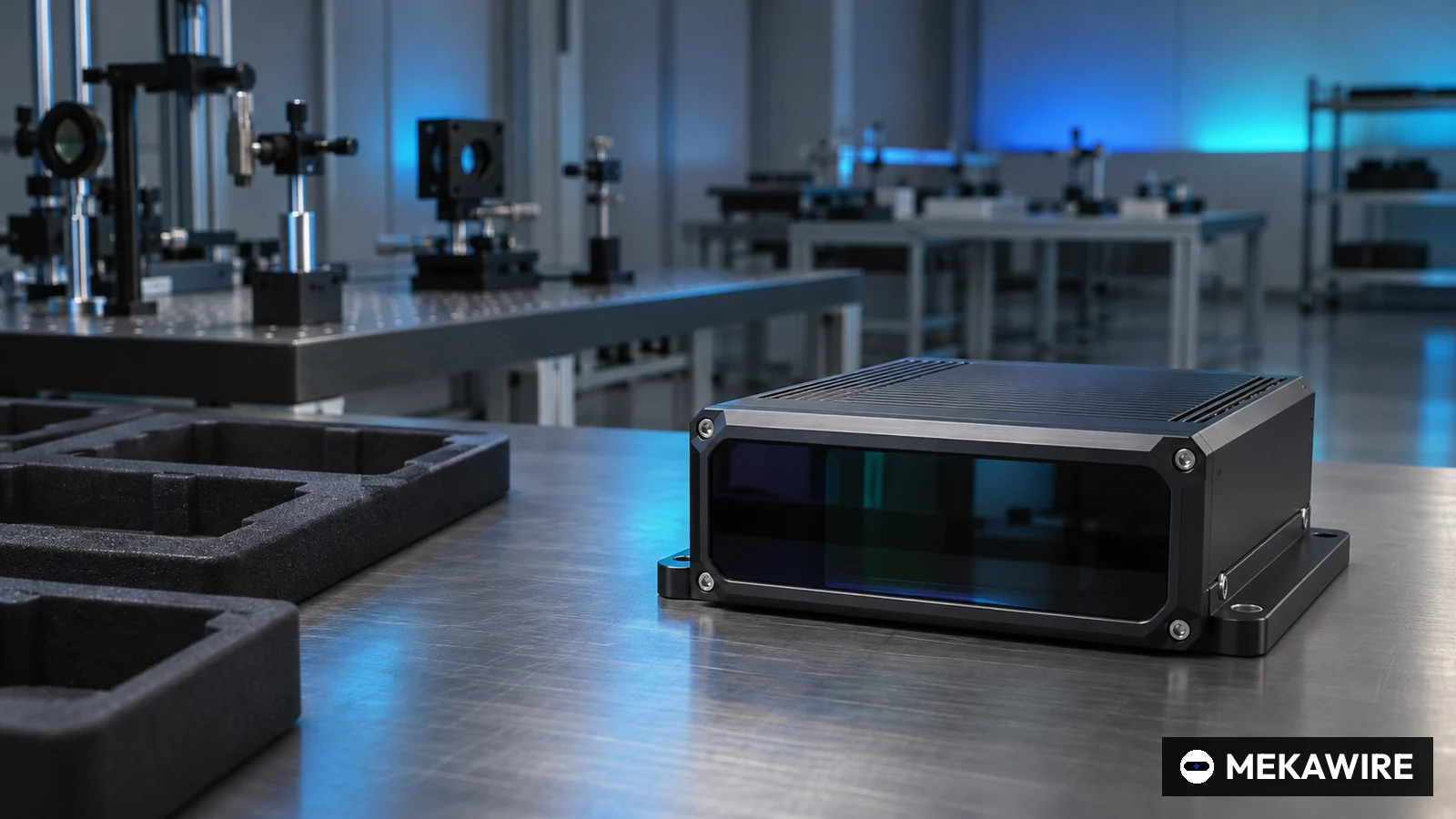
South Korean lidar maker SOS Lab reported third-quarter revenue of KRW 1.39bn, down 5.5% from a year earlier, and an operating loss of KRW 4.49bn in a quarterly report filed on DART on Nov 16. Nine-month revenue fell 32.0% to KRW 2.42bn while the operating loss grew 20.3% to KRW 15.17bn.
According to the balance sheet in the report, cash, financial instruments and current financial assets totalled KRW 38.05bn at Sept 30, against a KRW 43bn convertible bond whose holders may demand repayment from Aug 11, 2027.
SOS Lab, the Gwangju-based maker of lidar sensors for robots, cars and smart infrastructure, reported third-quarter revenue of KRW 1.39bn in a quarterly report filed on DART on Nov 16, down 5.5% from KRW 1.47bn a year earlier. The quarterly operating loss widened to KRW 4.49bn from KRW 3.99bn, more than three times the quarter's sales.
The nine-month picture is weaker. Revenue for January to September fell 32.0% to KRW 2.42bn from KRW 3.56bn, while selling, general and administrative expenses rose to KRW 15.80bn from KRW 13.75bn, according to the income statement. The operating loss for the period grew 20.3% to KRW 15.17bn and the net loss 41.2% to KRW 18.62bn, after KRW 4.57bn of finance costs against KRW 0.99bn a year earlier, the income statement in the report shows. The carrying amount of the company's convertible bond rose to KRW 37.95bn from KRW 34.04bn at the end of 2025, the balance sheet in the quarterly report shows.
Robots and cars now bring more than half of the sales
The product table in the filing shows how the mix has turned. Robotics customers, mainly buyers of its ML solid-state lidar and GL two-dimensional sensors, brought KRW 1.09bn, or 44.9% of nine-month revenue, against 14.2% for all of 2025. Automotive ML sales were KRW 0.28bn, or 11.5%, so the mobility group of robots and cars made up 56.4%. Industrial safety and security ML sales, KRW 1.08bn in 2025, fell to KRW 0.04bn. The largest open order in the filing is from an automotive customer for 340 ML units worth KRW 714m, with 280 units and KRW 588m still to be delivered by Nov 30.
- Robotics (ML, GL, data)
- 1,089
- 44.9%
- 863
- 14.2%
- Automotive (ML)
- 279
- 11.5%
- 646
- 10.6%
- Industrial safety and security (ML)
- 37
- 1.5%
- 1,078
- 17.7%
From the product sales table in SOS Lab's quarterly report filed on DART on Nov 16, 2026 (thousands of won rounded to millions). Other fields in the filing are not shown.
As of Nov 16, 2026
The cash covers the burn, not the bond
The cash flow statement in the report shows an operating cash outflow of KRW 13.94bn for the nine months, up from KRW 8.35bn, and KRW 2.51bn spent on property and equipment. Cash, short- and long-term financial instruments and current financial assets at fair value came to KRW 38.05bn at Sept 30 in the balance sheet, down from KRW 54.65bn at the end of 2025 (MEKAWIRE calculation from the balance sheet). At the nine-month pace of operating outflow plus capital spending, about KRW 1.83bn a month, that covers about 21 months (MEKAWIRE calc.).
The date that matters comes earlier. SOS Lab issued a KRW 43bn private convertible bond on Aug 11, 2025, at 0% interest and a conversion price of KRW 10,857, maturing in August 2030, the company said in its Aug 1, 2025 filing. Under the bond terms in that filing, the first date on which holders can be repaid the full face amount early is Aug 11, 2027, with further dates every three months, and requests for the first date must be lodged between June 12 and July 12, 2027. Bank borrowings add KRW 13.36bn. If the nine-month burn rate holds, liquid assets on Aug 11, 2027 would be about KRW 19bn, less than half of the bond (MEKAWIRE calc.: 38.05 minus 10.4 months at 1.83).
- Cash and cash equivalents
- 4.32
- 2.58
- Short-term financial instruments
- 13.02
- 17.00
- Current financial assets at fair value
- 20.69
- 22.02
- Long-term financial instruments
- 0.02
- 13.04
- Liquid assets, total (MEKAWIRE calc.)
- 38.05
- 54.65
- Bank borrowings
- 13.36
- 13.36
- Convertible bond, carrying amount
- 37.95
- 34.04
Balance sheet in the quarterly report filed Nov 16, 2026. Bond face value KRW 43bn, put from Aug 11, 2027 (bond terms in the same report and the Aug 1, 2025 filing).
As of Nov 16, 2026
MEKAWIRE analysis
SOS Lab's problem is not the next year of operating costs but the August 2027 put: unless the share price makes conversion attractive or sales grow fast, it will need new money before bondholders can ask for theirs.
The shift to robotics customers is real, but it is a shift within a small base: nine months of robot sales are KRW 1.09bn, while the company spends more than KRW 1.7bn a month on SG&A alone. The conversion price can be reset every seven months, down to 70% of the issue price, which lowers the bar for conversion but dilutes existing holders. The counter-argument is the order book and the automotive pipeline: the filing says car programmes start mass production three to five years after development begins, so revenue there arrives late but lasts.
Among the Korean robot makers whose Q3 reports MEKAWIRE has read, Rainbow Robotics grew sales and holds more cash, and Angel Robotics has a longer cash cover at its own burn rate. More on the company: SOS Lab profile.
What to watch: the full-year report in March 2027, any capital raising or bond buyback before Aug 11, 2027, and whether the robotics share of sales keeps rising as the security and smart-infrastructure lines shrink.
- DART quarterly report, Nov 16, 2026 (income statement, balance sheet, cash flow)
- KRW 1.39bn, down 5.5%
- KRW 43bn, first early-repayment date Aug 11, 2027
- KRW 4.49bn, from KRW 3.99bn
- KRW 2.42bn, down 32.0%
- KRW 38.05bn, from KRW 54.65bn (MEKAWIRE calc.)
- 44.9% of nine-month revenue (2025: 14.2%)
- KRW 15.17bn, up 20.3%