Unitree files for Shanghai STAR Market IPO seeking RMB4.2 billion as 2025 revenue jumps 335%
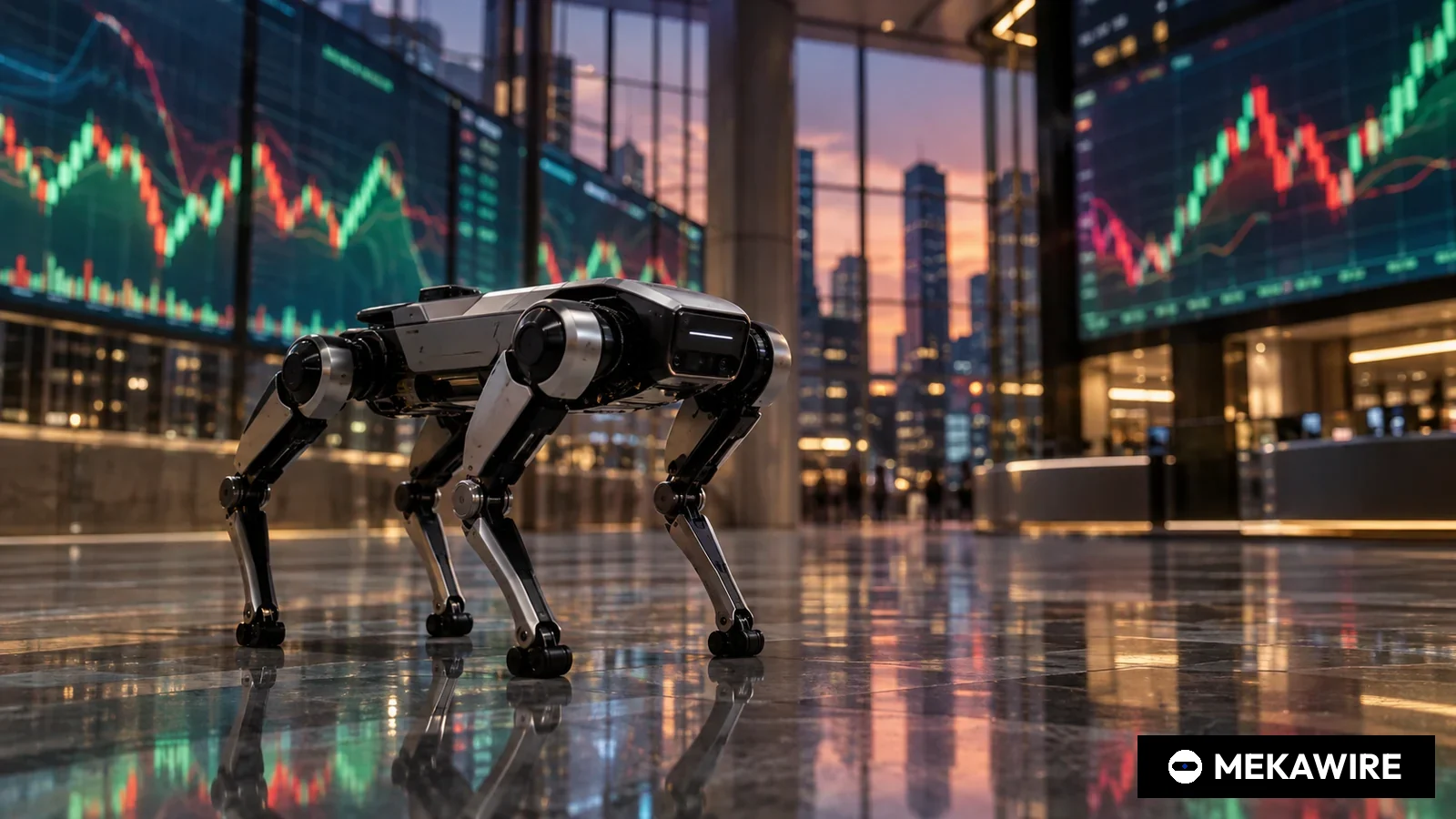
The Shanghai Stock Exchange accepted Unitree Robotics' application to list on the STAR Market on March 20, 2026, with the Hangzhou company seeking RMB4.202 billion. Its prospectus shows reviewed 2025 revenue of RMB1,708.21 million, up 335.36%, and more than 5,500 humanoids shipped in 2025, with humanoids overtaking quadrupeds as its largest product line.
Unitree Robotics, the Hangzhou company which says it shipped more legged humanoid robots in 2025 than any other company, has applied to list on the Shanghai Stock Exchange's STAR Market. The exchange accepted the application on March 20, 2026, and said Unitree plans to raise RMB4.202 billion. In its own summary of the filing, the SSE said Unitree would become the first humanoid robot stock on the A-share market if the listing goes through.
The prospectus gives outsiders their first detailed look at the company's accounts, and the growth is steep. Unitree reported reviewed 2025 revenue of RMB1,708.21 million, up 335.36% from 2024, and net profit attributable to shareholders excluding non-recurring items of RMB600.10 million, up 674.29%. The full-year 2025 figures were reviewed by the auditor rather than audited; the audited reporting period ends on September 30, 2025. In 2024 Unitree had revenue of RMB392.37 million and attributable net profit of RMB94.50 million, and in 2023 revenue of RMB159.13 million with an attributable net loss of RMB11.15 million.
- Revenue
- 159.13
- 392.37
- 1167.49
- 1708.21
- Net profit attributable to shareholders
- -11.15
- 94.5
- 105.33
- No data
- Net profit attributable, excl. non-recurring items
- No data
- 77.5
- 430.61
- 600.1
- Main-business gross margin (%)
- 44.22
- 56.41
- 59.45
- No data
- Humanoid robot revenue
- No data
- 106.9
- 595.19
- No data
- Quadruped robot revenue
- No data
- 230.54
- 487.99
- No data
Prospectus and sponsor letter filed 2026-03-20; source units of RMB10,000 divided by 100. FY2025 figures are reviewed, not audited. Growth rates 335.36% (revenue) and 674.29% (profit excl. non-recurring) as stated by the company.
As of Oct 1, 2026
The audited nine months to September 2025 show both the strength and the noise in the numbers. Revenue reached RMB1,167.49 million, but attributable net profit was RMB105.33 million against RMB430.61 million once non-recurring items are stripped out, a gap of more than RMB320 million booked as non-recurring in that period, according to the sponsor's letter filed with the exchange. Main-business gross margin rose to 59.45%, from 56.41% in 2024 and 44.22% in 2023. Research and development spending fell to 7.73% of revenue in the nine months, as sales grew far faster than the engineering budget.
The more telling change is in the product mix. Humanoid robots produced RMB595.19 million, or 51.53% of main-business revenue, in the first nine months of 2025, overtaking quadrupeds at RMB487.99 million (42.25%), with components and other products at RMB71.78 million (6.22%). A year earlier the order was reversed: quadrupeds brought in RMB230.54 million, or 59.53%, and humanoids RMB106.90 million, or 27.60%. Unitree says it shipped more than 5,500 humanoid robots in 2025, counting only legged humanoids and excluding wheeled dual-arm machines, and describes that volume as the largest in the world. Cumulative quadruped sales have passed 30,000 units.
The offering itself will be at least 40,446,434 new shares, at least 10% of a post-issue share count of at least 404,464,340, before any over-allotment. CITIC Securities is sponsor and lead underwriter. Unitree chose the STAR Market listing standard that requires an expected market value of at least RMB10 billion, and pointed to its June 2025 Series C round, priced at RMB12.0 billion before and RMB12.7 billion after the money. The proceeds are earmarked for four projects: intelligent robot model development, robot body development, new robot products, and a manufacturing base.
Founder Wang Xingxing keeps firm control. He controls 34.7630% of the shares and, through a special voting rights structure, 68.7816% of the votes; after the offering his voting share will fall to no more than 65.3090%, according to the filing. The company was set up on August 26, 2016, and converted into a joint-stock company on May 28, 2025.
The geography of sales is shifting at home. Overseas customers accounted for 55.70% of revenue in 2024 but 39.20% in the first nine months of 2025, the sponsor's letter shows, which means the domestic market supplied most of last year's surge. The company lists trade friction, export controls and exchange-rate swings among its risk factors.
Unitree's numbers set it apart from both Chinese and American rivals. UBTech Robotics has been listed in Hong Kong since December 2023 and has funded itself through repeated share placings. LimX Dynamics closed a US$200 million Series B on February 2, 2026. In the United States, capital has been far larger relative to sales: Figure AI raised US$1 billion at a US$39 billion post-money valuation in September 2025, Skild AI raised US$1.4 billion at US$14 billion in January 2026, and Apptronik added US$520 million to its Series A in February 2026. Unitree, by contrast, is profitable on a recurring basis and was last valued privately at RMB12.7 billion.
- Unitree Robotics
- CN
- 2016
- Series C
- 2025-06
- No data
- No data
- 12,700,000,000
- Figure AI
- US
- No data
- Series C
- 2025-09-16
- 1,000,000,000
- 39,000,000,000
- No data
- Skild AI
- US
- 2023
- Series C
- 2026-01-14
- 1,400,000,000
- 14,000,000,000
- No data
- Apptronik
- US
- 2016
- Series A extension
- 2026-02-11
- 520,000,000
- No data
- No data
- LimX Dynamics
- CN
- No data
- Series B
- 2026-02-02
- 200,000,000
- No data
- No data
Figures as disclosed by each company or in Unitree's STAR Market prospectus (Unitree Series C pre-money RMB12.0bn, post-money RMB12.7bn); no currency conversion applied; — = not disclosed.
As of Oct 1, 2026
The technology behind the margins is mostly in-house hardware. The prospectus lists twelve core technology areas, among them integrated joint assemblies (the motor-driven modules that move each limb), a self-developed lidar, compact body integration, fall protection and thermal management, along with embodied large models for humanoids. Making its own joints and sensors means more of the value of each robot stays inside the company, which is consistent with a main-business gross margin that rose from 44.22% in 2023 to 59.45% in the first nine months of 2025.
The filing is candid about risk. Unitree warns that breakthroughs in embodied AI models are uncertain, that growth and margins may not hold, that inventory and receivables are rising, that commercial uses may take longer to scale, and that competition and market sentiment could turn. Investors should also note that the full-year 2025 profit figures are reviewed rather than audited.
MEKAWIRE analysis
Unitree's filing shows a humanoid business that already earns recurring profit at volume, so the A-share market will be asked to price it as a hardware franchise rather than a bet on future AI.
The evidence is in the mix and the margin. Humanoids went from 27.60% to 51.53% of revenue inside a year while gross margin climbed to 59.45%, so the new product line is not being sold at a loss to buy share. Recurring profit of RMB600.10 million on RMB1,708.21 million of revenue in 2025 works out to a 35.1% margin, up from 19.8% in 2024 (RMB77.50 million on RMB392.37 million).
The strongest counter-argument is that much of this demand is early and domestic. Overseas share fell to 39.20%, R&D intensity fell to 7.73%, and the filing summary does not show how many of the 5,500 humanoids went to buyers that will reorder for production work. A hardware maker with falling R&D intensity is exposed if software, not bodies, ends up capturing the value.
Bull case: Unitree uses RMB4.202 billion to add a manufacturing base and its own models, keeps unit costs falling, and becomes the default body that China's AI developers build on, extending the installed base it built with more than 30,000 quadrupeds. Volume then compounds into both margin and data.
Bear case: subsidised domestic rivals cut prices, export controls narrow overseas sales, and demand from showcase buyers fades. Margins fall back toward 2023 levels and the market treats Unitree as a cyclical gadget maker.
Signals to watch:
- The SSE's inquiry letters and Unitree's replies through the second quarter of 2026, especially questions on customer concentration and the nine-month non-recurring charge.
- An updated prospectus with audited full-year 2025 accounts, expected before the listing committee hearing.
- Humanoid revenue share and gross margin in the next reported period, the test of whether the 2025 mix shift holds.
- CITIC Securities
- 40,446,434
- RMB4.202 billion
- 68.7816% before, up to 65.3090% after
- RMB1,708.21 million, +335.36%
- More than 5,500 units (legged only)
- 2026-03-20 (SSE STAR Market)
- 51.53% (Jan-Sep 2025) vs 27.60% (2024)
- 59.45% (Jan-Sep 2025)
- RMB600.10 million, +674.29%
Why it matters
Unitree's prospectus is the first full set of exchange-reviewed accounts from a company whose main product line is now humanoid robots. Until this filing, the industry's commercial claims rested on shipment counts and private valuations. The filing replaces those with revenue by product, gross margin by year and recurring profit, all signed off by a sponsor and filed with a regulator.
The numbers matter beyond Unitree because they set a reference point for every humanoid maker preparing to list in Shanghai, Shenzhen or Hong Kong. A RMB1.71 billion revenue base, a 59.45% main-business gross margin and more than 5,500 humanoid shipments in a year give investors a benchmark to test rival claims against.
Rival analysis
The comparison that matters inside China is with UBTech Robotics, the Hong Kong-listed group that has raised money through repeated H-share placings since its December 2023 listing, and with venture-backed makers such as AgiBot and LimX Dynamics, which closed a US$200 million Series B on February 2, 2026. Unitree reaches the public market with recurring profit rather than a funding need, which strengthens its hand on pricing and on terms with component suppliers.
Against US rivals the contrast is in capital intensity. Figure AI (US$39 billion post-money after a US$1 billion Series C) and Skild AI (US$14 billion after US$1.4 billion) are valued on models and future deployments. Unitree was valued at RMB12.7 billion after its June 2025 round while already earning RMB600.10 million of recurring profit in 2025, a gap that the listing will put a public price on.
Valuation context
The listing standard Unitree chose requires an expected market value of at least RMB10 billion, and the company cites its Series C post-money value of RMB12.7 billion. On reviewed 2025 profit excluding non-recurring items of RMB600.10 million, that private value equals about 21 times earnings (12,700 / 600.10), a multiple that STAR Market investors are likely to view as conservative for a company growing revenue by 335.36%.
The RMB4.202 billion fundraising target is about a third of the Series C post-money value (4,202 / 12,700 = 33.1%). If the minimum issue of 40,446,434 shares were sold at a price implying RMB4.202 billion, each share would be priced near RMB104, but the final price will be set by bookbuilding and is not in the filing.
Supply-chain implications
Unitree builds its own joint assemblies and lidar, according to the list of twelve core technologies in the prospectus. That limits its dependence on outside suppliers of integrated actuators and depth sensors, two of the costliest parts of a legged robot, and explains part of the margin gain from 44.22% in 2023 to 59.45% in the first nine months of 2025.
The fundraising includes a manufacturing base project, which signals that Unitree expects volume to keep rising and wants more of final assembly under its own roof. Component and materials suppliers in the Hangzhou and Yangtze River Delta cluster stand to gain if that capacity is built, while Unitree's own components line (RMB71.78 million in the nine months) gives it a small but growing role as a supplier to other robot makers.
Signals to watch
The first is the SSE inquiry process. The questions the exchange asks, and Unitree's answers, will show how regulators view customer concentration, the size of the nine-month non-recurring charge (RMB325.28 million between reported and recurring profit) and the use of reviewed rather than audited full-year numbers.
The second is the audited 2025 accounts in an updated prospectus, which should confirm or revise the reviewed RMB1,708.21 million revenue and RMB600.10 million recurring profit. The third is whether humanoid revenue keeps its majority of sales and whether overseas share stabilises after falling from 55.70% to 39.20%.
Analyst view
Thesis: Unitree is the clearest proof yet that a humanoid hardware business can be profitable at scale, and its STAR listing will reprice Chinese humanoid makers on earnings rather than on promises. Confidence: medium.
Reasons for medium rather than high confidence: the full-year profit is reviewed, not audited; the nine-month gap between reported and recurring profit is large; the domestic share of demand jumped quickly; and the filing summaries we verified do not break down customers by type. Reasons it is not low: revenue mix, margin and shipment figures are disclosed in a regulated filing and are internally consistent across the prospectus and the sponsor's letter.
Questions you should be asking
How much of the 5,500 humanoids shipped in 2025 went to research, education and exhibition buyers, and how much to industrial or commercial users who will reorder?
What explains the more than RMB320 million difference between reported and recurring profit in the first nine months of 2025, and will similar charges recur after listing? How will the RMB4.202 billion be split among the model, body, new product and manufacturing projects once amounts are disclosed?