What is Rainbow Robotics? Samsung's 35% robot maker now earns 40% of its sales from mobile humanoids
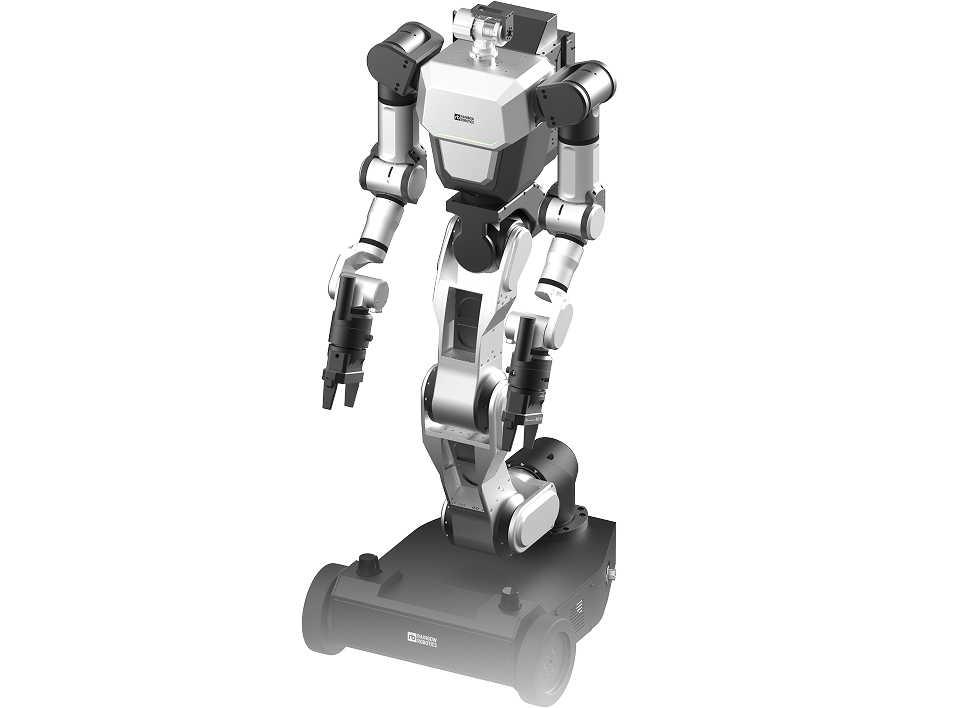
Rainbow Robotics is the KAIST spin-off behind the HUBO humanoid, 35% owned by Samsung Electronics since December 2024. Its half-year report shows mobile humanoids such as the RB-Y1 became its largest revenue line in the first half of 2026, at KRW 8.65bn or 40.5% of KRW 21.38bn in sales, while operating losses widened and the share price implied far more than Samsung paid.
Rainbow Robotics is a Korean robot maker founded in 2011 by researchers from KAIST's humanoid lab, and since December 31, 2024 its largest shareholder has been Samsung Electronics with 35.00%. The short answer to what it has become is in its half-year report filed with DART on August 14: in the first six months of 2026, mobile humanoids such as the wheeled, two-armed RB-Y1 brought in KRW 8.65 billion, 40.5% of KRW 21.38 billion in consolidated sales, more than its collaborative robots at KRW 4.50 billion.
That is the first time the company has broken out humanoid revenue, and it changes how the business should be read. Rainbow is still described in most coverage as a cobot company with a famous humanoid past. The filing shows a research-platform vendor whose biggest product line sells mainly to universities, government institutes and public bodies, and whose share price prices something larger than either. This piece sets out the numbers, compares them with rivals in MEKAWIRE's database, and states what would change our view.
Revenue grew faster than Korea's cobot leader, and the mix shifted
Rainbow's consolidated revenue rose from KRW 19.35 billion in 2024 to KRW 34.12 billion in 2025, a 76.4% increase, and the first half of 2026 alone reached 62.6% of the 2025 total, according to the filing. Doosan Robotics, the best-known Korean cobot maker, reported KRW 32.98 billion for 2025 in its own DART filing, down 29.6%. On disclosed figures Rainbow's 2025 revenue was 3.5% larger than Doosan's.
- Revenue
- 19.35
- 34.12
- 21.38
- Operating profit
- -2.98
- -2.48
- -3.59
- Net profit
- 2.14
- 1.42
- -0.97
- Exports
- 3.01
- 6.24
- 6.46
- R&D spending
- 5.51
- 8.47
- 6.37
- Inventory (period end)
- 7.16
- 15.52
- 23.18
Consolidated figures from Rainbow Robotics' DART half-year report filed Aug 14, 2026 (rcpNo 20260814002901). Growth 2025 = 34.12 / 19.35 - 1 = 76.4%. Operating margin H1 = -3.59 / 21.38 = -16.8%.
As of Oct 17, 2026
Exports carried much of the change. Overseas sales in the first half were KRW 6.46 billion, already 103% of the full 2025 export figure of KRW 6.24 billion, lifting the export share from 18.3% to 30.2%. Service revenue, which the filing books separately from products, was KRW 7.24 billion in the half after KRW 9.09 billion in 2025 and KRW 0.81 billion in 2024. The company lists 38 system-integration partners for cobots and 40 dealers in 16 countries for its telescope mounts, a niche business built on the same harmonic-drive reducers its robot joints use.
Growth came with heavier costs, which is where the story turns.
The humanoid line sells to labs, and losses widened
The filing describes the mobile humanoid as a research and demonstration platform with 7-degree-of-freedom arms on a wheeled base, sold directly to universities, state research institutes and public agencies, often for national R&D projects. Rainbow's own product page lists the RB-Y1 with 20 degrees of freedom and a 3 kg arm payload, and its 2024 pre-order release priced it at USD 80,000. Daedong, the farm-machinery maker, said on August 13 that it will co-develop the AGROID greenhouse robot by putting Rainbow's two-armed upper body on its own autonomous base.
- Mobile humanoid (RB-Y1 series)
- 8.65
- 40.5%
- Other robots (quadrupeds, AMRs and others)
- 6.62
- 31.0%
- Collaborative robots
- 4.50
- 21.1%
- Other (including precision mounts)
- 1.60
- 7.5%
- Total
- 21.38
- 100%
From the main-revenue table in the DART half-year report; the company did not break out these lines for 2025.
As of Oct 17, 2026
Operating loss widened to KRW 3.59 billion in the half, a margin of minus 16.8%, from minus 7.3% for 2025. Research spending was KRW 6.37 billion, 30% of revenue, of which government grants covered KRW 2.54 billion or 39.8%. The filing lists ten government projects, including trade-ministry humanoid programmes for dexterous industrial humanoids (to December 2027) and display-process humanoids built on AI foundation models (to December 2028), and a health-ministry project for a humanoid surgical assistant using vision-language-action models (to 2029). Inventory rose to KRW 23.18 billion at June 30 from KRW 15.52 billion at the end of 2025 and KRW 7.16 billion a year earlier, and quick assets fell from KRW 84.76 billion to KRW 72.00 billion. The new headquarters and factory, a KRW 29.47 billion investment, was completed on March 27, 2026 according to a corrected DART disclosure.
The operating picture is a small, growing, loss-making hardware maker. The market picture is different.
MEKAWIRE analysis: the stock prices Samsung's robot plan, not Rainbow's sales
Rainbow Robotics is the only listed Korean company in our data that discloses humanoid-type robot sales at this scale, but its valuation rests on being Samsung's robot platform rather than on the research-lab revenue that now leads its sales.
Samsung paid KRW 267.46 billion for 3,935,814 shares when it exercised its call option, about KRW 67,956 a share. The half-year report shows the stock traded between KRW 444,000 and KRW 880,000 from January to June 2026, 6.5 to 12.9 times Samsung's price. With 19,399,858 shares outstanding, that range implies a market value of roughly KRW 8.6 trillion to KRW 17.1 trillion, or about 200 to 400 times the first-half revenue run rate of KRW 42.75 billion (method: shares outstanding times the lowest and highest monthly prices in the filing; run rate equals first-half revenue times two, not a forecast).
- Rainbow Robotics (KR)
- KRW 34.12bn (FY2025); KRW 21.38bn (H1 2026)
- +76.4%
- Loss KRW 2.48bn (FY2025)
- DART
- Doosan Robotics (KR)
- KRW 32.98bn (FY2025)
- -29.6%
- Loss KRW 59.47bn (FY2025)
- DART
- Dobot (CN)
- RMB 492.2m (FY2025)
- +31.7%
- n/a here
- HKEX results
- Teradyne Robotics (US/DK)
- USD 100m (Q2 2026)
- +33%
- n/a here
- Company results
Disclosed figures from filings stored in MEKAWIRE; currencies not converted. Rainbow's implied market value of KRW 8.6tn to 17.1tn = 19,399,858 shares x H1 2026 monthly price low/high (KRW 444,000 / 880,000).
As of Oct 17, 2026
The comparison with peers shows why. Doosan Robotics reported a 2025 operating loss of KRW 59.47 billion on similar revenue, so Rainbow runs far leaner. Dobot grew 31.7% in 2025 and Teradyne's robotics unit, which owns Universal Robots, reported USD 100 million in second-quarter 2026 revenue. None of these numbers explains a value of 200 to 400 times Rainbow's sales; Samsung's ownership, its Future Robotics Office led by Rainbow co-founder Oh Jun-ho, and the option value of Samsung's own humanoid ambitions do.
The bull case is that research platforms are how the market for general-purpose robots starts, as Unitree's G1 suggests, and that Rainbow's in-house reducers, actuators and controllers let Samsung scale a product quickly once a foundation model is good enough. The bear case is that lab demand is lumpy and grant-dependent, that 40% of revenue from one platform sold to institutions is a concentration risk, and that Samsung could build its flagship humanoid in its own divisions, leaving Rainbow as a parts and research supplier. The strongest counter-argument to our thesis is that Rainbow's export jump and service revenue show real commercial pull beyond Samsung; if exports keep rising at the first-half pace, the valuation becomes less dependent on its parent.
What would change our view: a Samsung-branded humanoid with Rainbow named as maker, a mobile-humanoid order from a factory or logistics customer rather than a lab, or a third straight half of widening operating losses. Signals to watch are the third-quarter report due by mid-November 2026, the next update to the trade-ministry humanoid programmes due to finish in December 2027, and any related-party transactions with Samsung in Rainbow's filings.
- KRW 6.37bn, 30% of revenue; 39.8% covered by government grants
- 20 DoF, 3 kg arm payload, USD 80,000 pre-order price
- KAIST humanoid spin-off, 35% owned by Samsung Electronics; mobile humanoids are now its largest revenue line
- KRW 6.46bn in H1, already 103% of FY2025 exports
- 6,789,950 shares, 35.00%; option price about KRW 67,956 a share
- KRW 3.59bn in H1 2026 (margin -16.8%) vs KRW 2.48bn in FY2025
- KRW 21.38bn, 62.6% of FY2025 (KRW 34.12bn, +76.4%)
- KRW 444,000 to 880,000 (6.5x to 12.9x Samsung's price)
- KRW 8.65bn, 40.5% of H1 2026 revenue; cobots KRW 4.50bn (21.1%)