国内初の臨床遠隔ロボット手術、弘前大がhinotoriで5例実施
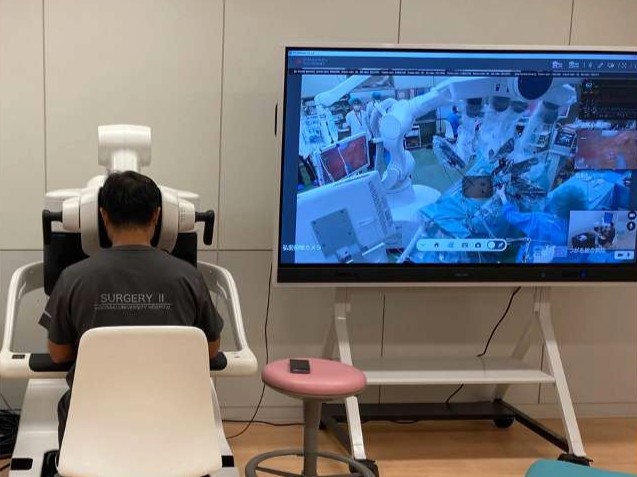
弘前大学は15日、国内初となる手術支援ロボットによる遠隔手術の臨床応用を開始したと発表した。8月からメディカロイドのhinotoriとNTT東日本の商用回線を使い、別病院の熟練医の支援で消化器がん手術5例を安全に実施した。研究はjRCTs022240038として登録されている。
弘前大学は2026年10月14日に記者会見を開き、15日の発表で、手術支援ロボットを使い離れた場所の医師が通信回線を介して手術を支援する「遠隔手術」の臨床応用を国内で初めて開始したと明らかにした。8月に第1例を実施し、これまでに5例を安全に終えたという。
発表から6日たつが、意味は小さくない。日本外科学会の遠隔手術はこれまで実証研究の段階にあり、患者への適用は国内初だと大学は説明する。何が認められたのか、なぜ通信技術よりも国産手術ロボットにとって重要なのかを整理する。
研究網ではなく商用光回線
研究は弘前大学医学部附属病院と、つがる西北五広域連合つがる総合病院(青森県五所川原市)を、NTT東日本の企業向けWANサービス「Interconnected WAN」で結ぶ。対象はhinotoriサージカルロボットシステムによる手術の適応となる消化器がん患者で、離れた場所の医師が回線を通じて手術を支援し、患者側には現地術者がいる。大学が公開した写真には、遠隔施設のコンソールと手術室映像、心電図のモニター、患者側施設の手術助手と現地術者が写っている。
研究は弘前大学総合臨床研究審査委員会の承認を受け、jRCTにjRCTs022240038として登録された。日本外科学会の「遠隔手術ガイドライン第2版」に沿う特定臨床研究で、安全性を最優先にしている。会見には福田学長、袴田健一特任教授、武冨紹信日本外科学会理事長、森正樹遠隔手術実施推進委員会委員長が出席した。施設間の距離、通信遅延、手術時間は公表していない。
AMEDが支えた5年度の実証
今回の臨床研究は、日本外科学会が2020〜2024年度(令和2〜6年度)にAMEDの事業として進めた実証研究を土台とする。通信の遅延と安定性、安全なロボット操作、緊急時対応を検証し、その成果が第2版ガイドラインに反映された。
大学は狙いを医療アクセスと位置づける。外科医不足と専門医の都市偏在を背景に、熟練医が地域の外科医を遠隔で支援し、患者が住み慣れた地域で高度な手術を受けられるようにする。教育への活用や、将来の海外への医療貢献も掲げた。ここで注目すべきは写真に写るロボットだ。
国産ロボットが最初の臨床記録を得た
hinotoriを手がけるメディカロイドは、同社の沿革によれば川崎重工業とシスメックスの共同出資で2013年に設立された神戸の企業だ。2020年に国内の製造販売承認を取得し、2022年に消化器外科と婦人科、2024年に呼吸器外科へ適応を広げた。シンガポール(2023年)、マレーシア(2024年)、ベトナム(2026年)で販売承認を得て、2026年には欧州医療機器規則に基づくCEマークも取得した。川崎重工は9月、ローマのジェメッリ病院と医療ロボットの覚書を結んだ([MEKAWIRE報道](/news/kawasaki-gemelli-university-hospital-mou-kic-eu-strasbourg-hinotori-nyokkey-forro-rome-20260914))。
MEKAWIREの計算では、国内承認(2020年)から初の臨床遠隔手術(2026年8月)まで約6年を要した。10月にMEKAWIREのデータベースに入った遠隔手術の事例は3件あり、それぞれ示すものが異なる。
- 弘前大学医学部附属病院とつがる総合病院(日本)
- 2026年8月に第1例、10月14〜15日に公表
- hinotori(メディカロイド)
- 患者5例、消化器がん
- 非公表
- 大学発表
- 高麗大学安岩病院、ソウルから上海
- 2026年10月16日
- Toumai(MicroPort MedBot)
- 動物モデル
- 約870km
- 病院発表
- 九州大学、福岡から別府(日本)
- 10月13日報道、2027年まで実証
- マイクロサージャリーロボット
- 実証中、症例報告なし
- 約110km
- 報道ベース、未確認
MEKAWIRE記事とその一次情報に基づく。距離は出典の記載による。
2026年10月20日時点
韓国の高麗大学安岩病院は[ソウルから約870km離れた上海のロボットを遠隔操作](/news/korea-university-anam-hospital-cross-border-telesurgery-seoul-shanghai-870km-microport-toumai-20261019)したが、対象は動物モデルだった。[九州大学の約110kmの実証](/news/kyushu-university-iown-apn-remote-microsurgery-robot-beppu-110km-20261013)は報道ベースで、MEKAWIREは大学発表を確認できていない。弘前は距離で最も控えめだが、患者を対象とした唯一の事例だ。
MEKAWIRE分析
国内初の臨床遠隔手術は、技術よりも制度の節目である。ガイドライン、倫理審査、登録臨床研究という道筋を一般の商用回線上で初めて通し、その最初の臨床記録を国産ロボットが得た。
回線は標準的な企業向けサービスで、2病院は同じ県内にあり、患者側に術者がいる。技術の限界に挑む実験ではない。新しいのは、学会と審査委員会、公開登録制度が患者へのロボット遠隔操作を認めた点で、この枠組みは新たな回線網を敷くより速く他の病院の組み合わせに広げられる。
国内メーカーと部品各社にとっての意味は大きい。インテュイティブは2026年6月末時点で世界に1万1710台のダビンチを設置していると決算発表で示した([MEKAWIRE手術ロボット解説](/news/surgical-robots-market-2026-explained-11710-da-vinci-systems-8400-surgical-robots-sold-challengers-backed-by-medtech-giants-20261017))。メディカロイドは設置台数を公表していない。後発は台数では勝てないが、国内ガイドラインと最初の臨床データが結びついた用途は押さえられる。
最も強い反論は、現地術者がいる5例では術中の回線断の際の安全性を語れないという点だ。発表には遅延、遠隔医の介入頻度、合併症のデータがない。遠隔医の出番がほとんどなければ、この方式は治療より教育に向くかもしれない。注目点は、jRCTs022240038の結果公表、2027年まで続く九州大学の実証での患者症例、CEマークを得たhinotoriの国外での初の遠隔利用だ。日本のロボット産業全体は[MEKAWIRE日本市場解説](/news/japan-robotics-market-2026-explained-36219-robot-installations-decade-low-exports-82-percent-of-shipments-20261017)にまとめている。
- 2026年10月14日会見、15日大学発表
- 2026年8月の第1例以降5例を安全に実施
- hinotoriサージカルロボットシステム(メディカロイド)
- NTT東日本の企業向けWAN「Interconnected WAN」
- 弘前大学医学部附属病院とつがる総合病院
- 遠隔手術ガイドライン第2版、jRCTs022240038
- 距離、遅延、手術時間、合併症
なぜ重要か
The first clinical telesurgery cases in Japan turn a decade of guideline work into a registered, reviewable study on patients. The precedent is procedural: any hospital pair that can meet the Japan Surgical Society's second-edition guideline, obtain certified review-board approval and register in jRCT now has a template. That lowers the barrier for regional hospitals far more than any network upgrade would.
It also ties the first patient data to a domestic platform. In a market where Intuitive's installed base sets the scale, being the robot named in the country's first clinical telesurgery is a differentiator Medicaroid can use with Japanese hospitals and in the four markets where hinotori is approved.
競合分析
Intuitive (11,710 da Vinci systems installed on June 30, 2026, per its Q2 release) dominates installed base; MEKAWIRE has no verified record of a clinical da Vinci telesurgery in Japan, so the comparison is about firsts, not capability. MicroPort MedBot's Toumai has been used for long-distance and cross-border demonstrations, including Korea University Anam Hospital's Seoul to Shanghai animal-model case on Oct 16. Kyushu University's IOWN trial points to a parallel Japanese track focused on microsurgery and photonic networks.
The Hirosaki model is the most conservative of the three: regional distance, commercial line, local surgeon present. Its advantage is regulatory standing, not reach.
企業価値の背景
Medicaroid is a private joint venture of Kawasaki Heavy Industries and Sysmex and discloses neither revenue nor installed base, so no valuation comparison is possible. Its value to the parents shows up in approvals (Japan 2020, Singapore 2023, Malaysia 2024, Vietnam 2026, CE mark 2026) and in clinical firsts such as this one. Investors in Kawasaki and Sysmex should treat the news as a qualitative milestone without a disclosed financial effect.
サプライチェーンへの影響
The study uses a Japanese robot and a Japanese carrier's commercial WAN service. The network layer is an ordinary enterprise product, which means the binding constraints are clinical governance and staffing, not components. For component suppliers to surgical robots, a growing telesurgery use case raises the value of low-latency video, haptic and control electronics, but the release gives no technical data that would size that demand.
今後の注目点
Results or updates filed under jRCTs022240038. Whether the Kyushu University IOWN trial, which runs through 2027, produces a university release with patient cases. Medicaroid's first remote use of hinotori outside Japan, now that it holds a CE mark. A decision by Japanese payers on recognising remote support during robotic surgery.
アナリストの見方
Thesis: the milestone is governance, not engineering, and it strengthens a domestic platform at home. Confidence: medium. The facts are primary and clear, but five cases and no published latency or intervention data leave the clinical value open. A data release showing frequent, meaningful remote interventions would raise confidence; a study that stalls at a handful of cases would lower it.
問うべき論点
How often did the remote surgeon actually intervene in the five cases, and what latency did the link show? What is the fallback procedure if the link drops mid-operation? Will Medicaroid offer telesurgery support as a service with hinotori sales abroad? How many more hospital pairs are preparing under the same guideline?