Korea forms K-Humanoid Alliance of about 40 groups, targeting a shared robot brain and sub-60kg, 50-joint humanoids by 2028
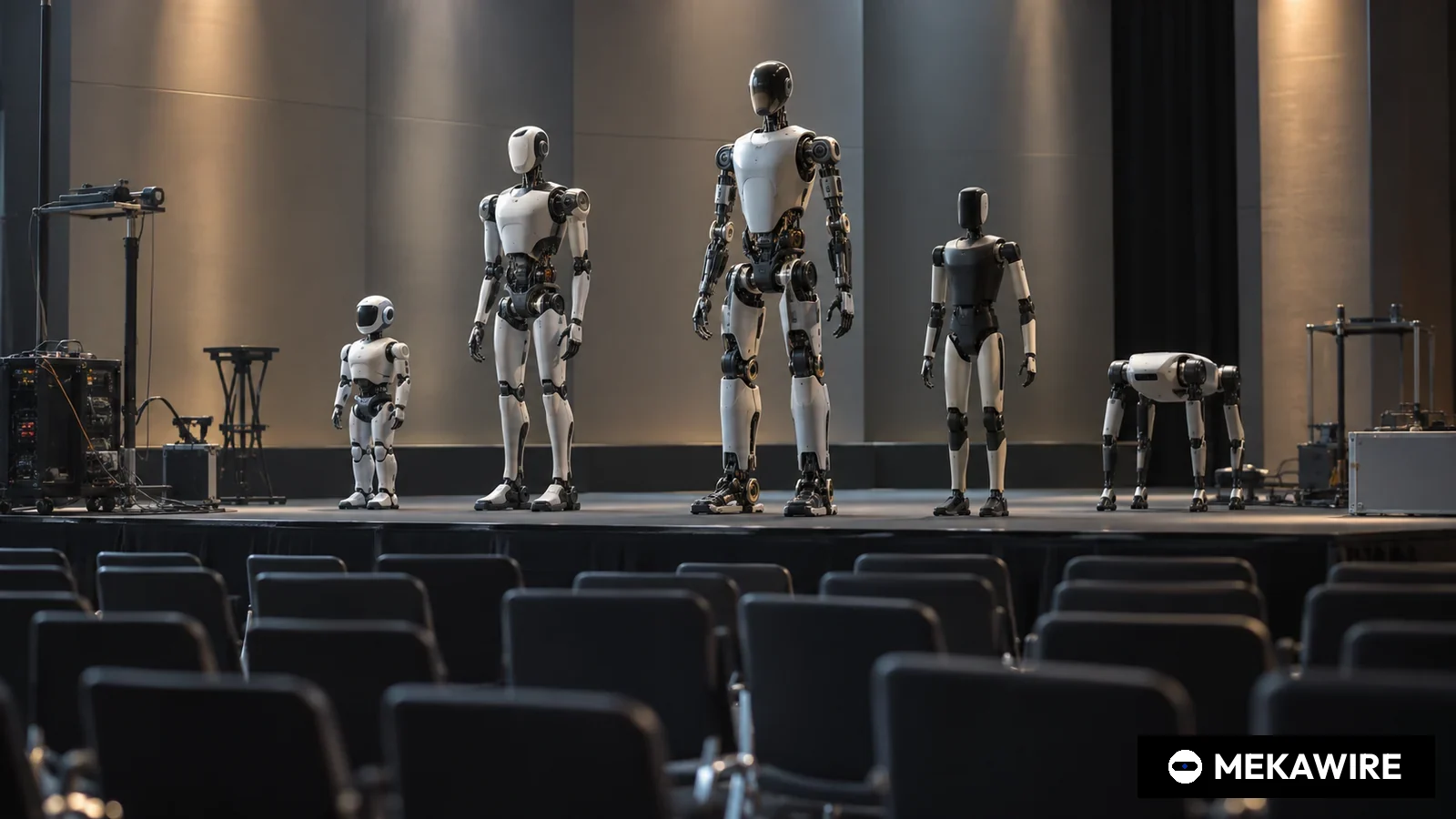
South Korea's Ministry of Trade, Industry and Energy launched the K-Humanoid Alliance in Seoul on 10 April 2025, with about 40 companies, universities and other organisations signing a cooperation agreement aimed at making Korea the world's leading humanoid nation by 2030.
The ministry expects more than 1 trillion won of public and private investment by 2030 and set 2028 targets for a shared robot AI foundation model and for humanoids under 60kg with more than 50 degrees of freedom.
South Korea's Ministry of Trade, Industry and Energy (MOTIE) launched the K-Humanoid Alliance on 10 April 2025, bringing the country's robot makers, AI researchers, chip and battery suppliers and factory owners into one programme with a stated aim of making Korea the world's strongest humanoid nation by 2030. About 40 companies, universities and other organisations signed a cooperation agreement at a ceremony at The Plaza hotel in Seoul attended by about 350 people, including Minister Ahn Duk-geun and Seoul National University President Yoo Hong-rim, according to the ministry's release. MOTIE said it expects more than 1 trillion won of public and private investment in R&D, funds and M&A by 2030.
The ministry set five tasks: a shared robot AI model, core humanoid hardware, AI semiconductors and mobility batteries, start-ups and talent, and closer ties between robot suppliers and the companies that would use them. Members sit in six expert groups covering AI development, robot manufacturing, components, demand companies, universities and research institutes, and investment and finance, with a steering committee of group representatives handling coordination. The release's reference list names 15 AI and robotics experts, 12 robot makers, 11 component companies and seven demand companies. The Korea Evaluation Institute of Industrial Technology (KEIT) is listed as the supporting agency.
The alliance's first and, in the ministry's words, most important mission is the robot brain. An AI group built around the Seoul National University AI Institute, led by Professor Zhang Byoung-Tak, with researchers from KAIST, Korea University, Yonsei University, POSTECH, Pusan National University, GIST and Sogang University, plans to develop a robot AI foundation model by 2028 that all member robot makers can use. In return the robot and parts companies are to feed the researchers their robots, motion data and feedback from running the AI on real machines. MOTIE pointed to the queue of robot companies around NVIDIA's Cosmos platform at CES 2025 and to tie-ups such as Apptronik with Google and UBTech with Baidu as evidence that hardware makers increasingly pair with AI developers.
The hardware targets are equally specific. By 2028 the robot makers plan to produce, alone or jointly, humanoids weighing 60kg or less with at least 50 degrees of freedom, a payload of at least 20kg and a travel speed of at least 2.5 metres a second. Makers and parts suppliers are also to co-develop force and torque sensors for precise handling, tactile sensors that give a hand a sense of touch, and light, flexible actuators combining motor, controller and reducer. MOTIE said it would give priority to joint projects between two or more member companies, that its 2025 robot budget is about 200 billion won, and that it would keep negotiating with other ministries and the National Assembly for more. It also plans shared infrastructure, including test sites that resemble real workplaces and a virtual simulator built on video and tactile data, described as a Korean version of NVIDIA's Cosmos, with the project due to start in the first half of 2025.
On chips and batteries, the AI chip designers Rebellions and DEEPX and the three battery makers SK On, LG Energy Solution and Samsung SDI joined to explore joint development with the robot companies, and the ministry said it would run a large R&D programme for on-device AI chips. For start-ups and talent, MOTIE said it would launch a humanoid fund within 2025 and bring about 20 major universities, including SNU and KAIST, into the alliance so undergraduates can take part in its projects. To link suppliers and users it plans regular seminars, showcases and competitions, and from 2025 humanoid projects run jointly by a robot maker and a manufacturer may apply to its AI Autonomous Manufacturing leading project for R&D and financing support.
The robot makers named are Rainbow Robotics, AeiROBOT, Holiday Robotics, Wonik Robotics, WIRobotics, Blue Robin, Robros, Angel Robotics, Neuromeka, Doosan Robotics, LG Electronics and HD Hyundai Robotics. The ministry's profiles note that Rainbow was founded by the team behind HUBO, Korea's first humanoid, and had recently become a Samsung Electronics subsidiary; that Holiday Robotics raised 17.5 billion won within five months of its founding; that Wonik Robotics is developing a tactile robot arm with Meta; that WIRobotics was founded by developers of Naver's AMBIDEX dual-arm robot; and that Neuromeka is running a 10 billion won medical humanoid project funded by KIAT from 2024 with Georgia Tech. HD Hyundai Robotics joined to add AI to industrial robots.
The component list includes Robotis, whose main product is robot joint actuators and in which LG Electronics is the second-largest shareholder after a 2017 investment, SBB Tech, which the ministry says was the first Korean company to develop and mass-produce harmonic reducers, force-torque sensor maker AIDIN Robotics, gripper start-up Tesollo, and motor makers Faraday Dynamics and Komotek. The demand side comprises Samsung Display, which the ministry says runs more than 20,000 industrial robots in its plants, LG Electronics, HD Hyundai Mipo, Samsung Heavy Industries, CJ Logistics, POSCO Holdings and POSCO E&C. Samsung Electronics is not on the member list, but Oh Jun-ho, head of its Future Robotics Office, presented on domestic and global humanoid trends at the launch.
- AI and robotics experts (individuals)
- 15
- Zhang Byoung-Tak and Park Jaeheung (SNU), Lee Seungjoon (Pusan National), Han Jaekwan (Hanyang)
- Robot makers
- 12
- Rainbow Robotics, AeiROBOT, Holiday Robotics, WIRobotics, Doosan Robotics, LG Electronics, HD Hyundai Robotics
- Component makers
- 11
- Rebellions, DEEPX, SK On, LG Energy Solution, Samsung SDI, Robotis, SBB Tech
- Demand companies
- 7
- Samsung Display, Samsung Heavy Industries, HD Hyundai Mipo, CJ Logistics, POSCO Holdings
Counts from reference 3 of MOTIE's 10 April 2025 release. LG Electronics appears in both the robot maker and demand lists. The ministry described the signatories overall as about 40 organisations. Figures disclosed, not estimated.
As of Oct 1, 2026
MOTIE framed the alliance as a catch-up effort. Its release lists Tesla, Figure AI, Amazon, Microsoft and NVIDIA as US companies investing astronomical sums and says Chinese start-ups such as Unitree and UBTech are growing fast with state support. Korea, it argued, has technical potential, citing second and third places for SNU and Pusan National University and for Hanyang University at RoboCup 2024, but lacks investment and people. Its patent count for the past five years puts Korea fourth with 368, against 5,688 for China, 1,483 for the United States and 1,195 for Japan. Ahn said humanoids are expected to grow 25-fold in ten years, from US$1.5 billion in 2025 to US$38 billion in 2035, and that the sector is tied directly to the future competitiveness of Korean manufacturing.
- China
- 5688
- 1
- 15.46
- United States
- 1483
- 2
- 4.03
- Japan
- 1195
- 3
- 3.25
- South Korea
- 368
- 4
- 1
Patent counts as given in MOTIE's 10 April 2025 release in the context of humanoid technology; the release does not define the patent scope further. Multiple = country count / Korea count, MEKAWIRE calculation.
As of Oct 1, 2026
In plain terms, a robot foundation model is a large AI model trained on many robots' sensor and movement data so it can be adapted to new machines and tasks, rather than coding each robot separately. Degrees of freedom count a robot's joints, which set its range of motion; payload is what it can lift; and an actuator is the motor, controller and gearbox package that drives each joint. On-device AI chips run that model inside the robot at low power instead of in a data centre.
The risks sit in the wording. The 1 trillion won is an expectation spread across R&D, funds and M&A, not an appropriation, and the ministry gave no breakdown by year or source. The 200 billion won 2025 budget covers all of MOTIE's robot programmes, not humanoids alone. A foundation model built by a university-led group must compete with models from NVIDIA, Google and well-funded start-ups, and keeping about 40 organisations, including direct competitors, sharing data will test the steering committee. The patent gap with China, more than 15-fold on the ministry's own figures, is the scale of the task.
Three weeks after the launch, on 1 May 2025, MOTIE said members had already signed four MOUs, including one between Rainbow Robotics and CJ Logistics to co-develop and commercialise logistics robots. The deadlines that matter remain 2028 for the shared model and the hardware specifications and 2030 for the investment and leadership goals.
MEKAWIRE analysis
The K-Humanoid Alliance is Korea's bet that coordination can substitute for capital, and its 2028 deadline for a shared robot brain is the test that will show whether that bet works.
The evidence is in the design. Instead of one national champion, MOTIE grouped 12 robot makers, 11 suppliers and seven users around a single university-built model and tied state money to projects involving at least two members. That spreads a 2025 robot budget of about 200 billion won across an entire supply chain, from SBB Tech's reducers and Robotis actuators to Samsung SDI cells and DEEPX chips, which no single Korean start-up could assemble alone.
The strongest counter-argument is that foundation models reward concentration, not consensus. Figure AI raised US$675 million in a single round in February 2024 and Apptronik US$350 million in February 2025, while the alliance's expected 1 trillion won is spread over six years and dozens of members. A shared model that must serve every member's hardware may end up good enough for none, and rival members may hold back their best data.
Bull case. The data-sharing bargain works, Korean manufacturers such as Samsung Display, Samsung Heavy Industries and POSCO provide real factory tasks, and the 2028 hardware specification gives suppliers a common target for actuators, sensors and batteries. Korea then exits 2028 with a domestic model and a parts base that lower humanoid costs for every member.
Bear case. The investment figure stays an aspiration, the larger groups build their own stacks with NVIDIA or Google, and the shared model lags global alternatives. The alliance then becomes a forum for MOUs rather than a production programme, and the patent gap with China keeps widening.
Signals to watch.
- December 2026: the National Assembly's vote on the 2027 budget, which sets how much robot R&D money backs the alliance's projects.
- During 2027: whether alliance members publish benchmarks for the shared robot AI model ahead of its 2028 deadline.
- End of 2028: whether any member humanoid meets all four targets of 60kg or less, at least 50 degrees of freedom, a 20kg payload and 2.5 metres a second.
- World's strongest humanoid nation by 2030
- 10 April 2025, 14:00 KST, The Plaza hotel, Seoul
- Ministry of Trade, Industry and Energy (MOTIE); KEIT as supporting agency
- Humanoid fund within 2025; Korean Cosmos-style simulator from H1 2025; about 20 universities
- Shared robot AI foundation model by 2028, led by SNU AI Institute
- About 40 companies, universities and other organisations; about 350 attendees
- 15 experts, 12 robot makers, 11 component firms, 7 demand companies
- More than 1 trillion won public and private by 2030 (R&D, funds, M&A)
- About 200 billion won (all robot programmes)
- 60kg or less, 50+ degrees of freedom, 20kg+ payload, 2.5 m/s+ speed
Why it matters
The alliance is the first time Seoul has organised its whole humanoid supply chain, from university AI labs to battery makers and shipyards, around common technical deadlines. Previous robot policy funded individual projects; this one names a shared foundation model and a four-number hardware specification for 2028, which gives suppliers and investors a fixed target to plan against.
It also signals that MOTIE sees humanoids as a manufacturing competitiveness issue rather than a consumer gadget. The demand group is made up of shipbuilders, steel, display, logistics and construction companies, and the ministry opened its AI Autonomous Manufacturing leading project to humanoid pilots from 2025, so the first use cases are meant to be factories and warehouses.
Rival analysis
The ministry measured itself against US platform companies and Chinese start-ups. Tesla is developing Optimus inside its own car plants, Figure AI works with BMW, and NVIDIA's Cosmos platform has drawn a queue of robot makers; in China, Unitree and UBTech are scaling with state support. Each of those has either a captive factory, a single large balance sheet or a national subsidy system behind it.
Korea's answer is a consortium. Rainbow Robotics brings Samsung's backing, LG Electronics brings Robotis and its service-robot line, Doosan Robotics and HD Hyundai Robotics bring industrial distribution, and start-ups such as Holiday Robotics, AeiROBOT, WIRobotics and Blue Robin bring humanoid-specific engineering. The weakness is that several of these are direct competitors being asked to pool data for one model.
Valuation context
The money is modest by global standards. The ministry's expected 1 trillion won to 2030 covers public and private spending across R&D, funds and M&A for about 40 members. For comparison, Figure AI raised US$675 million in one Series B round in February 2024 and Apptronik US$350 million in its Series A in February 2025, according to their own announcements.
MOTIE's 2025 robot budget of about 200 billion won is the only appropriated figure in the release, and it funds all robot programmes. No size was given for the humanoid fund promised for 2025, and no valuation or revenue data for member companies appear in the release, so no multiples are used here.
Supply-chain implications
The component list maps the humanoid bill of materials onto Korean suppliers: SBB Tech for harmonic reducers, Robotis for joint actuators, Faraday Dynamics and Komotek for motors, AIDIN Robotics for force-torque sensing, Tesollo for grippers, Rebellions and DEEPX for AI chips, and SK On, LG Energy Solution and Samsung SDI for batteries. The ministry's profiles note LG Energy Solution supplies 4680 cells to Tesla and Samsung SDI has begun robot battery work with Hyundai.
The 2028 specification matters most for actuators. Hitting 50 or more degrees of freedom under 60kg requires small, light joint modules in large numbers per robot, the segment where Japanese reducer makers and Chinese module makers dominate today. Whether Korean suppliers win those sockets is the alliance's industrial test.
Signals to watch
The first signal is money: whether the humanoid fund promised for 2025 and later budgets turn the 1 trillion won expectation into committed sums, and how much goes to joint projects among members. The second is the shared model: published benchmarks, data-sharing rules and which robot makers actually deploy it.
The third is deployment at demand members. Logistics and shipbuilding pilots, such as the Rainbow Robotics and CJ Logistics MOU disclosed on 1 May 2025, will show whether users are buying or only testing.
Analyst view
Thesis: the alliance gives Korea a credible coordination structure and clear 2028 technical targets, but its scale of funding is small against US and Chinese rivals, so success depends on members actually pooling data and orders. Confidence: medium.
Reasons: the targets, membership and tasks are specific and published by the ministry, and the supply chain coverage is unusually complete. Against that, the investment figure is an expectation without a breakdown, the 2025 budget is shared with all robot programmes, and the release offers no governance detail on how data and intellectual property from the shared model will be divided.
Questions you should be asking
Who owns the shared robot AI foundation model and the data members contribute, and can competitors such as Doosan Robotics and Rainbow Robotics use it on equal terms? How will MOTIE measure the 2030 goal of being the strongest humanoid nation?
How much of the 1 trillion won is public money, and over which years? Will the larger groups, especially Samsung Electronics and LG Electronics, route their own humanoid programmes through the alliance or run them in parallel?