Opentrons raises $40M Series E led by Avego to push lab robots toward autonomous science
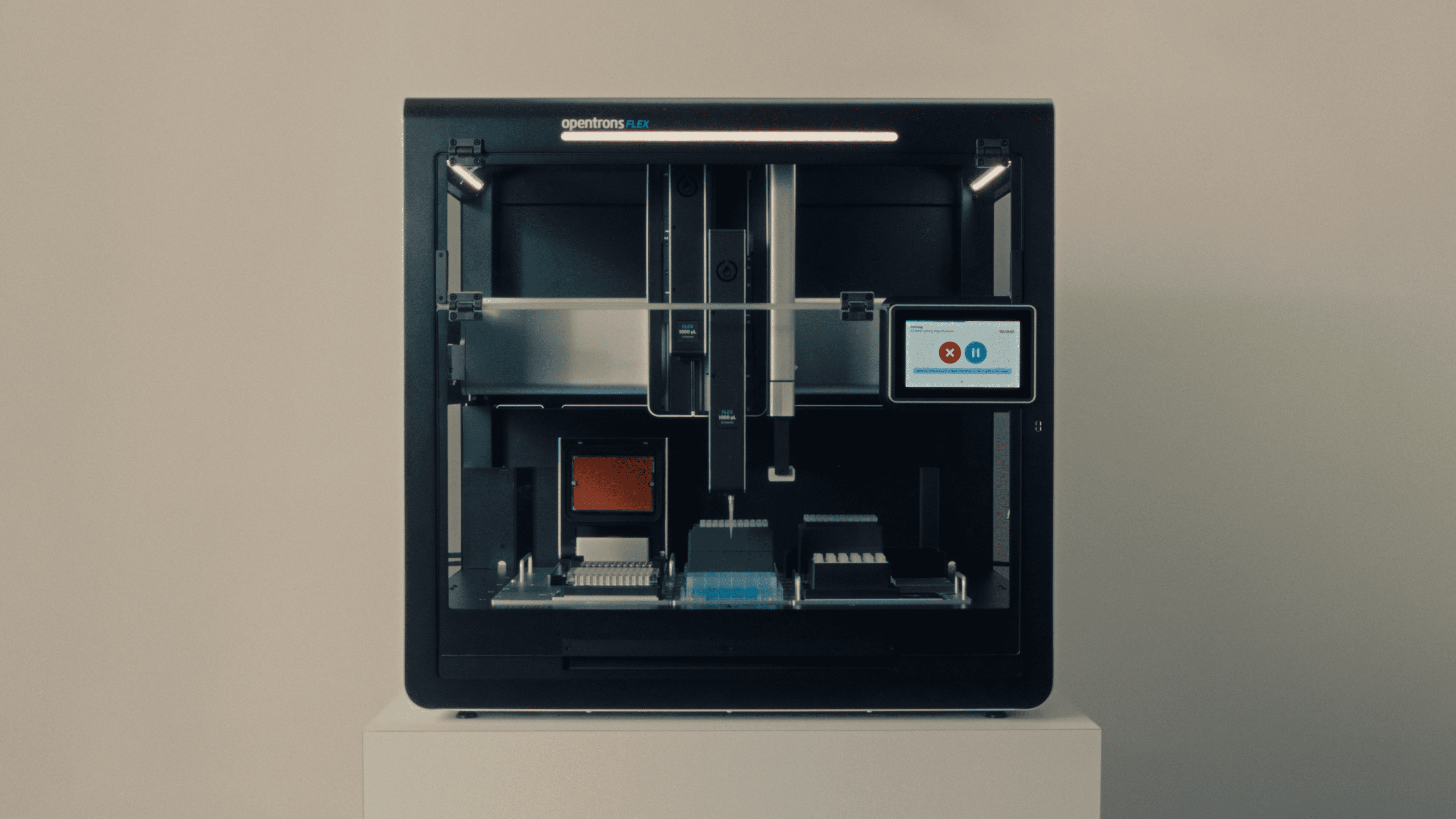
New York lab-automation maker Opentrons said in a press release on Oct 29 that it raised a $40 million Series E led by healthcare investor Avego, with BroadOak Capital Partners joining; SoftBank Vision Fund and Khosla Ventures are existing backers.
The company, which says it has more than 11,000 robots in labs in over 80 countries, will spend the money on AI-driven experiment execution, more robot and instrument capabilities, and new markets. No valuation was disclosed.
In MEKAWIRE's database it is the second lab-robotics round this month after Multiply Labs' $75 million Series B on Oct 6.
Opentrons Labworks, the New York maker of open laboratory automation robots, said in a press release on Oct 29 that it has closed a $40 million Series E. Healthcare investor Avego led the round and BroadOak Capital Partners also invested. The release names SoftBank Vision Fund and Khosla Ventures as existing investors. It gives no valuation and no breakdown of the amount by investor.
What the money is for
Opentrons said the capital will go into three areas: software and AI that design, run and refine experiments in a closed loop on its Opentrons Flex platform, wider capabilities across its robots and instruments, and expansion into new markets and geographies. Chief executive James Atwood framed the pitch around labour, saying scientists spend much of their day on manual work a robot can do. Avego managing partner James Flexner argued that every AI-generated hypothesis still has to be tested at a real bench.
The installed base behind the pitch
The company's main asset is reach. Opentrons says more than 11,000 of its robots are deployed in over 80 countries. The release gives two versions of its pharma footprint: 90 percent of the top 20 global pharmaceutical companies in the body, and 14 of the top 15 global biopharma companies in the boilerplate. Both are company claims with no customer names attached. Founded in 2014, Opentrons built its business on low-cost, Python-programmable liquid handlers such as the OT-2 before moving up to the Flex.
- Opentrons
- 2026-10-29
- Series E
- 40 million
- Avego
- Multiply Labs
- 2026-10-06
- Series B
- 75 million
- Patrick Soon-Shiong
Disclosed amounts from company releases as stored in MEKAWIRE's funding database. No valuation disclosed for either round.
As of Oct 30, 2026
MEKAWIRE analysis
The round is a bet that the lab robot becomes the data layer for AI-driven drug discovery, and that an open, cheap installed base wins that layer before closed workcells do.
MEKAWIRE's database shows the size of the shift. Multiply Labs, which automates cell-therapy manufacturing, raised $75 million in a Series B led by Patrick Soon-Shiong on Oct 6. Opentrons' Series E is about half that, at a far later stage, which suggests investors are pricing lab automation as an infrastructure business rather than a hyper-growth one. The counter-argument is that pharma buyers standardise on validated, closed systems, and an open platform has to prove compliance; Opentrons launched compliance-ready software for the Flex at SLAS Europe 2026, according to its newsroom.
What to watch: customer names for the AI execution layer, any disclosure of revenue or units shipped per year, and whether the round is followed by an acquisition in instruments or software.
- Series E, USD 40 million
- Oct 29, 2026 (company press release)
- Not disclosed
- AI-driven experiment execution, robot and instrument capabilities, new markets
- Avego
- More than 11,000 robots in over 80 countries (company figure)
- BroadOak Capital Partners
- SoftBank Vision Fund, Khosla Ventures
Why it matters
Opentrons sits where two funding themes meet: robotics and AI-for-science. Frontier models can propose experiments faster than labs can run them, and the company is positioning its installed base of more than 11,000 robots as the execution layer that closes that loop. If that framing holds, the value of a lab robot shifts from labour saving to the structured, reproducible data each run produces.
Rival analysis
Its rivals split into two camps. Established liquid-handling vendors sell closed, validated workcells into regulated pharma, while newer startups such as Multiply Labs (USD 75 million Series B on Oct 6, per our database) build fully robotic production cells for narrower workflows. Opentrons competes on price and openness: its robots are programmable through a public Python API, which suits academic and AI-native labs but must still pass pharma validation.
Valuation context
No valuation was disclosed, so no step-up can be computed. The round size is modest for a Series E, about half of Multiply Labs' Series B this month, which points to a company raising growth capital on an existing revenue base rather than a priced leap.
Supply-chain implications
Liquid handlers rely on precision motion stages, pipetting modules, pumps and consumables such as tips and labware. Opentrons sells its own tips and labware, which gives it recurring revenue tied to the installed base.
Signals to watch
Named pharma or AI-lab customers for the autonomous execution software; any revenue or unit disclosure; acquisitions in instruments or software funded by the round.
Analyst view
Thesis: the open installed base is the asset, and the round funds turning it into a data platform. Confidence medium, because the release gives no revenue, valuation or customer names.
Questions you should be asking
What share of the 11,000 robots run Flex rather than OT-2? How much revenue comes from consumables? Which customers already run AI-generated protocols end to end?