Rendezvous Robotics raises $20M seed for spacecraft tiles that assemble in orbit
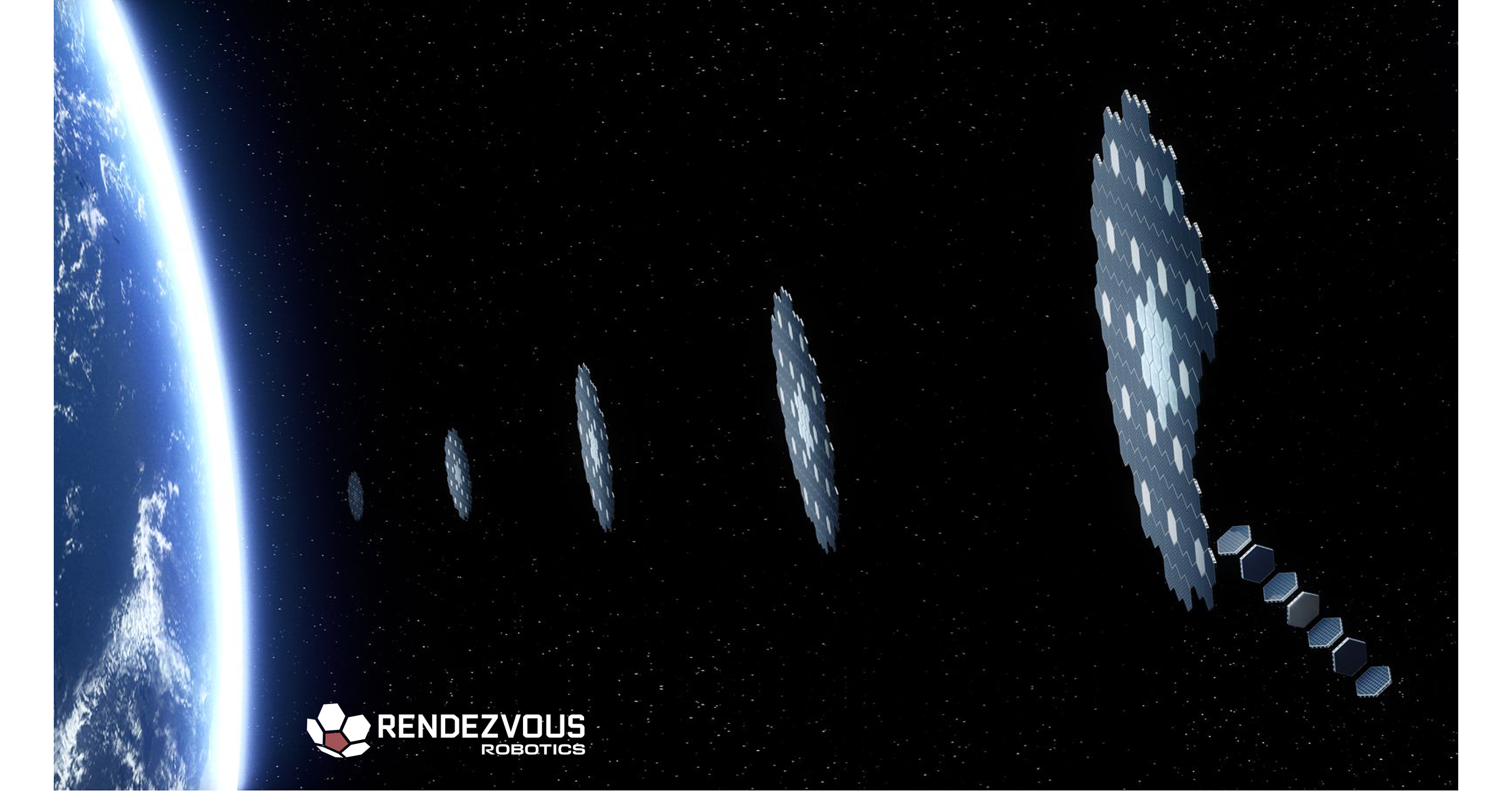
Rendezvous Robotics, a Golden, Colorado company spun out of MIT's TESSERAE research, said on Oct 28 it raised a USD 20 million oversubscribed seed round led by MaC Venture Capital and Toyota Ventures, its first priced round.
The money funds larger free-flying spacecraft tiles, a parabolic flight campaign in November 2026 and a low-Earth-orbit demonstration no earlier than April 2028, in which seven independently deployed tiles are to join, separate and reassemble without a robotic arm.
Rendezvous Robotics said in a press release on Oct 28 that it has raised USD 20 million in an oversubscribed seed round led by MaC Venture Capital and Toyota Ventures. The University of Michigan Endowment, Astera, which Jed McCaleb co-founded, and Industrious Ventures joined, and existing backers Aurelia Foundry, ATX Venture Partners and Mana Ventures returned. The company called it its first priced round and did not disclose a valuation.
The Golden, Colorado company builds spacecraft as compact hexagonal tiles that launch separately and then manoeuvre, align and latch together in orbit. Its argument is about the rocket fairing: a satellite today is sized to what fits inside the nose cone, which caps solar array area, antenna aperture and radiator size before launch. Tiles that assemble after launch remove that ceiling, and the same tiles can be rearranged when the mission changes.
A decade of MIT research, now on a flight schedule
The design comes from TESSERAE, a self-assembly programme invented by Dr. Ariel Ekblaw at MIT and continued at the Aurelia Institute she founded. Earlier generations flew on Blue Origin's New Shepard and on two International Space Station missions. The release sets out the next steps: ground demonstrations of autonomous movement and docking are under way, a parabolic flight campaign in November 2026 tests electromagnetic actuation in microgravity, a final ISS experiment in December 2026 has 32 fifth-generation tiles assembling into a three-dimensional structure, and a rideshare launch no earlier than April 2028 is to show seven free-flying tiles joining into one spacecraft, separating and reassembling in a different shape without outside robotic help. CEO Joe Landon said the goal is spacecraft with megawatt-scale power and very large communication and sensing apertures.
How the round compares in MEKAWIRE's data
In MEKAWIRE's funding database a USD 20 million seed is mid-sized for October 2026, a month crowded with large early rounds for robot-learning companies such as Dream Labs (USD 90 million) and Machenta (USD 40 million) [[table:1]]. Rendezvous is one of very few space-robotics companies in the database; its peers by investor are terrestrial. Toyota Ventures, a co-lead here, appears in our verified rows behind Walden Robotics (USD 300 million seed, July 2026), Tangent Robotics (pre-seed, September 2026) and Pickle Robot (Series B, November 2024), so this is the fund's first orbital robotics bet we have recorded.
Why it matters
Autonomous assembly is a robotics problem before it is a space problem: each tile has to sense its neighbours, plan its approach and control contact forces with no human in the loop and no arm to hold it. The milestones are dated and testable. The December ISS run of 32 tiles and the November flight campaign are the first chances to see whether the electromagnetic docking scales; the 2028 free-flight demonstration is the real test of the business case, and the release names no customer or contract yet.
- Dream Labs
- US
- Seed
- 90.0
- 2026-10-19
- Machenta
- GB
- Seed
- 40.0
- 2026-10-27
- Maxinsights
- US
- Seed
- 30.0
- 2026-10-22
- Rendezvous Robotics
- US
- Seed
- 20.0
- 2026-10-28
- SafeWorld
- US
- Seed
- 12.2
- 2026-10-05
Verified funding_rounds rows with round type Seed and a disclosed USD amount, announced Oct 1 to 28, 2026. Disclosed amounts, not estimates.
As of Oct 29, 2026
- MaC Venture Capital and Toyota Ventures
- USD 20 million seed, oversubscribed, first priced round
- Not disclosed
- Parabolic flights Nov 2026; 32-tile ISS experiment Dec 2026
- Seven free-flying tiles, rideshare no earlier than April 2028
- Hexagonal spacecraft tiles that self-assemble and reconfigure in orbit (MIT TESSERAE heritage)
- Golden, Colorado
- University of Michigan Endowment, Astera, Industrious Ventures; existing Aurelia Foundry, ATX Venture Partners, Mana Ventures