Equinor opens KNARR, a marine robot test centre wired into a live gas plant
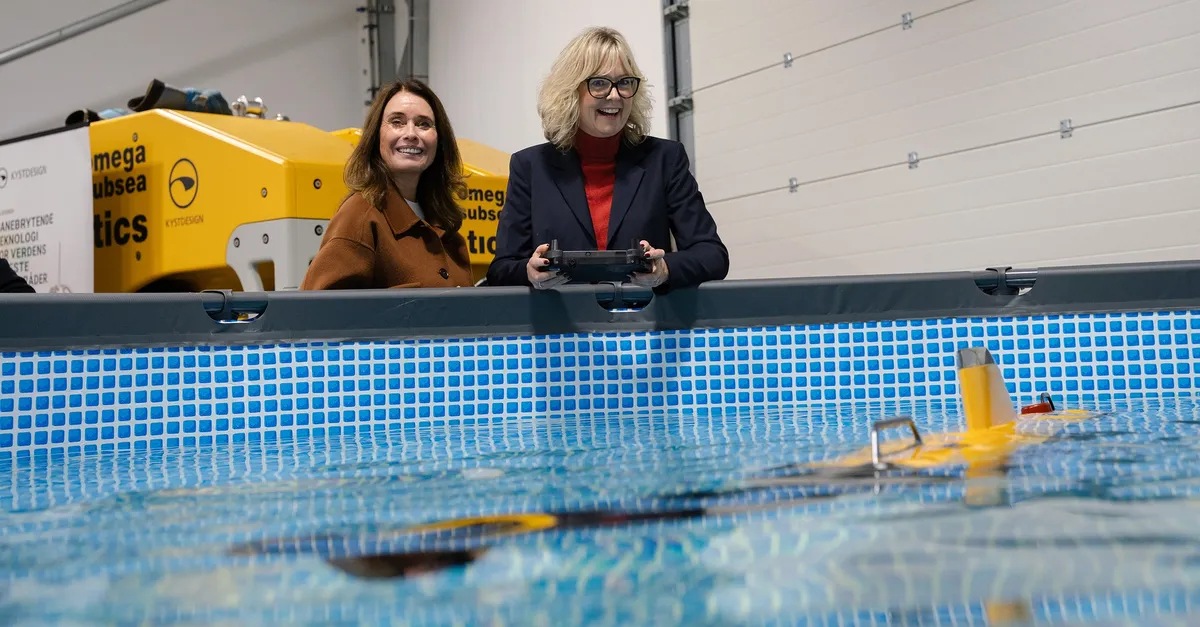
Equinor said on Oct 28 that it has opened the Kårstø Marine Robotics Centre (KNARR) at its Kårstø gas processing plant in western Norway, where subsea drones, robots and unmanned vessels will be tested and qualified on infrastructure in operation.
Equinor and Gassco have committed NOK 16 million so far; the site has test areas at 25, 140 and 250 m depth and 3 km of subsea sensor cable. Equinor expects underwater robots and autonomous vessels to save several hundred million kroner a year.
Equinor said in a press release on Oct 28 that the Kårstø Marine Robotics Centre, known as KNARR, has opened at its gas processing plant at Kårstø in Tysvær on Norway's west coast. The centre is for testing, qualifying and developing marine robots, and Equinor says it is one of the world's first such sites connected to a plant in operation, so suppliers can test against real pipelines and subsea structures rather than a tank.
The set-up is specific. Three test areas sit at water depths of 25, 140 and 250 metres. Three kilometres of subsea cable with electronics have been laid to test sensors over long periods, and together with existing power cables, export pipelines and subsea structures the site can be used for distributed acoustic sensing, which turns a fibre into a long line of vibration sensors. Equinor and Gassco, the operator of Norway's gas transport network, have so far set aside NOK 16 million and may add functions later. The centre is open to other maritime industries for inspection, autonomous operations, environmental monitoring and maintenance of offshore installations.
The money is in the operating budget, not the centre
NOK 16 million is a small sum for a North Sea operator. The figure that matters is the other one in the release: Equinor sees potential savings of several hundred million kroner a year from underwater robots and autonomous vessels, and has set a goal of cutting operating costs significantly by 2035. Hege Skryseth, executive vice president for technology, digitalisation and innovation, said small underwater drones should take over smaller tasks so large and expensive vessels are used only where they add the most value.
MEKAWIRE context
This is the second Equinor robotics item in two days. On Oct 27 ANYbotics named Equinor among the first customers of ANYmal X, its explosion-proof legged inspection robot (our story). Read together, Equinor is building a robot pipeline for both sides of its assets: legged robots on hazardous topside and plant areas, and drones and unmanned vessels below the waterline, with KNARR as the place where suppliers have to prove themselves before they reach a platform.
Why it matters
For subsea robot makers, qualification on live infrastructure is the slow, expensive step between a demo and an operator contract. A test site run by the operator itself shortens that path for the suppliers it chooses to work with. What to watch: which suppliers run the first test campaigns at KNARR, and whether Equinor puts a number on the savings in its future cost targets.
- Kårstø Marine Robotics Centre (KNARR), opened Oct 28, 2026
- Open to maritime industries beyond oil and gas
- Kårstø gas processing plant, Tysvær, western Norway
- 25 m, 140 m and 250 m water depth
- 3 km of subsea cable for long-term sensor and DAS tests
- NOK 16 million from Equinor and Gassco
- Several hundred million NOK a year from underwater robots and autonomous vessels (Equinor)