Stereolabs ZED Box 2 robot computers: Jetson Thor Max from $5,999, eight cameras
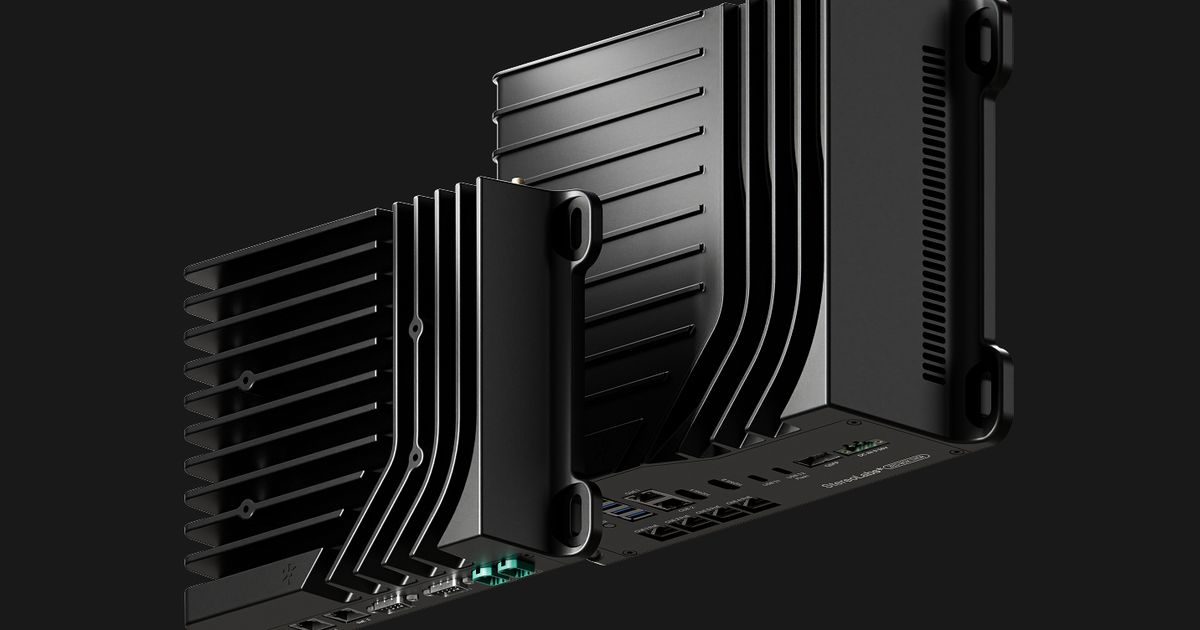
Stereolabs, the ZED camera maker Ouster bought in February, launched the ZED Box 2 Series on Oct 27: robot computers that take up to eight synchronized GMSL2 cameras. The base ZED Box 2 uses NVIDIA Jetson Orin NX (up to 157 TOPS) in a fanless 55 mm case from $1,799 and ships in October; the ZED Box 2 Max uses Jetson Thor T4000 or T5000 (up to 2,070 FP4 TFLOPS, 128 GB memory) to run vision-language-action models on the robot, from $5,999 and $7,999, shipping at the end of November.
Stereolabs put a price on running robot foundation models on the robot itself. The French camera maker, which lidar company Ouster acquired on Feb 4, launched the ZED Box 2 Series on Oct 27, and its top model, the ZED Box 2 Max with NVIDIA's Jetson Thor T5000, lists at $7,999 in Stereolabs' store. The company says the Max, with up to 2,070 FP4 TFLOPS and 128 GB of memory, can run generative AI, vision-language-action (VLA) models and multi-sensor fusion on board.
The smaller ZED Box 2 uses a Jetson Orin NX module, 117 TOPS with 8 GB or 157 TOPS with 16 GB, in a fanless enclosure 55 mm tall that Stereolabs says can sit inside an AMR or a robot cell. It starts at $1,799 and ships in October; the Max starts at $5,999 with the Thor T4000 and ships at the end of November.
- ZED Box 2
- Jetson Orin NX 8 GB / 16 GB
- 117 / 157 TOPS
- $1,799 (16 GB +$350)
- October 2026
- ZED Box 2 Max T4000
- Jetson Thor T4000
- not stated separately
- $5,999
- End of November 2026
- ZED Box 2 Max T5000
- Jetson Thor T5000
- up to 2,070 FP4 TFLOPS, 128 GB
- $7,999
- End of November 2026
Prices from the Stereolabs US store on Oct 28, 2026 (256 GB SSD; 1 TB +$580, 2 TB +$880 on ZED Box 2). The step from the base box to the T5000 Max is 4.4 times the price ($7,999 / $1,799).
As of Oct 28, 2026
Eight synchronized cameras are the point
Both boxes take up to eight GMSL2 cameras through two Quad Fakra-Z connectors, with hardware frame synchronization and external triggers across devices, so a robot can carry full 360-degree vision or a work cell can merge several viewpoints to remove occlusions. The Max adds four CAN ports, four USB ports, four PWM outputs to drive actuators directly and a QSFP port with four 10 GbE links for lidar. Both run from -20 to +50 °C and use the ZED SDK with ROS 2 and NVIDIA Isaac ROS. "Robot vision shouldn't take five suppliers," chief technology officer Edwin Azzam said in the release.
Why it matters
The launch is the first product line that shows what Ouster bought: one vendor now sells lidar, stereo cameras, compute and perception software for the same robot. Stereolabs names humanoids, AMRs, forklifts, off-road machines and data collection rigs for training robot foundation models as target kits. For buyers the comparison is with assembling NVIDIA's Jetson Thor developer hardware and third-party camera carriers themselves, the stack MEKAWIRE described in its NVIDIA robotics strategy explainer. The risk for Stereolabs is that the box is only as differentiated as its software; the module inside is the same Thor every integrator can buy. The Stereolabs company page tracks the next launches.
- ZED Box 2 Series, Oct 27, 2026
- Up to 8 synchronized GMSL2 inputs via two Quad Fakra-Z connectors
- 4 CAN, 4 USB, 4 PWM outputs, QSFP with four 10 GbE links
- ZED Box 2 October 2026; ZED Box 2 Max end of November 2026
- Jetson Orin NX 8 GB (117 TOPS) or 16 GB (157 TOPS), fanless, 55 mm tall, from $1,799
- Jetson Thor T4000 from $5,999 or T5000 from $7,999; up to 2,070 FP4 TFLOPS and 128 GB memory
- -20 to +50 °C