Unitree Q3: revenue up 70% to RMB665M, profit down 17% as R&D jumps 250%
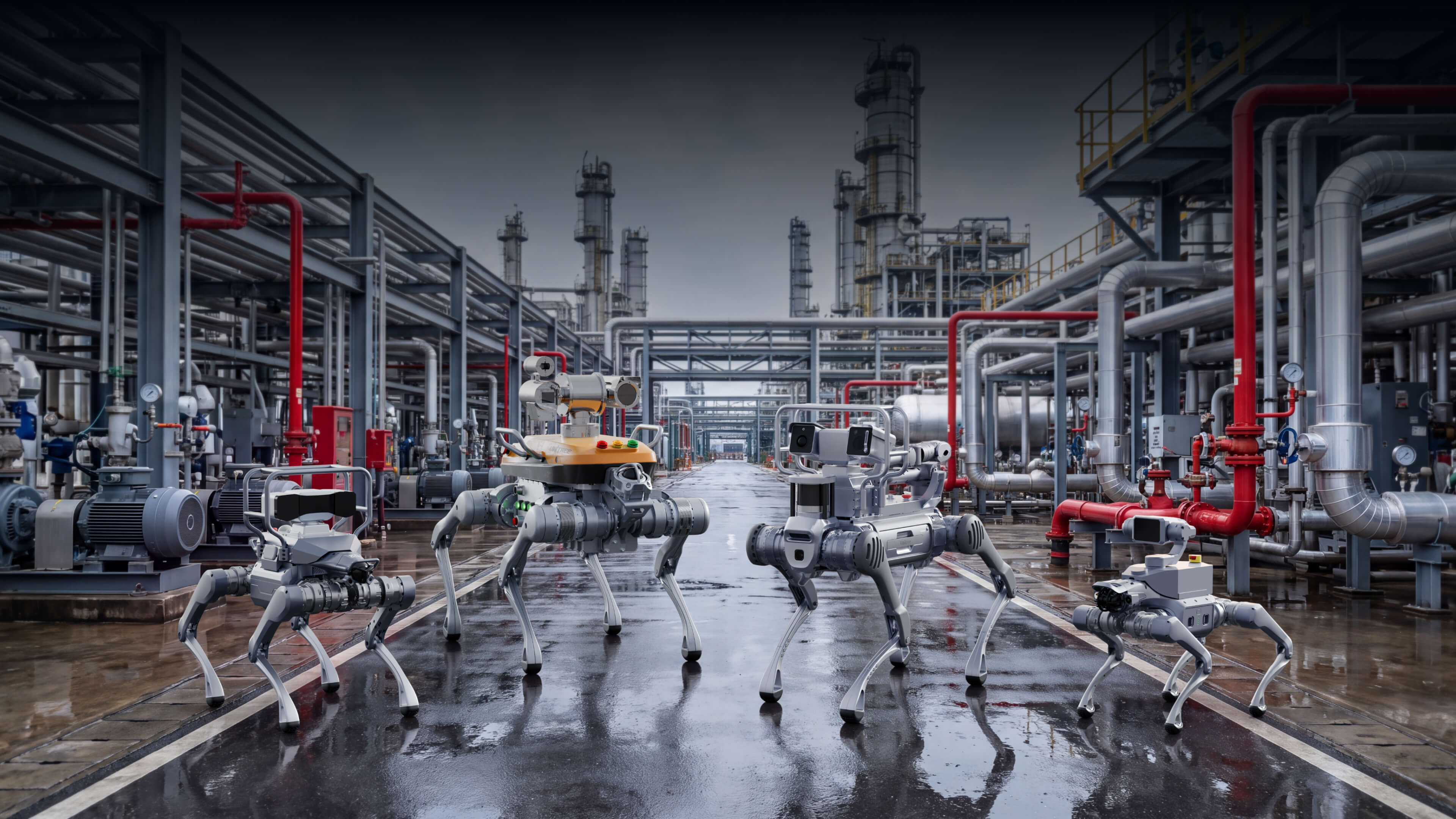
Unitree Robotics (SSE STAR 688836) reported third-quarter 2026 revenue of RMB665.0 million, up 69.93% year on year, while net profit attributable to shareholders fell 17.37% to RMB112.7 million, its first quarterly report since the August listing.
Research spending rose 249.58% to RMB127.0 million, or 19.1% of revenue, which the company tied to embodied-AI model and compute investment. Nine-month revenue of RMB1.82 billion already exceeds MEKAWIRE's record of Unitree's full-year 2025 revenue (RMB1.70 billion); gross margin over nine months slipped to 54.0% from 59.7%.
Unitree Robotics grew revenue by almost 70% in the third quarter and still earned less than a year earlier. The Hangzhou maker of legged and humanoid robots, listed on Shanghai's STAR Market under 688836 since August, said in its third-quarter report filed on Oct 28 that revenue reached RMB665.0 million, up 69.93%, while net profit attributable to shareholders fell 17.37% to RMB112.7 million. It is the company's first quarterly report as a listed firm, and it arrives a day after Unitree's second abnormal-trading notice in a week, which put its trailing price-to-earnings ratio at 465 times.
The gap between sales and profit has one main cause in the filing: research spending. R&D rose 249.58% to RMB127.0 million in the quarter, or 19.10% of revenue, up 9.82 percentage points. Unitree attributes the increase to embodied-AI work, "especially" large-model development and computing power, plus a larger research team and new products. Reuters reported the same headline growth and profit figures; they match the filing.
The nine-month view hides a weaker core
Over nine months revenue rose 55.71% to RMB1.82 billion and attributable net profit jumped 270.54% to RMB386.7 million. The second number flatters: Unitree says it reflects a large one-off share-based payment charge booked in 2025. Profit excluding one-off items fell 18.78% to RMB349.0 million, and operating cash flow dropped 54.69% to RMB193.7 million as purchases, payroll, selling and research costs grew faster than collections.
- Revenue
- 665.0
- +69.93%
- 1,817.3
- +55.71%
- Net profit attributable
- 112.7
- -17.37%
- 386.7
- +270.54%
- Net profit excl. one-offs
- 105.0
- -17.42%
- 349.0
- -18.78%
- R&D spending
- 127.0
- +249.58%
- 262.9
- +191.48%
- R&D as % of revenue
- 19.10%
- +9.82 pts
- 14.47%
- +6.74 pts
- Operating cash flow
- n/a
- n/a
- 193.7
- -54.69%
Source: Unitree 2026 third-quarter report (unaudited), filed Oct 28, 2026. The nine-month net profit rise reflects a large one-off share-based payment charge in 2025, as the company states.
As of Sep 30, 2026
MEKAWIRE analysis: Unitree is buying the model layer with IPO cash
Unitree is converting a hardware margin into an AI budget, and the third quarter is the first quarter that shows the cost.
MEKAWIRE's calculations from the filing show the trade-off. Gross margin for the nine months was 54.0%, against 59.7% a year earlier and the 59.45% for full-year 2025 recorded in our Unitree explainer. Selling expenses tripled to RMB229.9 million. Quarterly net margin fell to 16.9% from about 34.8%. Nine-month revenue already equals 107% of 2025's RMB1.70 billion, so the top line is not the problem; the company is choosing to spend.
- Implied Q3 2025 revenue
- RMB391.4M
- 665.0 / 1.6993
- Q3 net margin
- 16.9% (34.8% in Q3 2025)
- net profit / revenue; 2025 figures implied from the stated changes
- 9M gross margin
- 54.0% vs 59.7%
- gross profit / revenue: (1,817.3 minus 835.6) and (1,167.1 minus 469.8)
- Selling expenses, 9M
- RMB229.9M vs 76.0M (+202%)
- income statement
- 9M revenue vs FY2025
- 107%
- 1,817.3 / 1,700 (FY2025 revenue in MEKAWIRE's Unitree explainer)
Derived from disclosed figures only; no estimates.
As of Oct 28, 2026
It can afford to. Cash stood at RMB7.35 billion on Sept. 30, up from RMB1.42 billion at the end of 2025 after the listing, and total assets tripled to RMB10.16 billion. Inventory rose to RMB1.02 billion, 2.8 times the year-end level, and contract liabilities, mostly customer prepayments, rose to RMB233.1 million from RMB137.0 million. Higher stock and higher prepayments together point to a company building ahead of orders, though the report gives no unit shipments or product split.
The counter-argument is valuation. At 465 times trailing earnings, the market is paying for growth in profit, and a quarter in which profit falls while R&D triples asks investors to accept that Unitree's own models will earn back the spending. The bull case: model capability lets Unitree sell beyond the research and education buyers who took 73.6% of its humanoid revenue in the prospectus period. The bear case: margin keeps sliding as cheaper humanoids from rivals force price cuts, and R&D stays near a fifth of sales.
A small stake in Hangzhou's pilot base
The same evening Unitree disclosed that its subsidiary Hangzhou Unitree Robotics will put RMB20 million into the Hangzhou Embodied AI Application Pilot Base, in which it holds 10% and has a board seat. The base is raising RMB200 million in total, lifting its registered capital to RMB300 million; Hangzhou Hi-tech Sci-Innovation Group, which owns half, adds RMB73 million, Hangzhou Data Group RMB39 million, Transfar Group RMB8 million and a new partnership RMB60 million. Unitree's stake stays at 10%. The deal is a related-party transaction and still needs state-asset approvals.
What to watch
The full-year report, due by April 2027, will show whether gross margin stabilises near 54% and whether R&D stays near 19% of sales. Watch also for product-level disclosure on the H2 and G1 humanoids, and for further exchange notices if the share price keeps outrunning the industry.
- RMB127.0M, up 249.58%, 19.10% of revenue
- RMB1,817.3M, up 55.71%
- RMB665.0M, up 69.93% y/y
- RMB7.35B (RMB1.42B at end-2025)
- RMB20M into Hangzhou embodied-AI pilot base, stake stays 10%
- RMB1.02B, 2.8x end-2025
- RMB112.7M, down 17.37%
- 54.0% vs 59.7% a year earlier
Why it matters
Unitree is the first pure-play humanoid maker to report a full quarter as a listed company in China, so its numbers set the benchmark investors will use for AgiBot, UBTECH and the next STAR and Hong Kong listings. The quarter shows that growth alone is no longer enough to lift profit once a hardware company starts paying for its own foundation models.
The filing also gives the first hard evidence of how much listing proceeds are being redirected into compute: R&D tripled while cash rose fivefold, which means the spending pace can continue for years without new capital.
Rival analysis
UBTECH, listed in Hong Kong, still reports losses, so Unitree remains the profitable reference point in Chinese humanoids even after this quarter. Private rivals such as AgiBot and Galbot do not publish quarterly accounts; their valuations are anchored by funding rounds rather than earnings. The margin squeeze in Unitree's figures is a warning for any rival planning to list on the strength of hardware gross margin.
Valuation context
The trailing P/E of 465 times cited in the Oct 27 exchange notice was set before this report. With quarterly profit down 17%, the trailing figure will not improve until R&D growth slows or revenue accelerates further. Investors are effectively valuing the cash pile and the option on an in-house model stack.
Supply-chain implications
Inventory at RMB1.02 billion and higher prepayments suggest Unitree is stocking motors, reducers, batteries and compute modules ahead of demand. Suppliers of joint modules and edge compute are the immediate beneficiaries; a slowdown in orders would leave Unitree carrying that stock.
Signals to watch
1) Full-year 2026 report (by April 2027): gross margin and R&D ratio. 2) Any product or shipment breakdown in investor-relations records. 3) Further abnormal-trading notices or shareholder lock-up expiries on the STAR Market.
Analyst view
Thesis: Unitree is converting hardware margin into model capability, and the third quarter is the first visible cost. Confidence: medium. The cash position makes the strategy sustainable; the open question is whether the models create revenue outside research and education buyers before investors lose patience with falling quarterly profit.
Questions you should be asking
How much of Q3 R&D was compute rental versus headcount? What share of revenue came from humanoids versus quadrupeds this quarter? Why did inventory nearly triple, and which products does it cover? What is the role of the Hangzhou pilot base in Unitree's customer pipeline?