Seoul Dynamics to build KRW 20bn autonomous forklift plant in Chungju, aims for 2,500 a year
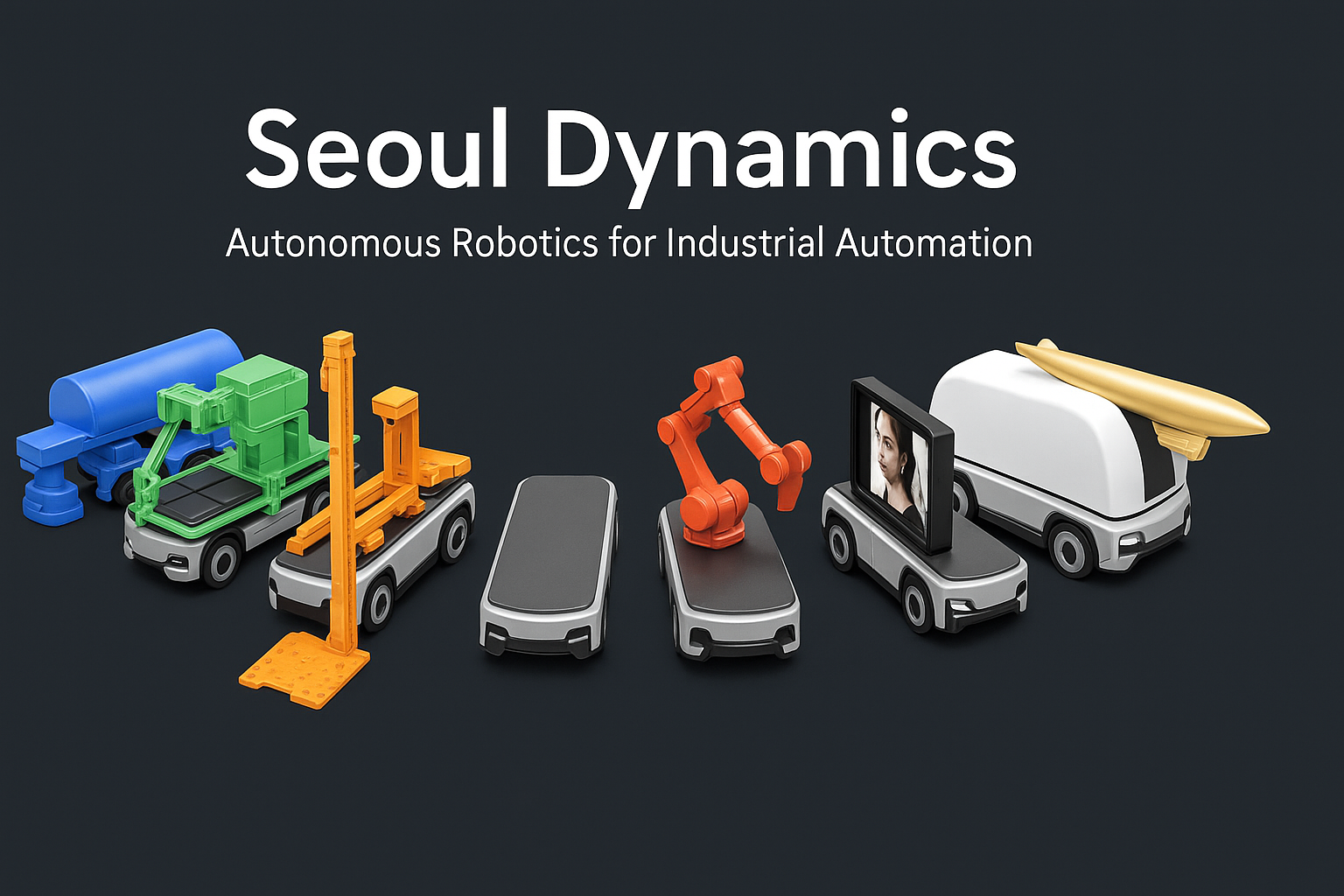
Korean start-up Seoul Dynamics will spend KRW 20 billion on a plant for its RAPTOR Lift autonomous forklifts in Chungju's Dongchungju industrial complex, the city said on Oct 22 after signing an investment agreement; local reports quoting the city add that construction starts in December, about 50 jobs will be created and annual output is meant to rise from about 50 robots to more than 2,500.
The company, founded in 2022, sells riderless 1.5 to 2 tonne forklifts trained on simulation and teleoperation data.
Seoul Dynamics, a Korean start-up that builds driverless forklifts, plans to go from hand-building robots to factory volumes in one step. The city of Chungju said on Oct 22 that it had signed an investment agreement with the company at city hall for a KRW 20 billion production base on a 16,529 square metre site in the Dongchungju industrial complex, with a mass-production line for autonomous forklifts and a test and verification facility on the same plot.
The numbers that matter most came through local reports of the signing rather than a company filing. Newsis, quoting the city, reported that construction is due to start in December, that the plant will add about 50 jobs and that the company wants to lift capacity from about 50 robots a year today to more than 2,500. Seoul Dynamics has not published its own release, and the city's statement as carried by Newspim and Newsis does not give a completion date, so those figures should be read as the city's account. If they hold, they describe a fiftyfold jump for a company that is four years old.
What the money buys: a forklift that learns the job, not the route
The product behind the plan is RAPTOR Lift, a riderless forklift rated for 1.5 to 2 tonnes. On its own website Seoul Dynamics describes it as a machine built to finish a handling job rather than follow a fixed path: it looks at the scene, picks the next action, checks the result and changes its approach until the load is placed. It learns pallet approach, lift sequencing and trailer transfer from simulation policies and teleoperation data and then moves the same work loop to the production robot. The company also designs the outer mast for each customer's load, citing cable bobbins, foundry ingots and yard pallets, and lists a larger TYRANNO forklift for 10 to 15 tonne trailer-type loads. Its operator console shows a digital twin of the fork, surround person alerts, a vision-language model ranking free space and a stereo obstacle grid.
That combination of rule-based control with learned work policies is the industry's current answer to the hardest part of forklift automation, which is not driving but the last metre of picking and placing an irregular load. It also explains why the company wants testing capacity next to the line: every new load type needs its own validation.
A crowded aisle in Korea and abroad
Seoul Dynamics is not alone. On Oct 16 MEKAWIRE reported that Twinny had agreed with The Prime Group to sell driverless forklifts for warehouse pallet moves, and that Brils plans to build forklift and low-profile AMRs at its Michigan unit. Abroad, the venture-funded autonomous forklift makers in our database have raised rounds in the tens of millions of dollars, not hundreds, which shows how capital-light the category has stayed compared with humanoids. Our [warehouse robots explainer](/news/warehouse-robots-amr-market-2026-explained-117500-logistics-robots-sold-venture-money-moved-to-humanoids-20261017) tracks the same shift of venture money away from logistics machines.
- Rapyuta Robotics
- JP
- Series C
- 2022-04-20
- 51M
- Gideon
- HR
- Series A
- 2021-06-08
- 31M
- Third Wave Automation
- US
- Series C
- 2024-10-30
- 27M
- Fox Robotics
- US
- Series B
- 2022-10-27
- 20M
- Seoul Dynamics
- KR
- Not disclosed
- No data
- Plant plan KRW 20bn (Oct 2026)
Disclosed amounts from MEKAWIRE funding rows, not estimates; later strategic investments without amounts omitted. Seoul Dynamics figure is a plant investment announced by Chungju, not a funding round. Plant investment per unit of annual capacity = KRW 20,000 million / 2,500 = KRW 8 million.
As of Oct 22, 2026
MEKAWIRE analysis
We think the Chungju plant is a bet that Korean heavy industry will buy autonomous forklifts in fleets before the technology is proven at scale, and that a domestic factory is the ticket into public and shipbuilding procurement.
The arithmetic is simple. KRW 20 billion spread over 2,500 units of annual capacity is about KRW 8 million of plant investment per unit of yearly output (20,000 million / 2,500), a modest figure for a line that also houses testing. The harder number is demand: 2,500 forklifts a year would be a large share of any single country's autonomous forklift market, and the company has disclosed no customer, order book or funding round. The strongest counter-argument is that capacity announced at a city signing often runs ahead of orders; Korean regional investment agreements are statements of intent, not contracts. The bull case is that shipbuilding, cable and foundry customers with heavy, odd-shaped loads need exactly the custom mast and learned handling the company sells, and that Korea's push for domestic physical AI production favours a local maker. The bear case is that the plant is built for volume that arrives slowly, leaving a four-year-old company carrying fixed costs before its product has a reference fleet.
What to watch
Three signals will test the plan: the December groundbreaking reported by the city, any disclosed funding round or regulatory filing that shows who is paying for the KRW 20 billion, and the first named fleet customer, especially in shipbuilding or steel, where the company says its heavy loads fit. Until one of those arrives, the most important open question is not whether the robot works but who will buy 2,500 of them.
- About 50 new hires (reported)
- 16,529 m² in the Dongchungju industrial complex, Chungju, North Chungcheong
- RAPTOR Lift riderless 1.5 to 2 t autonomous forklift; TYRANNO 10 to 15 t trailer type (company website)
- From about 50 to more than 2,500 robots a year (reported, not confirmed by the company)
- Construction from December 2026 (Newsis, quoting the city); completion date not given
- Autonomous forklift mass-production plant plus test and verification facility
- KRW 20 billion (city figure)
- Investment agreement signed with the city of Chungju on Oct 22, 2026
- Customers, orders, funding, price