Singapore opens a humanoid robot centre for police and emergency work, aiming to put a robot beside officers by 2028
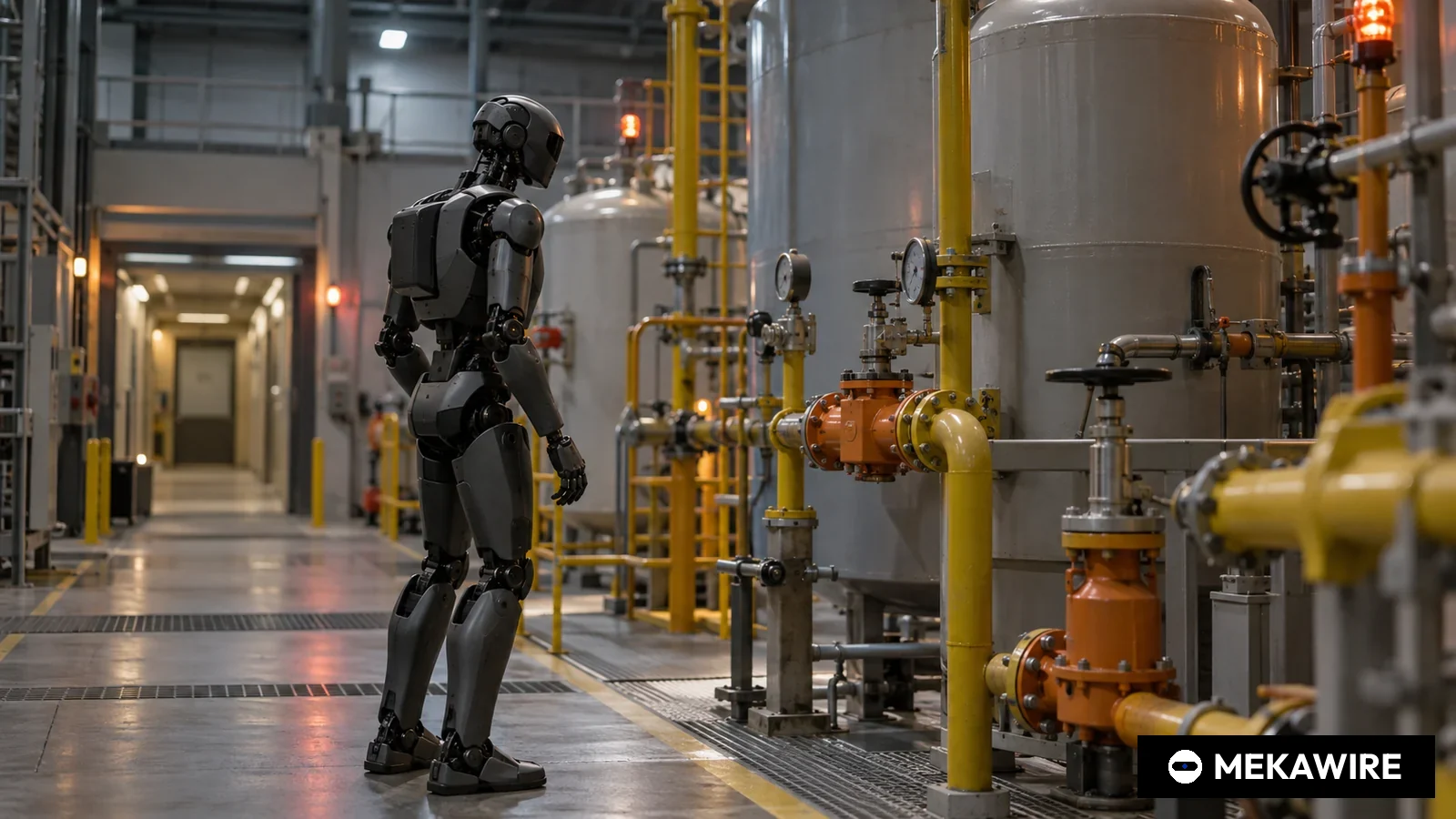
Singapore's Ministry of Home Affairs opened the Home Team Humanoid Robotics Centre (H2RC) on Sept. 30, 2026, with the goal of having a humanoid robot working alongside officers in a real operational setting by 2028.
Run by the agency HTX and backed by a S$100 million commitment announced in 2025, the centre will work with ST Engineering on robot platforms and with Singtel's RE:AI on computing.
Singapore's Ministry of Home Affairs (MHA) opened the Home Team Humanoid Robotics Centre (H2RC) on Sept. 30, 2026, and set itself a deadline. Edwin Tong, Minister for Law and Second Minister for Home Affairs, said the aim is to have the first humanoid robot working alongside Home Team officers in a real operational setting, performing defined tasks safely and reliably, by 2028. The centre is run by the Home Team Science and Technology Agency (HTX), and Tong described it as the first centre of its kind dedicated specifically to humanoid robotics for public safety.
The government priced the project well before the ribbon was cut. When Minister for Digital Development and Information Josephine Teo announced the centre at HTX's AI TechXplore event on May 26, 2025, she said it would be supported by a commitment of S$100 million and would open in the second quarter of 2026. Coordinating Minister for National Security K Shanmugam said on April 28, 2026 that the launch would come in September. Tong's launch speech did not restate the budget, give the size of the facility, name a robot model or say how much of the S$100 million has been spent.
The launch came with an industrial partner. Tong said HTX had signed a memorandum of understanding with ST Engineering, which he said brings deep robotics expertise and strong partnerships with leading robot manufacturers. Combined with Home Team operational experience, he said, the partnership would help identify, adapt and integrate platforms for public safety, build cybersecurity and trustworthiness in from the start and move the work from experiments to deployment. ST Engineering chairman Teo Ming Kian attended alongside HTX chief executive Chan Tsan and Permanent Secretary for Home Affairs Tan Chye Hee. Tong also invited more industry and academic partners to join.
Tong gave three examples of the jobs he has in mind. In a chemical leak, HazMat officers today enter the contaminated zone to take samples and secure valves; he said humanoids could one day locate the source and contain it. After an explosion, forensic officers work among unstable debris and possible secondary devices; a robot could recover the evidence instead. In prisons, humanoids could run routine cell searches and yard checks, giving officers more time for engagement and rehabilitation of inmates. He said the intent is to augment officers and not to replace them.
The minister set out three requirements. The first is the humanoid body itself, which he argued suits operations in uncontrolled places because a robot shaped like a person can go where officers go and use the equipment officers use, without the site being modified. The second is embodied AI, meaning robots that learn, perceive, reason and act in changing real-world conditions. The third is data. Commercial robots are mostly being trained for factories and homes, Tong said, and a robot trained in a factory would not know how to operate at an incident scene. H2RC is meant to combine physical mock-ups of operational environments with Home Team expertise, companies and research institutions to train models on public safety data.
The computing behind the robots is already in place in part. Tong said the centre builds on NGINE, HTX's sovereign AI infrastructure, which supports some 35 Home Team AI products, and that working with Singtel RE:AI would take it to its next stage, with H2RC as the first platform to use the upgraded capacity for embodied AI. HTX launched NGINE on Aug. 26, 2025, on an NVIDIA B200 DGX SuperPOD installed on premises at a classified location, according to the agency. Shanmugam said HTX built NGINE with ST Engineering, Google, NVIDIA and Nutanix, and signed an MOU with NVIDIA in March 2026 to build further iterations. RE:AI is the enterprise AI platform run by Singtel Digital InfraCo, and HTX renewed a five-year innovation partnership with Singtel Group on Feb. 1, 2026.
The case for robots rests on staffing. Tong said Singapore's workforce is ageing and will grow older quickly, the Home Team draws from the same limited pool, and demand is rising from more medical emergencies among the elderly, busier checkpoints and more sophisticated crime. He added that the city's dense high-rise and underground layout leaves little room for error. He cited earlier uses of robots by other public safety agencies, including the Colossus robot used by Paris firefighters at Notre-Dame in 2019 and robots sent into radioactive zones after the Fukushima accident.
Singapore joins a short list of governments that have put public money behind humanoids for state work. The U.S. Army's xTechHumanoid competition offered $490,000 in cash prizes and up to $1.25 million in follow-on contracts, and named its winners on Sept. 11, 2026. South Korea's science ministry launched a 50.4 billion won AI humanoid programme led by KIST with LG affiliates on May 18, 2026, and the Ministry of Planning and Budget said on Aug. 27, 2026 that the government would spend 2.3 trillion won on the humanoid ecosystem from 2027 to 2030 and buy 250 domestic humanoids in 2027 and 1,080 by 2030. China's MIIT and SASAC told provinces and central state firms in June 2026 to put humanoids to work in real sites, listing emergency rescue and disaster prevention among the target scenarios.
- Home Team Humanoid Robotics Centre (H2RC)
- Singapore
- MHA and HTX
- 2026-09-30
- First humanoid working with officers in real operations by 2028
- 100
- SGD
- xTechHumanoid competition
- United States
- U.S. Army
- 2025-08-06
- Advance toward fielded militarized humanoid capabilities
- 0.49
- USD
- AI humanoid source technology (K-Moonshot)
- South Korea
- Ministry of Science and ICT, KIST
- 2026-05-18
- Real-world test of 20 humanoids within the 2026-2030 programme
- 50,400
- KRW
- Humanoid ecosystem budget 2027-2030
- South Korea
- Ministry of Planning and Budget
- 2026-08-27
- Government buys 250 domestic humanoids in 2027 and 1,080 by 2030
- 2,300,000
- KRW
- Humanoid real-world training notice
- China
- MIIT and SASAC
- 2026-06-08
- More than 100 high-value scenarios and ten-thousand-unit deployment capability by end-2026
- No data
- CNY
Funding as disclosed by each government, in millions of local currency, not converted. H2RC figure is the S$100 million commitment announced May 26, 2025. xTechHumanoid figure is cash prizes only; up to $1.25 million in follow-on contracts excluded. K-Moonshot total includes 15,000 million won of private money. Korea's 2.3 trillion won excludes private matching (2.7 trillion won with it). — means not disclosed. Figures disclosed, not estimated.
As of Oct 1, 2026
Several questions remain open. MHA has not said which robots H2RC will start with, and ST Engineering's role as integrator means the hardware may come from manufacturers that have not been named. The 2028 goal covers a first robot on defined tasks, which leaves the scale of any later rollout undefined. The centre also opened about a quarter later than the second-quarter 2026 date given in May 2025. Robots working near officers and the public in prisons and hazardous scenes will need safety and cybersecurity assurance that Tong acknowledged but did not detail.
MEKAWIRE analysis
Singapore is betting that public safety data, not robot hardware, is the scarce input, and its S$100 million buys a training ground rather than a fleet.
The design of H2RC points that way. The minister spent more of his speech on embodied AI and on data drawn from incident scenes than on robots, the hardware will come through an integrator with ties to outside manufacturers, and the compute layer sits on sovereign infrastructure that HTX already runs. Against Korea's 2.3 trillion won humanoid plan, Singapore's commitment is small, but it is aimed at a narrow set of tasks that commercial developers are unlikely to train for on their own.
The strongest counter-argument is that a narrow, sovereign approach may lag the pace of commercial models. Large humanoid developers are training on volumes of data that a single agency cannot match, and a public safety layer may end up as a thin fine-tune on someone else's foundation model, which would make supplier choice more important than the centre itself.
Bull case. ST Engineering selects capable platforms quickly, HTX's mock-up sites generate useful training data, and a humanoid is doing a defined prison or HazMat task by 2028. Singapore then has an exportable model for public safety robotics that ST Engineering can sell to other governments.
Bear case. Hardware reliability, safety assurance and cyber vetting slow the programme as the opening date already slipped by a quarter. The 2028 milestone becomes a supervised demonstration, and the S$100 million mostly funds facilities and studies.
Signals to watch:
- 2027: whether HTX and ST Engineering name the first humanoid platforms and their makers.
- End of 2026: China's MIIT and SASAC target of 100 high-value scenarios and ten-thousand-unit deployment capability, which will show whether emergency rescue uses move beyond pilots.
- 2028: the H2RC milestone of a first humanoid working with Home Team officers in a real operation.
- Sept. 30, 2026
- HTX (Home Team Science and Technology Agency), under MHA
- HTX's NGINE, next stage with Singtel RE:AI
- Edwin Tong, Minister for Law and Second Minister for Home Affairs
- ST Engineering (memorandum of understanding)
- First humanoid working with officers in a real operational setting by 2028
- Chemical leak containment, post-blast evidence recovery, prison cell searches and yard checks
- S$100 million, announced May 26, 2025
- About 35 Home Team AI products
- Second quarter of 2026
Why it matters
H2RC is one of the first facilities built by an interior ministry specifically to train humanoid robots for police, civil defence and prison work. Most public humanoid spending so far has gone to industrial policy, as in Korea and China, or to military experiments such as the U.S. Army's xTechHumanoid. Singapore is instead funding the data and test environment for a narrow set of government tasks, and it has tied the effort to a public date, 2028, for a first operational robot.
That matters for suppliers because public safety is a buyer with specific requirements that general purpose humanoid makers have not yet trained for. If HTX's mock-up scenes produce reusable data and evaluation methods, they become an entry ticket for any manufacturer that wants to sell to the Home Team, and potentially to other governments that copy the approach.
Rival analysis
The relevant comparison is with other governments, not with robot companies. The U.S. Army's xTechHumanoid is a prize competition with $490,000 in cash awards, aimed at military force augmentation and won in part by IHMC's Alex. Korea's programmes are much larger in money: 50.4 billion won for KIST's AI humanoid research with LG affiliates, and 2.3 trillion won planned for the humanoid ecosystem from 2027 to 2030, including state purchases of 250 domestic humanoids in 2027. China's MIIT and SASAC notice pushes provinces and central state firms to deploy humanoids in real sites and names emergency rescue and disaster prevention as target scenarios.
Singapore's distinguishing features are a single operational customer, the Home Team, a named integrator in ST Engineering and a sovereign compute stack. It is closer to a defence-style capability programme than to industrial policy, and it does not carry a domestic manufacturing goal of the kind Korea attaches to its spending.
Valuation context
No company valuation is directly at stake. The disclosed public commitment is S$100 million, announced in May 2025, which is modest next to Korea's 2.3 trillion won humanoid plan but large next to the U.S. Army prize pool. MHA did not give a spending breakdown, so it is not possible to say how much goes to robots, facilities, compute or staff.
For ST Engineering and Singtel, H2RC is a reference project more than a revenue line. Its commercial value lies in whether the integration work and the RE:AI compute arrangement can be repeated for other agencies or exported to other governments.
Supply-chain implications
The chain has three layers. Robot hardware will come through ST Engineering, which the minister said has strong partnerships with leading robot manufacturers; none were named. Compute sits on HTX's NGINE, launched in August 2025 on an NVIDIA B200 DGX SuperPOD and built with ST Engineering, Google, NVIDIA and Nutanix, with a further NVIDIA MOU signed in March 2026 and a next stage planned with Singtel's RE:AI. Data will be produced in-house from mock-ups of operational environments.
Because the hardware supplier is open, H2RC is effectively a procurement funnel. Makers whose robots can handle tools designed for people, tolerate hazardous environments and pass cybersecurity vetting will be best placed. Sovereignty requirements on data and compute may weigh on which foreign platforms are acceptable.
Signals to watch
First, the naming of initial humanoid platforms and their makers by HTX and ST Engineering, likely during 2027 if the 2028 target is to hold. Second, any formal announcement from Singtel or HTX on the RE:AI capacity allocated to H2RC. Third, additional partners joining from industry and academia, which Tong invited at the launch.
Outside Singapore, the end-2026 targets in China's MIIT and SASAC notice and Korea's first state purchases of 250 humanoids in 2027 will show how quickly public buyers elsewhere move from pilots to operations.
Analyst view
Thesis: H2RC is a credible, narrowly scoped programme whose success depends on supplier choice and data quality more than on its budget. Confidence: medium. The government has a clear operator, a funded commitment, an integrator, existing compute and a public deadline, which supports credibility. Confidence is not high because the robots have not been named, the original opening date slipped by about a quarter, and no interim milestones or spending breakdown have been published.
The 2028 target is achievable if it is read narrowly, one humanoid on defined tasks under supervision. A broader rollout across prisons, HazMat and forensics would require reliability that commercial humanoids have not yet shown in public.
Questions you should be asking
Which humanoid platforms and manufacturers will ST Engineering bring to H2RC, and will any be built or assembled in Singapore? How much of the S$100 million has been allocated to hardware, compute and staff? What safety and cybersecurity certification will a robot need before it works beside officers or inmates? Will HTX publish evaluation benchmarks from its mock-up scenes, and will data or models be shared with other governments or partners?