Tesla shareholders approve Musk award that pays out only if Tesla delivers 1 million robots or hits other operating goals alongside a market value of up to $8.5 trillion
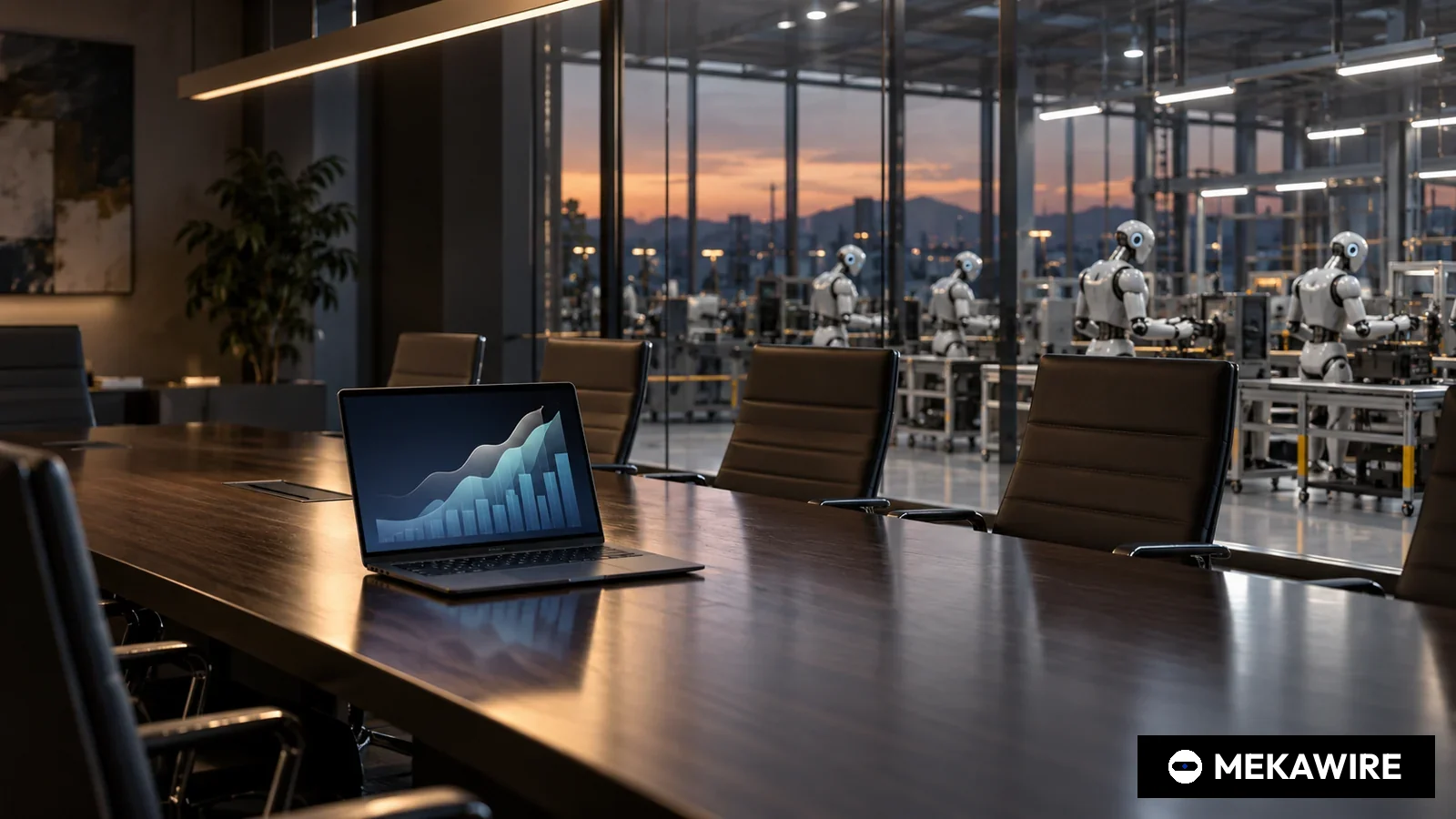
Tesla shareholders approved the 2025 CEO Performance Award at the November 6, 2025 annual meeting, with 1,892,235,822 shares voting for and 564,940,908 against, according to Tesla's 8-K. The award of up to 423,743,904 restricted shares is split into 12 tranches, each earned only when a market capitalization step from $2 trillion to $8.5 trillion is paired with one of 12 operating milestones, among them the cumulative delivery of 1 million Bots, a category the award agreement defines to include Optimus.
Tesla shareholders on November 6, 2025 approved a performance award for chief executive Elon Musk that ties up to 423,743,904 restricted shares to a ladder of market value and operating targets, one of which is the cumulative delivery of 1 million robots such as the company's Optimus humanoid. The vote turned a robot volume number into a contractual condition of how much of Tesla Musk can earn over the next decade.
Tesla reported the result in a Form 8-K filed with the SEC on November 7, 2025. Proposal 4, the management proposal to approve the 2025 CEO Performance Award, received 1,892,235,822 votes for, 564,940,908 against and 12,227,846 abstentions, with 302,456,274 broker non-votes, and the company stated that the proposal was approved. Tesla did not publish a percentage. By MEKAWIRE calculation the votes in favour equal 77.0% of shares voted for or against, or 76.6% if abstentions are added to the denominator.
The board granted the award on September 3, 2025, subject to that vote. According to the proxy excerpt Tesla attached to the 8-K as Exhibit 99.2, the 423,743,904 shares represent 12% of an Adjusted Share Count and are divided into 12 tranches of 35,311,992 shares, each equal to 1% of that count. A tranche becomes earned only when Tesla meets both a market capitalization milestone and one operational milestone. The first market value step is $2 trillion; the next nine each add $500 billion up to $6.5 trillion, and the last two each add $1 trillion, ending at $8.5 trillion. Each threshold must be met on both a six-month and a 30-day trailing average.
There are 12 operational milestones. Four are product goals: 20 million Tesla vehicles delivered, 10 million active Full Self-Driving subscriptions, 1 million Bots delivered and 1 million Robotaxis in commercial operation. The other eight are Adjusted EBITDA levels measured over four consecutive quarters: $50 billion, $80 billion, $130 billion, $210 billion, $300 billion and three separate milestones at $400 billion.
The award agreement, filed as Exhibit 10.2, sets the robot test in specific terms. A Bot is any robot or other physical product with mobility that uses artificial intelligence and is made by or on behalf of Tesla, including Optimus, and vehicles are excluded. The milestone is met when Tesla has cumulatively delivered at least 1 million Bots counted from the date of grant. The vehicle goal, by contrast, counts every Tesla delivered since the company's first delivery, while the subscription and Robotaxi goals require a daily average sustained over three consecutive months. The agreement gives the board's administrator final authority to interpret, count and calculate whether operational milestones are met.
The pay mechanics stretch over ten years. Shares earned within five years of the grant vest on the 7.5th anniversary, and shares earned later vest on the 10th. Any milestone not reached by the 10th anniversary means the related unvested shares are forfeited. Earned shares are reduced by an offset worth $334.09 per share, the fair market value on the grant date, unless Musk pays that amount in cash. He must remain chief executive, or an executive officer in charge of product development or operations approved by disinterested directors, and the 11th and 12th tranches also require a CEO succession framework approved by the administrator. Under a separate voting agreement, unearned shares are voted in proportion to all other shares.
The award was designed by a Special Committee of the board made up of Robyn Denholm and Kathleen Wilson-Thompson, according to Tesla's definitive proxy statement filed on September 17, 2025. That proxy fixed September 15, 2025 as the record date and called the meeting at Gigafactory Texas in Austin. Its narrative described the company's direction as bringing AI into the physical world through products and services including FSD, Optimus and Robotaxi.
Tesla's own filings since the vote show how far Optimus has to travel. In its fourth quarter 2025 update, filed on January 28, 2026, Tesla said it planned to unveil a Gen 3 Optimus in the first quarter of 2026 as its first design meant for mass production, with start of production on a first line planned before the end of 2026 and an eventual planned capacity of 1 million robots per year. The first quarter 2026 update, filed on April 22, 2026, said that first-generation line would replace the Model S and Model X lines in Fremont, and that Gigafactory Texas was being prepared for a second-generation line designed for long-term annual capacity of 10 million robots. By the second quarter 2026 update of July 22, 2026, Tesla said it had decommissioned the S and X lines, was installing the Optimus lines and expected production to start soon, with the first units going to an internal Optimus Academy for training data collection.
- 1
- 2,000,000,000,000
- 35,311,992
- 35,311,992
- 2
- 2,500,000,000,000
- 35,311,992
- 70,623,984
- 3
- 3,000,000,000,000
- 35,311,992
- 105,935,976
- 4
- 3,500,000,000,000
- 35,311,992
- 141,247,968
- 5
- 4,000,000,000,000
- 35,311,992
- 176,559,960
- 6
- 4,500,000,000,000
- 35,311,992
- 211,871,952
- 7
- 5,000,000,000,000
- 35,311,992
- 247,183,944
- 8
- 5,500,000,000,000
- 35,311,992
- 282,495,936
- 9
- 6,000,000,000,000
- 35,311,992
- 317,807,928
- 10
- 6,500,000,000,000
- 35,311,992
- 353,119,920
- 11
- 7,500,000,000,000
- 35,311,992
- 388,431,912
- 12
- 8,500,000,000,000
- 35,311,992
- 423,743,904
Milestones and tranche size disclosed in Tesla's proxy excerpt filed as Exhibit 99.2 to the 8-K of November 7, 2025; cumulative shares = tranche number x 35,311,992. Each tranche also requires one of 12 operational milestones. Figures disclosed, not estimated.
As of Oct 3, 2026
On disclosed figures, Tesla's humanoid rivals are valued far below the award's thresholds. Figure AI's Series C of September 16, 2025 valued it at $39 billion after the money, while Skild AI was valued at $14 billion in a $1.4 billion Series C on January 14, 2026, and Apptronik raised a $520 million Series A extension on February 11, 2026. Unitree Robotics listed on Shanghai's STAR Market on August 18, 2026. The award's first $2 trillion market value step is 51 times Figure's disclosed post-money valuation, a ratio MEKAWIRE derived from the two published figures.
- Figure AI
- US
- Series C
- 1,000,000,000
- 39,000,000,000
- 2025-09-16
- Skild AI
- US
- Series C
- 1,400,000,000
- 14,000,000,000
- 2026-01-14
- Apptronik
- US
- Series A extension
- 520,000,000
- No data
- 2026-02-11
- 1X Technologies
- US
- Series B
- 100,000,000
- No data
- 2024-01-13
- Unitree Robotics
- CN
- IPO (STAR Market)
- No data
- No data
- 2026-08-18
Latest rounds in the MEKAWIRE verified company dataset, from company announcements and exchange filings; — = not disclosed. Ratio cited in text = $2 trillion tranche 1 threshold / Figure post-money of $39 billion = 51. Figures disclosed, not estimated.
As of Oct 3, 2026
The robot target is narrower than it first appears in one sense and broader in another. It requires deliveries rather than production or revenue, and it can be paired with any market value step, so in principle a single tranche could be earned on robots alone. Yet the definition is not limited to humanoids, and the administrator decides how deliveries are counted. The filings MEKAWIRE reviewed do not say whether robots deployed inside Tesla's own plants, or units used for the Optimus Academy, would count as delivered. The open schedule matters too: Tesla's first line had not reached production by its July 2026 update, so the countdown that began on September 3, 2025 is running before the factory that would feed it.
MEKAWIRE analysis
The 1 million Bot milestone makes Optimus the one product in Tesla's pay contract whose entire volume must be created from zero after the grant date, which makes Fremont's ramp the most direct measure of whether the award's robot thesis is real.
The evidence is in the definitions. The vehicle goal counts every Tesla ever delivered, giving that milestone a running start, while the Bot count starts on September 3, 2025, before Tesla had begun producing the robot on any line. Tesla has since told investors that its first line is designed for 1 million robots a year, which on paper would cover the milestone in roughly a year of full output, and has named a Texas line designed for 10 million.
The strongest counter-argument is that the milestone may never decide anything. Each tranche needs only one of 12 operational milestones, eight of which are EBITDA levels, so Musk could earn every tranche without a single robot if the car, software and Robotaxi businesses deliver the profits and market value. On that reading Optimus is an option inside the award, not its spine.
Bull case: Fremont starts production in 2026 as Tesla planned, Gen 3 proves usable in Tesla's own factories and for outside customers, and cumulative deliveries pass 1 million well inside the five-year window that triggers the earlier 7.5-year vesting date. The robot then becomes evidence for the market value steps rather than a separate test.
Bear case: the line ramps slowly, early units stay inside Tesla for data collection, and the administrator faces a contested call on what counts as delivered. A broad Bot definition that admits non-humanoid machines could then draw criticism that the milestone was met in letter but not in spirit.
- By December 31, 2026: whether Tesla reports start of production on the Fremont first-generation Optimus line, as its Q4 2025 update planned.
- Tesla's update for the quarter ended September 30, 2026: any first disclosure of Optimus output or deliveries.
- September 3, 2030: the fifth anniversary of the grant, after which newly earned shares vest only at the 10th anniversary.
- 12 tranches of 35,311,992 shares
- 423,743,904 restricted shares, 12% of Adjusted Share Count
- First-generation line in Fremont designed for 1 million robots a year (Q1 2026 update)
- November 6, 2025, Gigafactory Texas, Austin
- Any AI-driven mobile robot or physical product made by or for Tesla, including Optimus, excluding vehicles
- 1 million Bots delivered cumulatively from the September 3, 2025 grant
- 1,892,235,822 for; 564,940,908 against; 12,227,846 abstain
- $2 trillion to $8.5 trillion
- 10 years from grant
- 77.0% (MEKAWIRE calculation)
Why it matters
The award gives Tesla's humanoid robot a hard number in a binding document approved by shareholders. Until the November 6, 2025 vote, Optimus targets lived in quarterly letters and presentations that can be revised from one quarter to the next. The award agreement filed as Exhibit 10.2 fixes a definition, a counting start date and a 10-year deadline, and it hands interpretation to a board administrator whose decisions will be disclosed in future filings.
For the humanoid sector the vote matters less as a forecast than as a capital allocation signal. A company with Tesla's balance sheet has tied its chief executive's equity, in part, to robot deliveries, and its subsequent filings show it converting Fremont car lines to Optimus and preparing a Texas line designed for 10 million units a year. Suppliers, rivals and investors in private humanoid makers now have a public yardstick against which Tesla's progress will be read each quarter.
Rival analysis
Tesla's rivals are funded differently. Figure AI raised a Series C of more than $1 billion at a $39 billion post-money valuation on September 16, 2025, Apptronik raised a $520 million Series A extension on February 11, 2026, and Skild AI, which builds a general robot model rather than a body, raised $1.4 billion at $14 billion on January 14, 2026. Unitree Robotics listed on Shanghai's STAR Market on August 18, 2026. These companies must show progress to new investors; Tesla funds Optimus from a car business that delivered 1,636,129 vehicles in 2025, according to its Q4 2025 update.
The award's Bot definition also matters for rivals. Because it counts any AI-driven mobile robot Tesla makes, Tesla is not committed to a humanoid-only path, and rivals that bet on wheeled or specialised forms are not outside the comparison set. The pace that matters is Tesla's line versus rivals' disclosed factories, such as Figure's BotQ plant and 1X's Hayward facility, both covered in MEKAWIRE archives.
Valuation context
The first market capitalization step of $2 trillion equals 51 times Figure's disclosed $39 billion post-money valuation, and the final $8.5 trillion step is 218 times it, MEKAWIRE calculates. The comparison is not like for like, since Tesla's value rests mostly on its car and energy businesses, but it shows the scale of market value the award asks Tesla to add on top of whatever Optimus contributes.
The $334.09 per share offset, equal to the stock's fair market value on September 3, 2025, means the award rewards only appreciation above the grant date price. Because each tranche must pair a market value step with an operational goal, the robot milestone cannot pay out on its own; it can only qualify a tranche whose market value step has also been reached on both six-month and 30-day averages.
Supply-chain implications
Tesla's Q4 2025 update said preparations for the first Optimus line included supply chain readiness, without naming suppliers. A line designed for 1 million robots a year implies demand for actuators, gear reducers, motors, bearings, sensors, batteries and compute at a volume no humanoid programme has disclosed, which is why component makers in Japan, Korea, China and Germany watch Tesla's ramp closely.
The Q2 2026 update added that early Optimus builds will go to an Optimus Academy for training data collection. That suggests the first units are as much data gatherers as products, and that compute for training, which Tesla said its Cortex 2 cluster supports for both vehicle and humanoid autonomy, is part of the robot supply chain alongside hardware.
Signals to watch
The near-term signal is whether Fremont's first-generation line reaches start of production before December 31, 2026, the timing Tesla gave in its Q4 2025 update and reaffirmed in later quarters by saying production was expected in 2026. A second is whether Tesla begins to disclose Optimus output or delivery numbers, which it has not yet done in its quarterly updates.
Longer term, the dates are fixed by the award itself. Shares earned before September 3, 2030 vest on the 7.5th anniversary of the grant, and anything not earned by September 3, 2035 is forfeited. Filings in which the administrator certifies a milestone will reveal how the Bot count is being interpreted.
Analyst view
Thesis: the Bot milestone is a meaningful but not decisive part of the award, and its credibility depends on Tesla converting line installation into disclosed deliveries during 2027 and 2028. Confidence: medium. Tesla's own filings establish a line designed for 1 million robots a year and a 2026 production start target, which supports the thesis; the absence of any disclosed output figure as of the July 2026 update, and the administrator's discretion over counting, keep confidence from being high.
The award makes Optimus progress auditable in a way it was not before, because certification of the milestone will have to appear in filings. Investors who want to judge the robot business should watch for that disclosure rather than for demonstration videos.
Questions you should be asking
Will robots used in Tesla's own factories or in the Optimus Academy count as delivered under the award agreement, and will the administrator explain its counting method when it certifies the milestone?
How much of the planned 1 million robots a year capacity in Fremont will be reached in the first full year of production, and when will Tesla begin reporting Optimus output in its quarterly updates?
Does the broad Bot definition, which includes non-humanoid mobile robots, change Tesla's product plans, and will the Texas second-generation line designed for 10 million robots receive a disclosed timeline?