UBTech raises HK$3.1 billion for supply-chain deals a week after its Walker S2 humanoid enters mass delivery
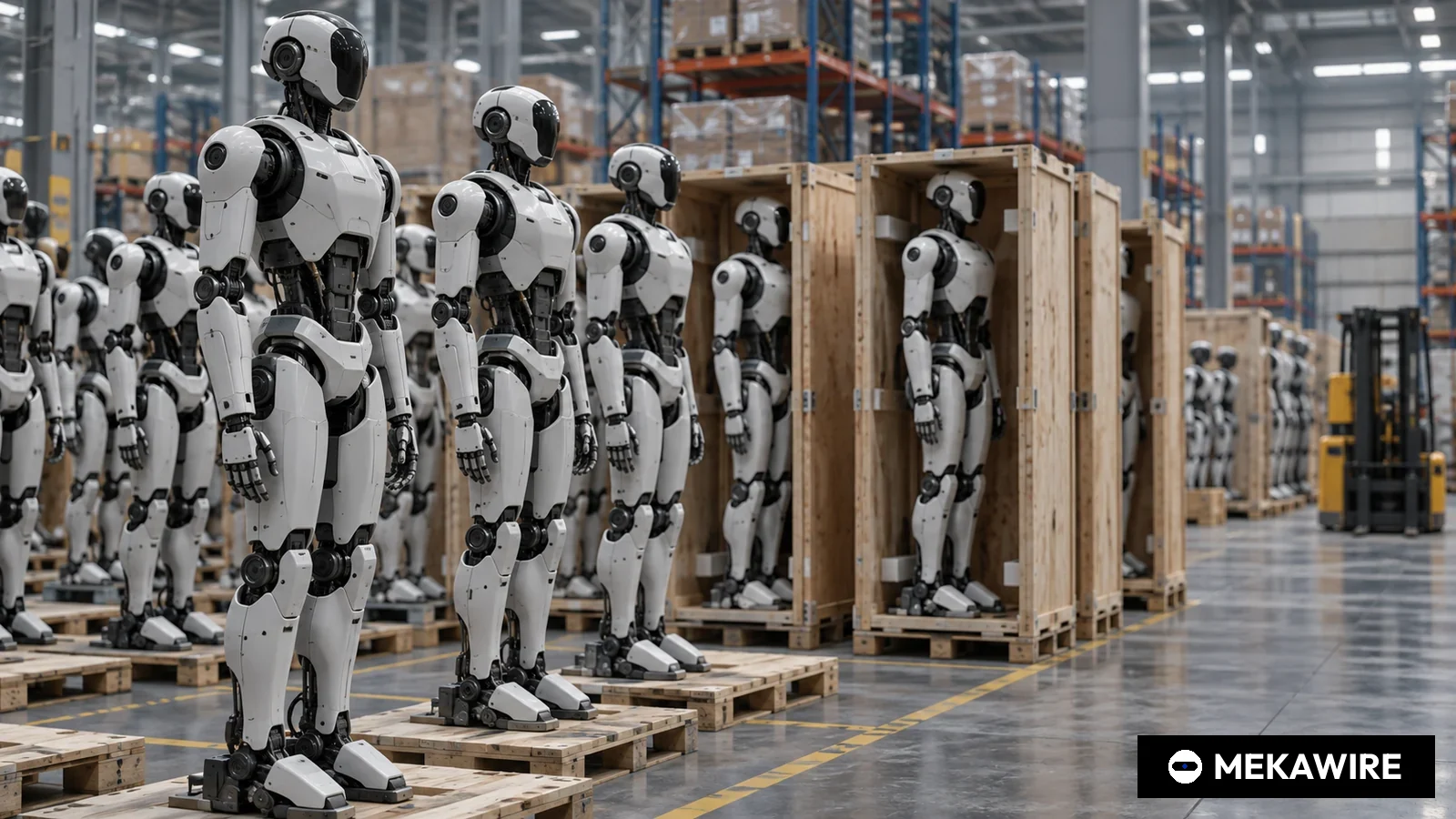
UBTech Robotics agreed on 25 November 2025 to place 31.468 million new H shares at HK$98.80, raising about HK$3.11 billion, and earmarked 75% of the net proceeds for investing in or acquiring upstream and downstream companies.
Eight days earlier the Shenzhen company said its Walker S2 industrial humanoid had entered mass production and delivery, with orders since the start of 2025 above RMB800 million.
UBTech Robotics, the Shenzhen humanoid maker listed in Hong Kong, agreed on 25 November 2025 to sell 31,468,000 new H shares at HK$98.80 each, according to its filing with the Hong Kong stock exchange. The placing brings in gross proceeds of about HK$3,109.04 million, the largest of the three share sales the company carried out that year, and it sends three quarters of the net money toward buying or investing in companies along UBTech's own supply chain.
The price was 11.39% below the HK$111.50 close on the last trading day before the agreement and 18.56% below the five-day average close of HK$121.32. UBTech put net proceeds at about HK$3,055.71 million. It said 75% would be used to invest in or acquire potential upstream or downstream targets in its business value chain, 15% would fund operations and development, including working capital and project construction, and 10% would repay credit facilities. The new shares equal 6.67% of the existing issued share capital and 6.25% of the enlarged capital. Guotai Junan Securities (Hong Kong), CLSA and TradeGo Markets were the placing agents, and completion was due within five business days.
The raise followed an operational milestone. In a release dated 17 November 2025, UBTech said the Walker S2, its full-size industrial humanoid, had entered mass production and delivery, with a first batch of several hundred units heading to frontline industrial sites. The company said orders for the Walker series since the start of 2025 had passed RMB800 million, about US$112 million. The two largest it named were a RMB250 million contract signed in September, the biggest of the year, and a RMB159 million order for a data collection centre in Zigong.
UBTech set out a production path in the same release: 500 units delivered within 2025, annual capacity of 5,000 units in 2026 and 10,000 units in 2027. It listed BYD, Dongfeng Liuzhou Motor, Geely Auto, FAW-Volkswagen Qingdao, Audi FAW, BAIC New Energy, Foxconn and SF Express among the companies where the Walker S series has worked in car plants, smart factories, logistics and data collection centres.
The annual results UBTech filed on 31 March 2026 show how the year closed. The company sold 1,079 full-size humanoid units in 2025, a figure that covers all of its full-size models rather than the Walker S2 alone, and booked about RMB820.6 million of revenue from full-size humanoid products and services. Group revenue rose 53.3% to RMB2,001.0 million and the net loss narrowed to RMB789.8 million from RMB1,159.9 million. The filing said annualised capacity had passed 6,000 units and that the placing completed in December had raised RMB2,777.369 million.
Founded in 2012 and listed on the Hong Kong Main Board in December 2023, UBTech built its business on education, consumer and service robots before turning to full-size humanoids for factories. It has leaned on the equity market to pay for that shift. In 2025 it also placed 10,155,099 H shares at HK$90.00 in February and 30,155,450 H shares at HK$82.00 in July, filings show. With the November deal, gross proceeds from the three placings come to about HK$6.5 billion. The November price was 20.5% above the July price.
The Walker S2 is built for continuous shift work. According to UBTech's product page, the robot swaps its own battery in about three minutes and runs a dual-battery system that can switch between two packs and one, so it does not have to leave the line to charge. It carries a payload of 15 kg, reaches from floor level to 1.8 metres, and its waist rotates through plus or minus 162 degrees and pitches through 125 degrees. For depth perception it uses a passive binocular RGB camera pair with learned stereo depth estimation rather than lidar. Task planning runs on UBTech's BrainNet 2.0 framework and a Co-Agent system that the company says handles intention understanding, tool use and anomaly detection, and coordinates groups of robots on a line.
The use of proceeds sets UBTech apart from its closest Hong Kong-listed peer. Dobot, the Shenzhen cobot maker, placed 16,660,000 H shares at HK$46.80 on 6 November 2025 for gross proceeds of about HK$779.7 million at a 10.3% discount, and assigned 40% of the net money to research and product innovation and 20% to investment, acquisition and alliances. UBTech's 75% allocation to value-chain deals is the clearest signal yet that a Chinese humanoid maker intends to own parts of its supply base. On the mainland it competes for the same car-plant and logistics pilots with Unitree, AgiBot and XPeng, while Tesla, Figure and Agility Robotics lead the field in the United States.
- UBTech (Feb placing)
- 2025-02-27
- 10.16
- 90
- 913.96
- No data
- 3.1
- UBTech (Jul placing)
- 2025-07-28
- 30.16
- 82
- 2472.75
- No data
- 0.9
- UBTech (Nov placing)
- 2025-11-25
- 31.47
- 98.8
- 3109.04
- 11.39
- 75
- Dobot
- 2025-11-06
- 16.66
- 46.8
- 779.7
- 10.3
- 20
From HKEX filings by UBTech (9880) and Dobot (2432). Gross proceeds = shares placed x placing price. UBTech's February and July figures are from completion announcements, which do not state the discount (—). Investment share for UBTech February and July is the disclosed 'offshore and onshore investments' line; Dobot's is 'investment, acquisition and strategic alliance'. Figures disclosed, not estimated.
As of Oct 1, 2026
The order book carries a caveat. A material part of what UBTech disclosed is tied to data collection centres, facilities where humanoids generate training data, rather than to robots doing paid production work on a customer's line. The RMB159 million Zigong contract alone is close to a fifth of the RMB800 million total. Such projects help fill a factory, but they say less about whether a carmaker will buy a second and third batch. Order value also differs from revenue: deliveries, acceptance and payment can lag a signing by quarters.
The placing itself carries costs for existing holders. A discount of more than 11% to the last close and 18.56% to the five-day average, a third dilutive sale inside ten months and a large blank-cheque allocation for acquisitions leave investors relying on management to find targets at sensible prices. UBTech did not name any target in the filing.
- Walker orders since start of 2025 (floor)
- 800
- RMB million
- 2025-11-17
- Largest single order (September 2025)
- 250
- RMB million
- 2025-11-17
- Zigong data collection centre order
- 159
- RMB million
- 2025-11-17
- 2025 delivery target
- 500
- units
- 2025-11-17
- Planned capacity 2026
- 5,000
- units a year
- 2025-11-17
- Planned capacity 2027
- 10,000
- units a year
- 2025-11-17
- Full-size humanoids sold in 2025 (all models)
- 1,079
- units
- 2026-03-31
- Full-size humanoid revenue 2025
- 820.6
- RMB million
- 2026-03-31
- Average revenue per full-size unit 2025
- 0.76
- RMB million
- derived
Targets from UBTech's 17 November 2025 release; outcomes from its 2025 annual results filed with HKEX on 31 March 2026. Average revenue per unit = RMB820.6 million / 1,079 units, and includes services. Figures disclosed, not estimated, except the derived average.
As of Oct 1, 2026
MEKAWIRE analysis
UBTech used the order momentum of late 2025 as currency, turning a high share price into a war chest for vertical integration, and the bet pays only if Walker S2 volumes keep compounding beyond state-linked data-collection projects.
The evidence for intent is in the filing. Seventy-five per cent of HK$3.06 billion is earmarked for upstream or downstream acquisitions, compared with 0.90% for investments in the July placing and 3.10% in February. The timing, eight days after the mass-delivery announcement and with orders above RMB800 million, let UBTech price the deal 20.5% above its July placing despite the discount to market.
The strongest counter-argument is that vertical integration is premature. With 1,079 full-size units sold in 2025 and a net loss of RMB789.8 million, UBTech's scale is still small next to the component makers it might buy, and owning reducers, motors or batteries at this volume can lock in cost rather than lower it.
Bull case. If capacity reaches the 5,000 units planned for 2026 and car and electronics plants reorder, owned suppliers would protect margins and supply as rivals compete for the same parts. The placing would then look like cheap funding raised at the top of a cycle.
Bear case. If demand stays concentrated in subsidised data centres and pilot cells, the acquisitions add fixed cost and goodwill to a loss-making group. Shareholders would carry dilution from three placings without matching growth in recurring orders.
Signals to watch:
- By 31 December 2026: whether UBTech reports reaching its 2026 capacity target of 5,000 Walker units a year.
- By 31 March 2027: the 2026 annual results, which must show how much of the November 2025 proceeds went to acquisitions and what was bought.
- 2027: whether UBTech confirms the 10,000-unit capacity target and discloses repeat orders from the carmakers and Foxconn named in its 2025 release.
- RMB2,001.0 million, net loss RMB789.8 million
- about HK$3,055.71 million
- 31,468,000 at HK$98.80
- 25 November 2025
- about HK$3,109.04 million
- 75% value-chain investment or acquisition, 15% operations, 10% debt repayment
- 5,000 units in 2026, 10,000 in 2027
- 11.39% (HK$111.50)
- 1,079 units
- above RMB800 million (17 Nov 2025)
Why it matters
The November 2025 placing is the moment a Chinese humanoid maker moved from raising money to run itself to raising money to buy its suppliers. UBTech's two earlier 2025 placings sent most proceeds to working capital and debt repayment, with 3.10% and 0.90% for investments. This one reverses the mix, with 75% of about HK$3.06 billion reserved for upstream or downstream targets.
It also fixes a reference point for the sector. UBTech announced mass delivery, an order total above RMB800 million and capacity goals of 5,000 and 10,000 units within eight days of the deal. Those are the numbers investors and rivals measured Chinese humanoid makers against through 2026, and the 1,079 units UBTech reported selling in 2025 show the company more than doubled its own 500-unit delivery goal for the year, on a broader count that includes all full-size models.
Rival analysis
In Hong Kong, Dobot is the nearest listed comparison. Its 6 November 2025 placing raised about HK$779.7 million gross, a quarter of UBTech's, and kept acquisitions to 20% of net proceeds, with 40% for research. Dobot remains a cobot company adding humanoids, and its capital plan reflects that. UBTech is the only listed Chinese company so far to tie a placing this large to buying into its value chain.
On the mainland, Unitree, AgiBot and XPeng compete for the same pilots in car plants, logistics hubs and data collection centres, and all three were preparing listings or production lines in this period. In the United States, Tesla, Figure and Agility Robotics are building humanoids for their own or partner factories. UBTech's edge in late 2025 was a disclosed order book and named industrial customers, while its weakness was a loss-making income statement that rivals with car-group parents do not show separately.
Valuation context
The placing price implies a value for UBTech without needing market data. The 31,468,000 new shares equal 6.25% of the enlarged share capital, which puts total shares at about 503.5 million after completion. At HK$98.80 that gives an implied equity value of about HK$49.7 billion (formula: 31,468,000 / 0.0625 x HK$98.80).
Against 2025 group revenue of RMB2,001.0 million, that is a rich multiple for a company that lost RMB789.8 million. The placing price was 20.5% above July's HK$82.00 and 9.8% above February's HK$90.00, so each 2025 deal was struck higher, but the November discount of 18.56% to the five-day average shows the book needed a sharp concession to clear HK$3.1 billion in one go.
Supply-chain implications
A full-size humanoid depends on precision reducers, frameless torque motors, encoders, dexterous hands, battery packs and stereo cameras, much of which UBTech buys from Chinese suppliers that also serve Unitree, AgiBot and car-group programmes. As output plans rise to 5,000 and then 10,000 units a year, joint modules and reducers are the parts most exposed to shortages and price pressure.
The Walker S2's design choices point to where UBTech may want control. Autonomous three-minute battery swapping and a dual-battery system make battery packs and swap stations a recurring cost centre. A camera-only stereo vision stack lowers sensor cost but raises the importance of in-house algorithms. Buying into actuator or battery suppliers would be the obvious use of the 75% allocation.
Signals to watch
The first signal is disclosure of how the HK$3.06 billion is spent. UBTech must report use of proceeds in its interim and annual reports, and any acquisition above Hong Kong listing-rule thresholds triggers its own announcement. The 2026 annual results, due by 31 March 2027, will show the split.
The second is volume. UBTech's March 2026 filing put annualised capacity above 6,000 units. Whether 2026 deliveries reach a level close to the 5,000-unit plan, and how much comes from repeat industrial customers rather than data collection projects, will decide whether the 2025 order book was a start or a peak.
Analyst view
Thesis: UBTech converted late-2025 order momentum into acquisition capital, and the outcome depends on whether industrial reorders follow. Confidence: medium. The filing and results give verified data on money raised, units sold and losses, which supports a clear reading of intent. Confidence is not high because the order book's split between data centres, state-linked buyers and factories is only partly disclosed, and no acquisition target was named at the time.
The placing was well timed. It came when the company could point to mass delivery and a record order total, and the 2025 results confirm that deliveries exceeded the initial target. The risk is that the proceeds turn UBTech into an asset-heavy group before demand for factory humanoids is proven at scale.
Questions you should be asking
How much of the more than RMB800 million in Walker orders comes from data collection centres and government-linked projects, and how much from manufacturers buying robots for production work?
Which parts of the value chain does UBTech intend to buy into with the 75% allocation: actuators, batteries, hands, or downstream integrators?
How many of the 1,079 full-size humanoids sold in 2025 were Walker S2 units for industrial use, compared with research and education models?
Will the carmakers and Foxconn named in the November release convert pilots into multi-year volume contracts in 2026?