UBTech unveils Walker S3 humanoid: 59.3 kg, 2,070 TOPS, 30-second battery swaps
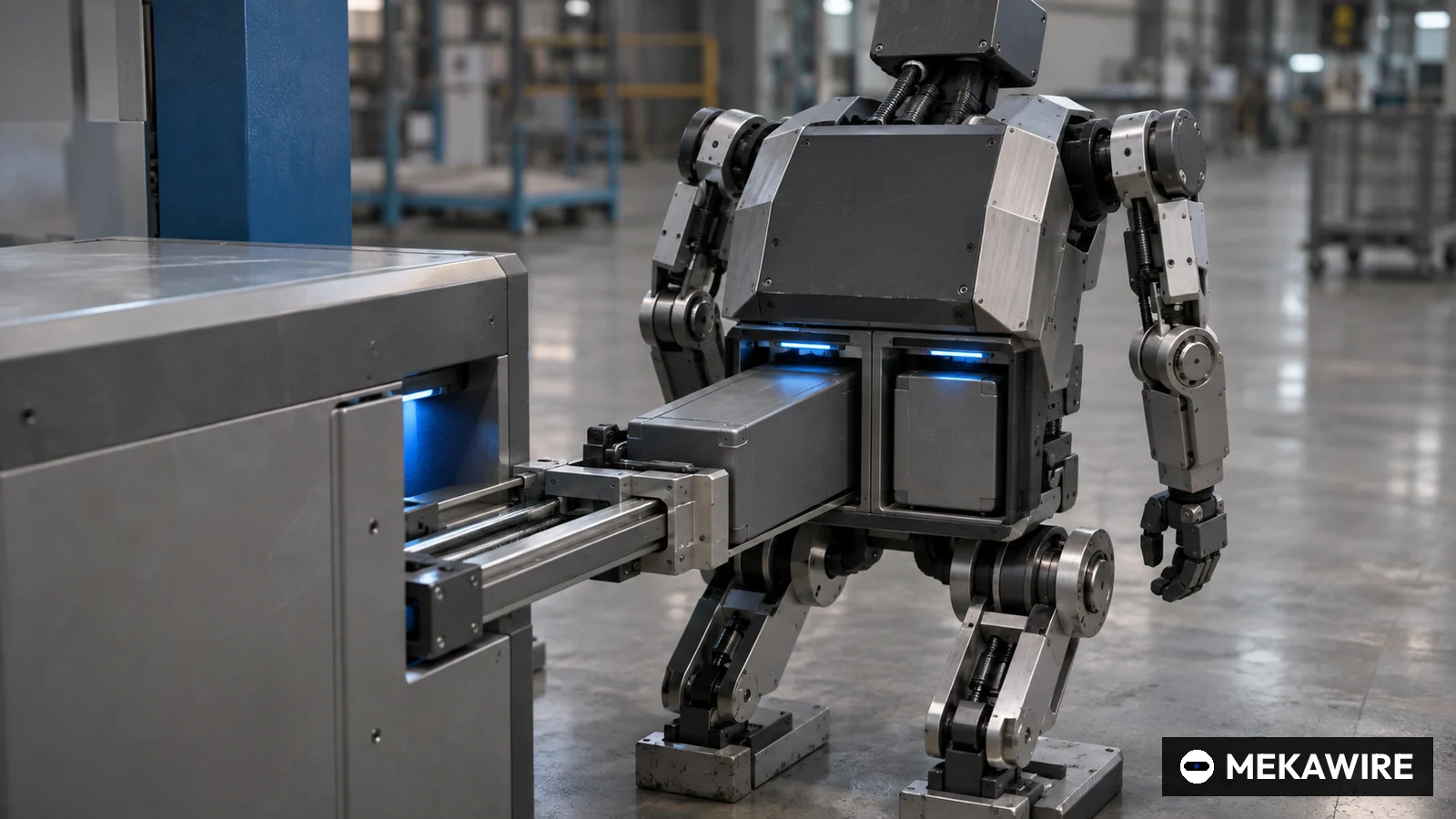
UBTech Robotics launched Walker S3, its new industrial humanoid, on Nov 29, 2026. Launch figures reported by IT Home and MyDrivers, both citing the company, put it at 174 cm and 59.3 kg, 14.29% lighter than before, with 51 degrees of freedom, 2,070 TOPS of compute, up to eight hours of work per session and dual batteries that hot-swap in 30 seconds. Neither report gives a price, a customer or a delivery date.
UBTech Robotics launched Walker S3, a new generation of its industrial humanoid, on Nov 29, 2026, three days after showing the robot in a video on its X account. The launch figures, reported by IT Home and MyDrivers and attributed by both to the company, describe a lighter and simpler machine: 174 cm tall and 59.3 kg, 14.29% lighter than the model UBTech compared it with, with 66% fewer wiring harnesses and half as many screws. Neither report gives a price, a customer or a delivery date.
The numbers matter because UBTech is one of the few humanoid makers that reports unit sales in its filings. In the six months to June 30, 2026 it sold 921 full-size humanoids and booked RMB 590.3 million of revenue from full-size humanoid products and services, according to its interim results filed with the Hong Kong stock exchange. Walker S3 is the product that has to carry that business into 2027.
What UBTech says changed, from hips to batteries
The reported specification covers four areas. Body: 51 degrees of freedom, a redesigned hip joint, a waist that turns 332 degrees, a low single-knee kneeling posture and walking at 2 m/s. Hands: UBTech says its own dexterous hand moves 22% more precisely. Computing: 2,070 TOPS, which UBTech describes as a 500% increase, running a vision-language-action (VLA) model that the company says improves new-task adaptation efficiency by more than 50%, with version 3.0 of its Co-Agent multi-robot network. Vision: a nine-camera distributed panoramic array and upgraded 3-megapixel stereo cameras, with recognition accuracy up 46%.
The working-day figures are the ones factory buyers will check first. UBTech says one session lasts up to eight hours and that the two batteries can be hot-swapped in 30 seconds, with 3,000 charge cycles per battery, MyDrivers reported. Arms and end effectors come off with quick-release mounts, and UBTech says this maintenance design, combined with built-in self-calibration, cuts fault repair time by 76%. Parts are built to automotive-grade standards, final assembly complexity is down 40%, and UBTech puts the domestic share of the supply chain for key components above 93%. In its Nov 26 video post UBTech called Walker S3 the world's first humanoid robot to rappel and showed it rappelling, sprinting and crawling, and helping a firefighter vault a high wall.
- Battery
- Up to 8 h per session; dual batteries, 30 s hot swap; 3,000 cycles
- Autonomous battery swap within 3 min
- Payload
- Not given
- 15 kg within a 0 to 1.8 m workspace
- Weight
- 59.3 kg, down 14.29% (implied baseline about 69.2 kg, MEKAWIRE calc.)
- 70 kg excluding dexterous hands (user guide)
- Compute
- 2,070 TOPS, described as up 500%
- Not stated on the page
- Vision
- 9-camera panoramic array; 3 MP stereo cameras
- Pure RGB binocular stereo vision
- AI software
- VLA model; Co-Agent 3.0 multi-robot network
- BrainNet 2.0 and Co-Agent
Walker S3: UBTech launch figures as reported by IT Home and MyDrivers on Nov 29, 2026. Walker S2: UBTech's Walker S2 product page and user guide.
As of Nov 29, 2026
MEKAWIRE analysis: a cost and uptime release
Walker S3 is a cost and uptime release more than a capability release. Most of the headline changes, fewer parts, faster battery changes, quicker repairs and a domestic supply chain, are about how many hours a robot works per yuan rather than about new skills.
Three details support that reading. The weight: the reported 14.29% cut to 59.3 kg implies a comparison baseline of about 69.2 kg (59.3 / 0.8571, MEKAWIRE calc.), close to the 70 kg excluding dexterous hands that UBTech's Walker S2 user guide lists; the reports do not name the baseline. The battery: UBTech's product page says Walker S2 swaps its battery autonomously within 3 minutes; the S3 figure is 30 seconds, although the reports do not say whether the S3 change is done by the robot itself. The compute: Walker S3 is reported at 2,070 TOPS, and NVIDIA rates its top Jetson Thor module, the T5000, at a peak of 2,070 TFLOPS in sparse FP4. The launch reports give no precision or sparsity, so the matching numeral does not by itself show the same chip. UBTech has not named the processor in the reported launch figures, and Xilect, the robot chip venture UBTech started with MetaX in May, plans its first chip only in 2028.
The strongest counter-argument is that rappelling, sprinting and crawling show real progress in whole-body control. They do, but a demonstration video is not a deployment, and the reports contain no payload figure to set against the 15 kg that UBTech states for Walker S2.
What UBTech's filings say about the business it is selling into
UBTech's group revenue in the first half was RMB 1,269.1 million, and its largest customer accounted for 24% of it. Revenue per full-size humanoid sold works out to about RMB 641,000 (RMB 590.3 million / 921 units, products and services together, MEKAWIRE calc.). A robot that is cheaper to build and faster to repair is how UBTech can keep that figure falling without giving up its 44.7% gross margin; the next results will show whether it works. The company joins the Hang Seng TECH Index on Dec 7. Background: the MEKAWIRE UBTech explainer and our humanoid battery-life explainer.
- Group revenue
- RMB 1,269.1M, up 104.2%
- Full-size humanoid revenue (products and services)
- RMB 590.3M, up 1,445.0%
- Full-size humanoids sold
- 921
- Revenue per full-size humanoid sold
- About RMB 641,000 (MEKAWIRE calc.)
- Gross margin
- 44.7%
- Largest customer
- 24% of revenue
Source: UBTech interim results, HKEX filing of Aug 28, 2026. Revenue per unit = full-size humanoid revenue / units sold.
As of Nov 29, 2026
What to watch
A price and a first delivery date for Walker S3; a payload figure; whether UBTech names the compute module; and the full-year 2026 humanoid unit count in UBTech's annual results, which for 2025 came on March 31.
- 59.3 kg, down 14.29%
- 2,070 TOPS
- Up to 8 h; 30 s battery hot swap
- 51
- About RMB 641,000 (MEKAWIRE calc.)
- Over 93%
- 921 (HKEX interim results)