China writes embodied AI into its Government Work Report for the first time, naming it a future industry
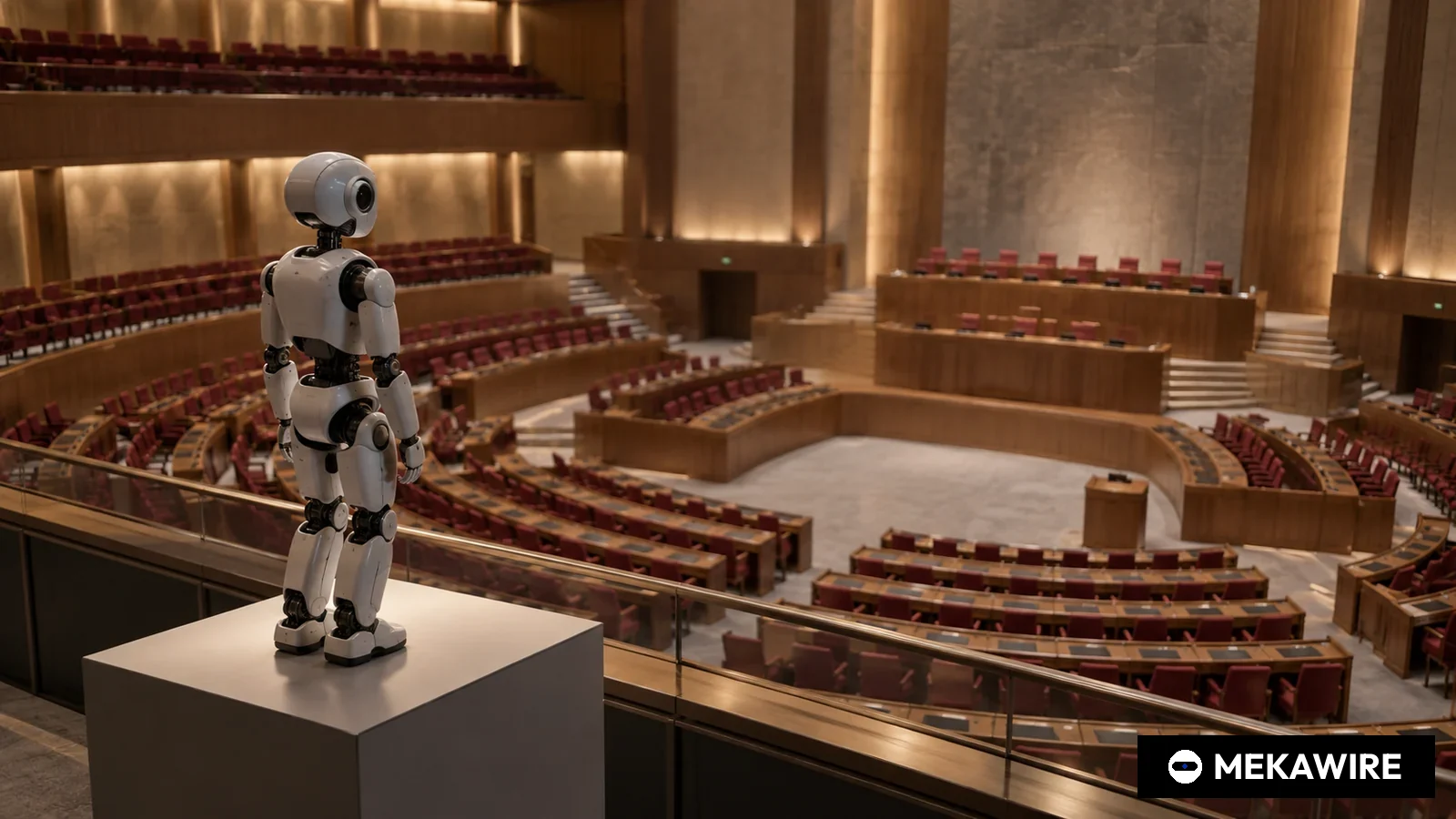
Premier Li Qiang's 2025 Government Work Report, delivered to the National People's Congress on March 5, lists embodied AI alongside biomanufacturing, quantum technology and 6G as future industries Beijing will cultivate, and pledges a funding growth mechanism for them.
The same report calls for intelligent robots as a new generation of smart terminals, a year after the 2024 report made no mention of embodied AI.
China's State Council has placed embodied artificial intelligence on its top annual policy agenda for the first time. In the 2025 Government Work Report that Premier Li Qiang delivered on March 5 at the third session of the 14th National People's Congress in Beijing, the government said it would set up a mechanism to grow investment in future industries and named four of them: biomanufacturing, quantum technology, embodied AI and 6G.
The wording matters because of what came before it. The 2024 report, according to the full text published on the central government portal, did not contain the term embodied AI at all. It spoke of drafting a future industries plan and opening new tracks in quantum technology and life sciences. Twelve months later, robots that perceive and act in the physical world have been lifted into the same sentence as quantum computing.
The report pairs that line with a second, more commercial instruction. Under the continuing AI Plus campaign, the government said it would support wide use of large models and vigorously develop intelligent connected new energy vehicles, AI phones and computers, and intelligent robots as a new generation of smart terminals, together with intelligent manufacturing equipment. Robots are therefore framed both as a frontier research bet and as a consumer and industrial product category that should reach scale.
The money behind the language is set out elsewhere in the report. The government plans a deficit ratio of about 4% of GDP, one percentage point higher than last year, for a deficit of 5.66 trillion yuan. It intends to issue 1.3 trillion yuan of ultra long special treasury bonds, 300 billion yuan more than in 2024, and 4.4 trillion yuan of local government special bonds. It also promised differentiated regulation of venture funds, more policy finance, faster growth of venture capital and what it calls patient capital, and a continued programme of major technology upgrades and large scale equipment renewal in manufacturing. The report sets a GDP growth target of around 5% for 2025.
The industrial base the policy builds on is already large. The National Bureau of Statistics reported on February 28 that China produced 556,000 industrial robots in 2024, up 14.2% from a year earlier, and 10.519 million service robots, up 15.6%. Output of new energy vehicles grew 38.7% and integrated circuits 22.2%, while value added in high technology manufacturing rose 8.9%. Spending on research and experimental development reached 3.613 trillion yuan, equal to 2.68% of GDP.
- Industrial robots (sets)
- 556,000
- 14.2
- Service robots (sets)
- 10,519,000
- 15.6
- New energy vehicles
- No data
- 38.7
- Integrated circuits
- No data
- 22.2
National Bureau of Statistics, 2024 statistical communique (Feb 28, 2025) and 2024 economic data release (Jan 17, 2025). NEV output stated in the 2025 Government Work Report as exceeding 13 million; exact unit figures for NEVs and ICs not used here. Figures disclosed, not estimated.
As of Mar 5, 2025
At the ministry level, the push predates this report. The Ministry of Industry and Information Technology's guidance on humanoid robot innovation, issued in November 2023, set a goal of establishing an initial humanoid innovation system by 2025, with breakthroughs in a batch of key technologies and secure supply of core components, and of reaching world advanced level in overall strength by 2027. The 2025 report effectively raises that sector plan to the level of the State Council's annual work programme, the year its first deadline falls due.
China also starts from a dominant position in conventional automation. The International Federation of Robotics counted 276,288 industrial robot installations in China in 2023, 51% of the global total of 541,302 units, against 46,106 in Japan, 37,587 in the United States, 31,444 in South Korea and 28,355 in Germany. The IFR put China's operational stock at about 1.8 million units.
- China
- 276,288
- 51
- Japan
- 46,106
- 8.5
- United States
- 37,587
- 6.9
- South Korea
- 31,444
- 5.8
- Germany
- 28,355
- 5.2
IFR World Robotics press release, Sept 24, 2024. Share = country installations / global installations of 541,302 units, rounded to one decimal.
As of Mar 5, 2025
The companies most exposed to the new language are a mix of listed firms and young startups. UBTECH Robotics, founded in 2012, has been listed in Hong Kong since December 2023 and announced a placing of new H shares on February 27. Unitree Robotics dates from 2016. AgiBot and Galbot were both founded in 2023, and Galaxea AI announced a Series A round on February 20. For these companies, a national future industry label can ease access to local government funds, state procurement pilots and bank credit, although the report itself names no company and attaches no budget line to embodied AI.
Several questions remain open. The report does not define embodied AI, does not say how the future industry investment mechanism will be structured or funded, and gives no output target for humanoid or service robots. Those details are likely to come from ministries and provincial governments in the months ahead, and from the drafting of the 15th Five Year Plan, which covers 2026 to 2030.
MEKAWIRE analysis
The 2025 report converts embodied AI from a ministry program into a State Council priority, which should accelerate local capital toward Chinese humanoid makers faster than demand can absorb it.
The evidence is in the structure of the text. Embodied AI sits in the future industry list next to a new investment growth mechanism, while intelligent robots appear separately in the terminal list that the government wants to scale under AI Plus. That double placement gives provinces two separate policy hooks for subsidies, and the fiscal stance, with a 4% deficit and 1.3 trillion yuan of ultra long bonds, leaves room to use them.
The strongest counter argument is that one sentence in a work report carries no budget. The 2024 report named quantum technology and life sciences as new tracks without producing a dedicated national fund for either, and MIIT's 2023 humanoid targets were qualitative. Without numbers, the mention may change rhetoric more than capital flows.
Bull case: provinces and city investment platforms treat the listing as a mandate, venture funds follow, and component makers gain scale on reducers, motors and sensors that already supply China's 556,000 unit industrial robot output. China then reaches the 2027 world advanced level target with a cost lead in hardware.
Bear case: duplicated local projects create too many humanoid startups chasing a small market, valuations outrun revenue, and policy attention shifts once the 15th Five Year Plan sets new priorities. Core technology gaps in robot foundation models and precision components remain.
Signals to watch:
- Mid March 2025: NBS January to February output data, the first 2025 reading on industrial and service robot production.
- By December 31, 2025: whether MIIT reports that the 2025 humanoid innovation system goal in its November 2023 guidance has been met.
- 2025 to 2026: whether the 15th Five Year Plan for 2026 to 2030 keeps embodied AI in its future industry list and attaches funding to it.
- Deficit ratio about 4%; 1.3 trillion yuan ultra long special treasury bonds
- New investment growth mechanism for future industries (no amount given)
- 2025 Government Work Report, State Council of China
- March 5, 2025, by Premier Li Qiang to the 14th NPC, third session
- Named a future industry with biomanufacturing, quantum technology and 6G
- Around 5%
- Intelligent robots listed with connected NEVs, AI phones and AI PCs
- 556,000 industrial robots (+14.2%); 10.519 million service robots (+15.6%)
Why it matters
The Government Work Report is the State Council's annual operating plan, and line items in it are used by ministries, provinces and state banks to justify budgets and credit. Moving embodied AI from a sector guidance issued by MIIT in November 2023 into this document changes who is accountable for it: provincial governors and city party secretaries now have a cabinet level reference when they approve industrial parks, guidance funds or procurement pilots for humanoid and service robots.
The second robot reference, intelligent robots as a smart terminal under AI Plus, is arguably more important commercially. It places robots in the same consumption and upgrade logic as connected NEVs, AI phones and AI PCs, categories where China has used subsidies, trade in programmes and local procurement to build volume quickly. NEV output grew 38.7% in 2024 according to the NBS, and the report says annual NEV production exceeded 13 million. That is the template policymakers appear to have in mind.
Rival analysis
Among Chinese humanoid makers, the listed UBTECH Robotics (founded 2012, Hong Kong listed since December 2023) has the most direct capital market channel and announced a new H share placing on February 27, 2025. Unitree Robotics (founded 2016) is the best known quadruped and humanoid hardware maker. AgiBot and Galbot (both founded 2023) and Galaxea AI (Series A announced February 20, 2025) represent the newer wave built around embodied foundation models. The report favours all of them, but the private, younger firms gain most from easier access to local guidance funds, since UBTECH already taps public equity.
For rivals outside China, the practical change is coordination. Chinese ministries, provinces and state financiers now share one reference text that names embodied AI, which tends to shorten the time between a policy signal and local funding. This article did not compare the report against government documents in the US, Japan, South Korea or Germany, so it makes no claim about whether those countries have issued equivalent language.
Valuation context
The report contains no valuation signals and no company names. The relevant financial levers are macro: a deficit of 5.66 trillion yuan, 1.3 trillion yuan of ultra long special treasury bonds, 4.4 trillion yuan of local special bonds and a pledge to grow venture capital and patient capital with differentiated regulation of venture funds. These widen the pool of state linked capital that can be directed to future industries.
For investors, the risk is that policy labelling drives private market valuations ahead of revenue. Snapshot data held by MEKAWIRE show multiple Chinese embodied AI rounds in early 2025 with undisclosed amounts and valuations, which makes price discovery hard. Listed comparables such as UBTECH will be the visible gauge of how markets price the policy.
Supply-chain implications
China's 2024 output of 556,000 industrial robots and 10.519 million service robots, as reported by the NBS, means the motor, reducer, controller and sensor base for humanoids already exists at scale. The 2023 MIIT humanoid guidance explicitly targeted secure supply of core components by 2025, and the 2025 report's reference to intelligent manufacturing equipment and to major technology upgrades and large scale equipment renewal in manufacturing supports that domestic substitution push.
The IFR's 2023 installation data, 276,288 units in China against 46,106 in Japan and 28,355 in Germany, show that China is the largest demand pool for automation suppliers. A policy shift toward embodied AI raises demand for precision reducers, frameless torque motors, tactile sensors and edge compute, where Japanese and European suppliers still hold strong positions and Chinese suppliers are trying to gain share.
Signals to watch
Mid March 2025: NBS January to February industrial output data, the first 2025 reading on industrial and service robot production. Any acceleration from the 14.2% and 15.6% growth rates of 2024 would show policy pull through.
Through 2025: provincial and municipal implementation plans that translate the future industries line into funds, parks and procurement. Watch Beijing, Shanghai, Shenzhen and Hangzhou in particular, where most humanoid startups are based.
By year end 2025: MIIT's assessment of the 2025 goals in its November 2023 humanoid guidance, and the shape of the 15th Five Year Plan for 2026 to 2030.
Analyst view
Thesis: the 2025 report is a coordination signal rather than a funding event, but in China's system coordination signals reliably move local capital. Confidence: medium. Reasons: the text is unambiguous and new relative to 2024, and fiscal settings are expansionary; however, the report attaches no budget or output target to embodied AI, and the investment growth mechanism is undefined.
We expect the first measurable effects to appear in local guidance fund announcements and in procurement pilots rather than in national statistics, which will lag. Over a two to three year view, the greater risk is overcapacity and price competition among humanoid makers rather than underfunding.
Questions you should be asking
How will the future industry investment growth mechanism be structured, and will it be a national fund, a tax measure or a direction to local governments?
Will the government publish a quantified humanoid or service robot target, and will the NBS add a humanoid line to its output statistics?
How will policy distinguish embodied AI research from intelligent robot terminals that compete on price, and which ministry leads each?