Service robot maker Excelland lists in Hong Kong at the bottom of its range as institutions leave the book short
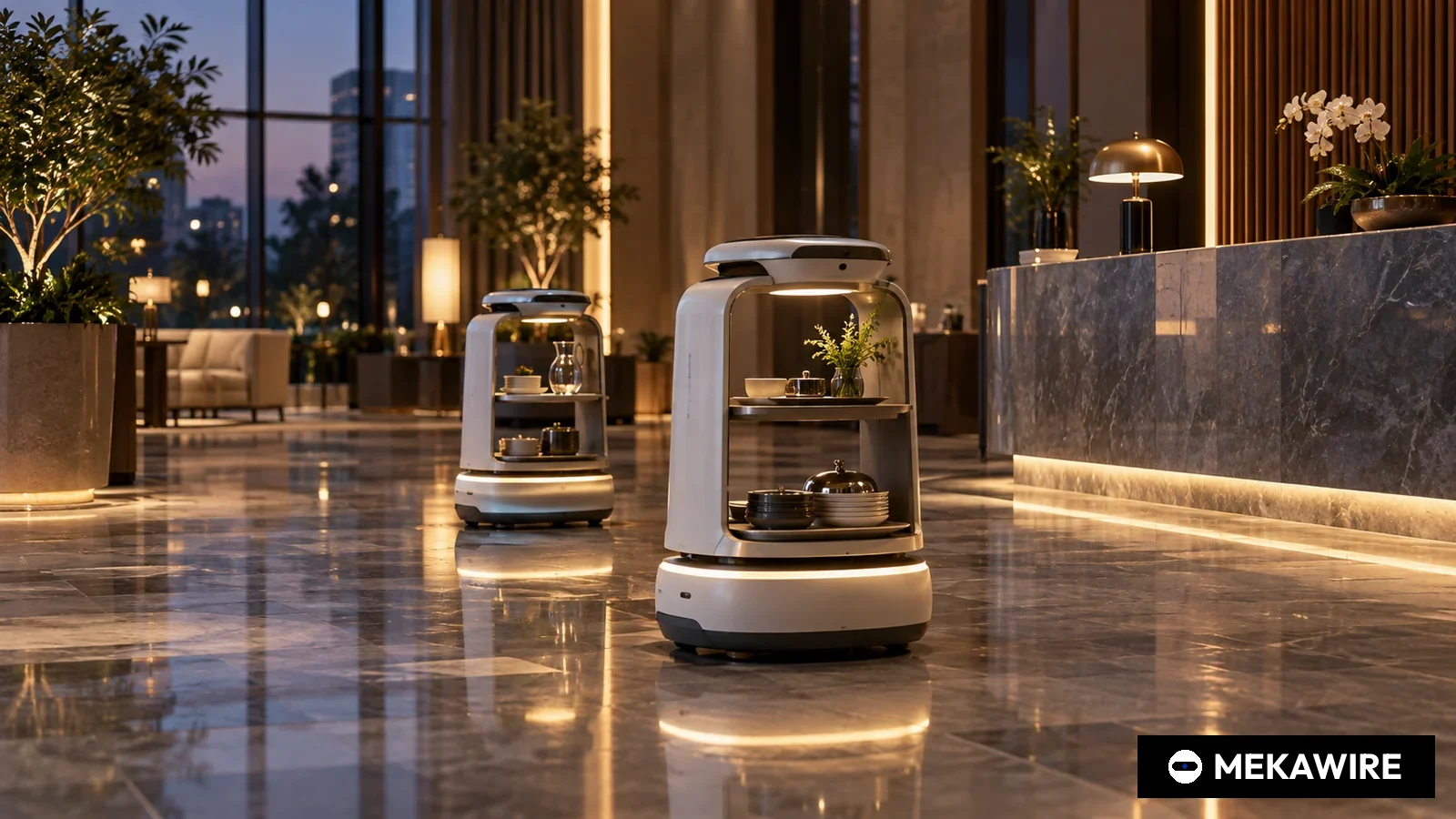
Excelland Robotics (Wuxi), ranked third in China's commercial service robot market, began trading in Hong Kong on 9 September 2026 after pricing 45 million H shares at HK$14.45, the bottom of its range, for gross proceeds of HK$650.2 million.
Retail investors subscribed 140.02 times while the international tranche was covered only 0.99 times, and the prospectus shows a 2025 loss of RMB110.8 million on revenue of RMB317.7 million.
Excelland Robotics (Wuxi), a Chinese maker of delivery, reception and cleaning robots for hotels, entertainment venues and office buildings, began trading on the Main Board of the Hong Kong Stock Exchange on 9 September 2026 under stock code 3231. It sold 45,000,000 H shares at HK$14.45 each, the bottom of its HK$14.45 to HK$19.55 range, raising gross proceeds of HK$650.2 million, according to its allotment results announcement filed on 8 September.
The two halves of the book told different stories. The Hong Kong public offering drew 27,933 valid applications and was subscribed 140.02 times, with 7,239 applicants receiving shares. The international offering, sold to 87 placees, was covered 0.99 times, the announcement said. The retail tranche was lifted from 2,250,000 to 2,781,800 shares through reallocation. After estimated listing expenses of about HK$73.6 million, net proceeds came to HK$576.6 million. No over-allotment option was disclosed in the announcement.
Two cornerstone investors took small slices. SensePower Management Limited received 1,089,600 shares, or 2.42% of the offer, and CYGG Holding Limited received 544,800 shares, or 1.21%, according to the filing. Silver Nile Global Investments Limited acted as sole sponsor. Upon listing the company had 416,368,421 shares in issue, of which 282,232,625 H shares count toward the public float. At the offer price that values the whole share capital at about HK$6.02 billion, a MEKAWIRE calculation from the disclosed share count.
The prospectus, dated 31 August 2026, shows a company that has cut its losses sharply but has not yet made money. Revenue rose from RMB243.8 million in 2023 to RMB267.1 million in 2024 and RMB317.7 million in 2025. The loss narrowed from RMB251.2 million to RMB151.4 million and then RMB110.8 million over the same years. Gross profit was RMB44.3 million in 2025, a gross margin of 13.9%, slightly below the 14.3% of 2024. In the first quarter of 2026 revenue grew to RMB76.5 million from RMB72.4 million a year earlier while the loss widened to RMB31.2 million from RMB26.0 million.
The revenue mix explains much of the margin profile. In 2025 sales of robotic products brought in RMB135.0 million, or 42.5% of revenue, and AI vision model solutions, software that performs object detection, scene recognition and anomaly detection on image and video data in non-robot settings, brought in RMB119.2 million, or 37.5%. Robots as a service (RaaS) contributed RMB49.9 million, up from RMB9.4 million in 2023, and leasing RMB13.6 million. The robot line is sold under the Yomie series for indoor delivery and guest guidance and the Yodee, Yogel, Yoxiaogu and Yoshop series, managed through the Yoware platform.
Customer concentration is high. The five largest customers accounted for RMB242.6 million, or 76.4% of 2025 revenue, according to the prospectus. Cash and cash equivalents stood at RMB65.7 million on 31 March 2026, when the company recorded net current liabilities of RMB0.7 million. Research and development expenses were RMB73.2 million in 2025, the Chinese version of the prospectus shows.
The company was incorporated on 13 March 2013 as Shenzhen Excelland Technology Co. Ltd. It listed as a specialist technology company under Chapter 18C of the Listing Rules, covering the robotics and automation and next generation information technology sectors. Its single largest group of shareholders, which includes founder Lu Ying, Gu Zhenjiang, Liu Dazhi, Luo Pei, Xia Ge and several holding and employee platforms, held about 33.40% before the offering and 29.79% afterwards.
The prospectus allocates net proceeds by percentage: about 48.5% to research and development, 30.0% to business expansion and strategic acquisitions, 7.0% to sales and marketing, 4.5% to repaying bank loans and 10.0% to working capital. Those shares were set against HK$685.7 million of net proceeds at the HK$17.00 midpoint, so the bottom-of-range pricing leaves the company with HK$109.1 million less to spend than the prospectus base case.
Citing Frost and Sullivan, the prospectus says China's market for commercial service robotic products and solutions grew from RMB1.3 billion in 2021 to RMB2.2 billion in 2025, a compound annual rate of 14.8%, with the top five companies holding about 43.4%. Excelland ranked third in 2025 with RMB199 million of revenue and an 8.9% share. The larger players it trails are not named, but two privately held Chinese rivals publish their own claims. Keenon Robotics said on 3 August 2026 that IDC ranked it first worldwide in commercial service robot shipments in 2025 and that it has deployed more than 100,000 robots. Pudu Robotics said on 23 April 2026 that it had shipped more than 120,000 units and raised nearly US$150 million at a valuation above US$1.5 billion.
- Excelland Robotics
- 3231
- 2026-09-09
- 14.45
- 45,000,000
- 650.2
- 140.02
- 0.99
- Yunji Technology
- 2670
- 2025-10-16
- 95.6
- 6,900,000
- 659.6
- 5657.2
- 18.62
- Geek+
- 2590
- 2025-07-09
- 16.8
- 161,405,800
- 2711.62
- 133.62
- 30.17
- UBTech Robotics
- 9880
- 2023-12-29
- 90
- 11,282,000
- 1015.38
- 5.16
- No data
From each company's HKEX allotment results announcement. Geek+ offer shares include its offer size adjustment option. Over-allotment excluded. Disclosed, not estimated.
As of Oct 1, 2026
Among listed peers, Beijing Yunji Technology, which sells hotel delivery robots, raised HK$659.6 million in October 2025 with a retail multiple of 5,657.20 times and an international multiple of 18.62 times. Geek+ raised HK$2,711.62 million in July 2025, with its international tranche covered 30.17 times. Excelland raised a similar sum to Yunji but without institutional demand to match, and its plan to develop selected overseas markets, stated in the prospectus, comes without a disclosed overseas revenue figure.
- 2023
- 243.8
- 16.9
- 6.9
- -251.2
- 9.4
- 2024
- 267.1
- 38.2
- 14.3
- -151.4
- 20.9
- 2025
- 317.7
- 44.3
- 13.9
- -110.8
- 49.9
- Q1 2025
- 72.4
- No data
- No data
- -26
- No data
- Q1 2026
- 76.5
- 8.6
- 11.2
- -31.2
- No data
From the prospectus dated 31 August 2026. Gross margin = gross profit / revenue; Q1 2026 margin is a MEKAWIRE calculation. Figures disclosed, not estimated.
As of Oct 1, 2026
MEKAWIRE analysis
Excelland's listing shows that Hong Kong will still fund a loss-making service robot maker under Chapter 18C, but institutions are now pricing these companies as cyclical hardware vendors rather than embodied AI platforms.
The evidence sits in the allotment table. Retail demand of 140.02 times sat beside an institutional book covered 0.99 times, and the price landed at the floor. In October 2025 Yunji, with a smaller revenue base of RMB244.8 million in 2024 and a larger loss of RMB185.0 million, drew 18.62 times institutional cover. The difference is less about Excelland's numbers, which improved for two straight years, than about investors' appetite for a narrow indoor delivery niche with a gross margin of 13.9% and 76.4% of revenue from five customers.
The strongest counter-argument is that the RaaS line is turning hardware into recurring revenue. It grew more than fivefold from 2023 to 2025 and now supplies 15.7% of sales. If that model scales and the AI vision business keeps funding research, the loss could close without a big jump in robot unit sales.
Bull case. Proceeds of HK$576.6 million give Excelland several years of research funding at its 2025 spending rate of RMB73.2 million, and the 30.0% earmarked for acquisitions lets it buy share in a market where the top five hold only 43.4%. A listed currency also helps it win hotel and campus contracts against private rivals.
Bear case. Keenon and Pudu, both claiming more than 100,000 robots in the field, with Pudu holding fresh private money from April 2026, compete on price and overseas reach where Excelland has no disclosed sales. With cash of RMB65.7 million before the IPO and margins under 15%, any price war in delivery and cleaning robots would push the loss back up.
Signals to watch:
- The first annual results as a listed company, for 2026, due by 31 March 2027, for gross margin, RaaS growth and customer concentration.
- Any acquisition announced against the 30.0% of proceeds earmarked for expansion and strategic acquisitions, through 2027.
- Whether Keenon or Pudu files a Hong Kong application proof, which would give the first audited comparison of the three companies.
- 45,000,000 H shares
- 3231 (HKEX Main Board, Chapter 18C)
- HK$14.45, bottom of HK$14.45 to HK$19.55 range
- 9 September 2026
- RMB317.7 million / RMB110.8 million
- 140.02 times (27,933 valid applications)
- HK$650.2 million / HK$576.6 million
- Third, 8.9% share (Frost and Sullivan, per prospectus)
- 76.4% of revenue
- 0.99 times, 87 placees
Why it matters
Excelland follows Yunji, which listed in October 2025, as a Hong Kong listed maker of indoor commercial service robots, and its book is the clearest test yet of how far institutional appetite for this category has cooled. Retail investors covered their tranche 140.02 times, yet 87 institutional placees took only 0.99 times the shares on offer and the price settled at HK$14.45, the floor of the range.
The result matters for Keenon and Pudu, the two private companies that publicly claim larger fleets. Neither has published a Hong Kong application proof that MEKAWIRE could find on HKEXnews. Excelland's prospectus is therefore the only audited window into the economics of a Chinese delivery and reception robot maker of this size, and it shows a gross margin of 13.9% in 2025 and a loss still above RMB100 million.
Rival analysis
Frost and Sullivan, cited in the prospectus, puts Excelland third in China's commercial service robotic products and solutions market in 2025 with an 8.9% share and RMB199 million of relevant revenue, inside a market of RMB2.2 billion where the top five held 43.4%. The two companies ahead of it are not named in the excerpt reviewed. Keenon says IDC ranked it first worldwide in commercial service robot shipments in 2025 and that it has deployed more than 100,000 robots. Pudu says it has shipped more than 120,000 units in more than 80 countries and regions and that commercial cleaning provides over 70% of its revenue.
Among listed names, Yunji is the closest match. It sells hotel delivery robots and reported revenue of RMB244.8 million and a loss of RMB185.0 million for 2024 in its prospectus. Excelland is larger on revenue and losing less, but almost 38% of its 2025 sales came from AI vision model solutions that do not involve robots at all, so its robot business alone is smaller than headline revenue suggests.
Valuation context
At HK$14.45 and 416,368,421 shares in issue, Excelland's equity was valued at about HK$6.02 billion at listing, a MEKAWIRE calculation. Set against 2025 revenue of RMB317.7 million, that is a high multiple for a business with gross margins in the low teens, which helps explain why institutions declined to fill the book above the floor.
Pudu's April 2026 private round, which the company said valued it above US$1.5 billion, provides a private market reference point for a rival with a larger installed base. Keenon's last disclosed round was a US$200 million Series D led by SoftBank Vision Fund 2 in September 2021. The gap between Hong Kong retail enthusiasm and institutional caution suggests any Keenon or Pudu listing would need to show margins well above Excelland's to price inside a range.
Supply-chain implications
Excelland's prospectus describes robots for indoor delivery, guest guidance, cleaning and unmanned retail, managed through its Yoware platform, and AI vision models that perform object detection, scene recognition and anomaly detection. Both lines depend on Chinese navigation sensors, compute boards and battery packs that are widely shared with Keenon, Pudu and Yunji, which limits hardware differentiation and keeps pressure on price.
The RaaS and leasing lines shift the balance sheet burden onto Excelland, since it owns the robots it rents out. RaaS revenue rose from RMB9.4 million in 2023 to RMB49.9 million in 2025. With net current liabilities of RMB0.7 million at the end of March 2026, the IPO cash is needed partly to fund that fleet, and 4.5% of proceeds is earmarked for bank loan repayment.
Signals to watch
The 2026 annual results, due by 31 March 2027, will be the first report as a listed company and should show whether gross margin recovers from the 11.2% implied by the first quarter of 2026.
Acquisitions funded from the 30.0% of proceeds set aside for business expansion and strategic acquisitions would signal consolidation in a market where the top five hold 43.4%. A Hong Kong application proof from Keenon or Pudu would allow the first like-for-like comparison of audited service robot economics.
Analyst view
Thesis. Excelland listed because Chapter 18C and Hong Kong retail demand made it possible, not because institutions are convinced about indoor service robot economics. Its improvement from a RMB251.2 million loss in 2023 to RMB110.8 million in 2025 is real, but a 13.9% gross margin, 76.4% customer concentration and RMB65.7 million of pre-IPO cash leave little room for error.
Confidence: medium. The financial data come from the prospectus and allotment announcement and are firm. Less certain is the competitive picture, because the two leaders Excelland trails are not named in the material reviewed and Keenon and Pudu publish only selected operating figures, not audited accounts.
Questions you should be asking
Which two companies rank ahead of Excelland in Frost and Sullivan's 2025 market share table, and how large is the gap? How much of the RMB119.2 million AI vision revenue in 2025 came from the five largest customers? How many robots does Excelland own and carry on its balance sheet to serve RaaS and leasing contracts?
Who are the ultimate owners of cornerstone investors SensePower Management Limited and CYGG Holding Limited, and do they have commercial ties with the company? Will the reduced net proceeds of HK$576.6 million, against HK$685.7 million at the midpoint, change the allocation across research, acquisitions and working capital?