Galbot raises RMB 1.1 billion in a round led by CATL and Puquan Capital, lifting two-year funding above RMB 2.4 billion
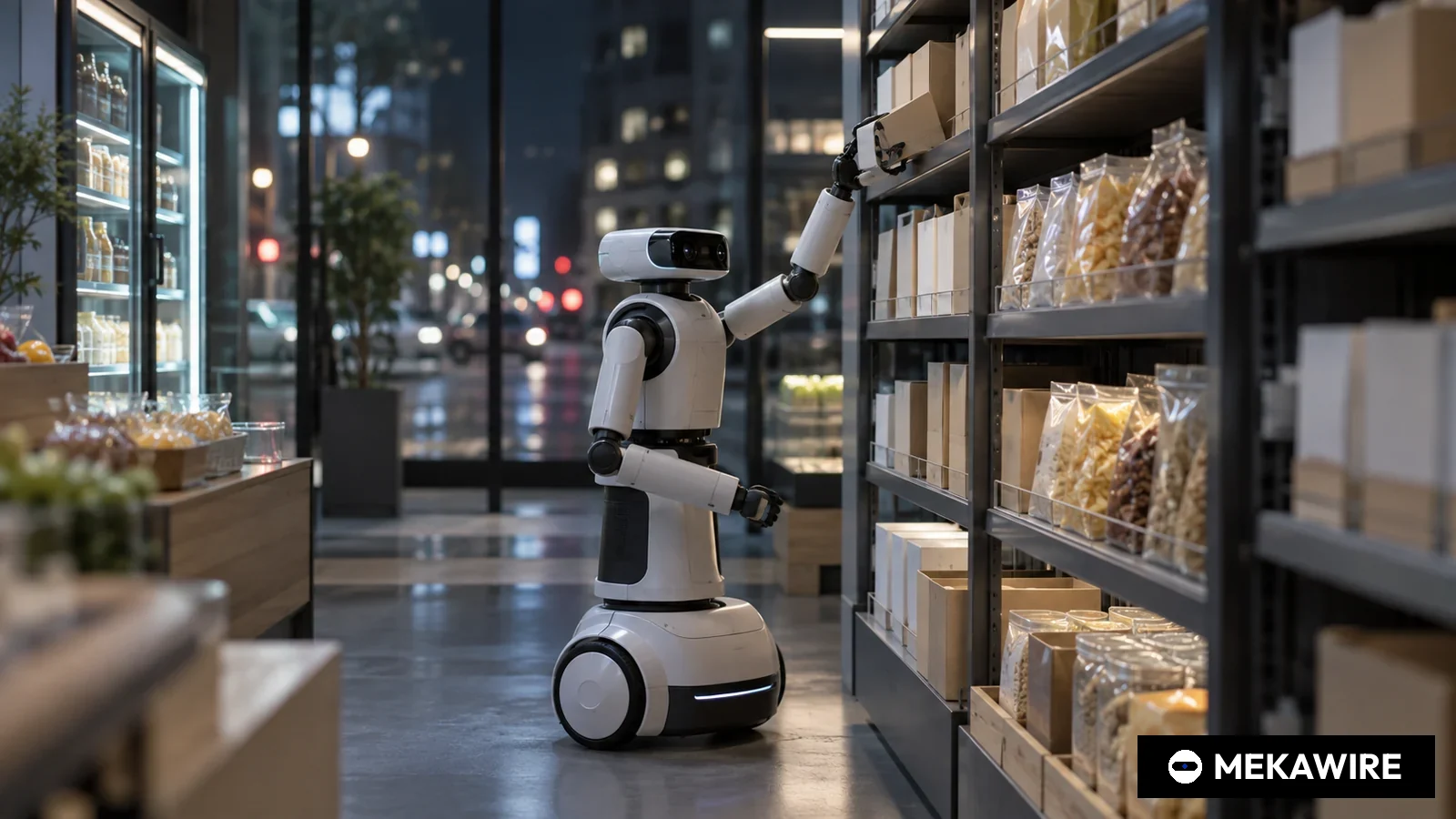
Beijing embodied AI start-up Galbot completed a RMB 1.1 billion financing in June 2025 led by battery maker CATL and Puquan Capital, with China Development Bank's CDB Science and Technology Innovation, the Beijing Robotics Industry Fund and GGV Capital also investing, according to the Zhongguancun Science City administration.
The deal took the company's funding over two years past RMB 2.4 billion and gave its synthetic data approach to robot learning a strategic industrial backer.
Galbot, a Beijing developer of wheeled dual arm robots and the models that drive them, completed a new financing round of RMB 1.1 billion in June 2025, the Zhongguancun Science City administration said in a release published on 24 June. Contemporary Amperex Technology (CATL), the world's largest maker of electric vehicle batteries, and Puquan Capital led the round.
The administration listed the other participants as CDB Science and Technology Innovation, the investment arm of China Development Bank, the Beijing Robotics Industry Fund and GGV Capital. CATL invested through the strategic investment vehicle of its listed company. The release said Galbot had raised more than RMB 2.4 billion in total over two years. It did not give a round letter, a valuation, a dollar amount or the split between new and existing investors, and Galbot did not post separate terms on its corporate website.
The official account framed the deal in political as well as commercial terms. It said embodied AI had been raised to the level of a national strategy, and that bringing in a national investment platform, a Beijing municipal platform and an international venture firm underlined Galbot's position in one of the capital's core industries. It singled out CATL as the round's strategic investor and said its arrival opened room for joint development in applying Galbot's embodied models.
Galbot's pitch rests on training robots largely in simulation. According to the Zhongguancun release, the company launched GraspVLA in January 2025, describing it as the first end to end embodied model pretrained on billion scale synthetic action data and able to generalise zero shot from pretraining alone. The accompanying research paper, written by Galbot, Peking University, the University of Hong Kong and the Beijing Academy of Artificial Intelligence, describes a dataset called SynGrasp-1B with one billion frames covering 10,680 object instances in 240 categories, and reports roughly 90% grasp success in real world tests and results on the LIBERO benchmark above fine tuned versions of the open models pi0 and OpenVLA.
Two further models followed. The release said GroceryVLA was built for commercial retail use, and that TrackVLA, a navigation model, combines purely visual perception with natural language instructions to follow moving targets. The TrackVLA paper, posted on 29 May 2025, reports training on 1.7 million samples, inference at 10 frames per second on a real robot and an 85.1% success rate on single target tracking in the EVT-Bench evaluation.
The commercial case so far is retail. The administration said Galbot's wheeled dual arm robot runs 50 square metre unstaffed shops around the clock, handling 5,000 product types across 6,000 shelf lanes and more than 10,000 boxes of goods, covering stocktaking, restocking, picking and packing. A new shop takes one day to set up. Nearly ten such shops were operating in Beijing at the time of the release, and the company aimed to have them in use at 100 stores nationwide within 2025.
Industry was the second front. On 17 June 2025, a week before the funding release, Galbot announced a joint venture with Boyuan Capital, the investment arm of the Bosch Group, and signed a three party strategic memorandum with Bosch China and Boyuan Capital. Galbot's founder and chief technology officer is Wang He, an assistant professor at Peking University and a scholar of the Beijing Academy of Artificial Intelligence, and the company was founded in 2023.
The hardware is a wheeled machine rather than a walking humanoid. Galbot's current product page for the G1 lists a maximum height of 1,730 mm, a weight of 92.5 kg, 21 degrees of freedom including seven per arm, a payload of 5 kg per arm and 10 kg combined, a top speed of 1.5 metres per second, a 48 V 30 Ah battery rated for eight hours of work, and an NVIDIA AGX Orin 64GB module rated at 275 TOPS. That design trades stair climbing for stability and battery life in shops and factory aisles.
- Galbot
- CN
- New round (no letter disclosed)
- 2025-06-24
- RMB
- 1100
- Apptronik
- US
- Series A
- 2025-02-13
- USD
- 350
- Genesis AI
- FR
- Launch round
- 2025-06-30
- USD
- 105
- Wandercraft
- FR
- Series D
- 2025-06-11
- USD
- 75
- Persona AI
- US
- Pre-seed
- 2025-05-14
- USD
- 27
Amounts as disclosed by the companies or, for Galbot, by the Zhongguancun Science City administration; not converted, not estimated. Galbot's round accounts for less than 45.8% of its two-year total (1,100 / 2,400, with the total stated only as above RMB 2.4 billion).
As of Oct 3, 2026
The round placed Galbot among the best funded robot model developers in the first half of 2025. In the United States, Apptronik raised USD 350 million in a Series A in February, and Persona AI raised USD 27 million in May. In France, Wandercraft closed a USD 75 million Series D on 11 June and Genesis AI announced USD 105 million on 30 June. At home Galbot competes with AgiBot, Unitree, the Hong Kong listed UBTech and younger rivals such as Galaxea AI and AI² Robotics, most of which did not disclose round sizes in the same period.
Questions remain. Galbot did not disclose revenue, unit shipments or the economics of its shops, and the 100 store target was an aspiration rather than a contract. The Zhongguancun release is a government account of a private deal, not a filing, and the precise stake CATL took is unknown. Simulation trained grasping has to prove it holds up as tasks move from boxed groceries to deformable parts and assembly.
MEKAWIRE analysis
CATL's cheque turned Galbot from a well funded lab into a supplier candidate for China's battery and automotive factories, and the synthetic data bet is what made that plausible.
The evidence sits in the sequencing. Galbot published a model trained on one billion synthetic frames, showed it in live retail, signed with Bosch's investment arm on 17 June and closed a round led by CATL a week later. Zhongguancun Science City said in March 2026 that Galbot remained the only embodied AI company CATL had invested in directly and that Galbot robot lines were running in CATL plants.
The strongest counter-argument is that grasping boxes in a 50 square metre shop is a narrow skill, and that a strategic investor's money does not guarantee volume orders. Rivals such as AgiBot have pursued large real world teleoperation datasets instead, and the field has not settled which approach generalises better.
Bull case. If synthetic pretraining keeps cutting the cost of each new task, Galbot can add factory skills faster than rivals that must record human demonstrations, and CATL and Bosch give it two of the largest production networks in China to deploy into. The follow-on round of RMB 2.5 billion in March 2026 suggests investors saw that path.
Bear case. Retail kiosks may stay a showcase, the factory pilots may stall at a handful of stations, and a crowded field of state backed Chinese robot makers could push prices down before Galbot reaches scale. Without disclosed revenue, the valuation rests on government accounts and investor confidence.
Signals to watch, as seen in June 2025:
- 31 December 2025: whether the target of 100 stores nationwide is reached.
- Second half of 2025: the first named production deployment from the Bosch joint venture.
- 2026: the next financing round and the first disclosed valuation, which arrived on 2 March 2026 at RMB 2.5 billion and RMB 20 billion respectively.
- RMB 1.1 billion
- GraspVLA (January 2025), GroceryVLA, TrackVLA
- Wang He, founder and CTO, Peking University assistant professor
- June 2025 (Zhongguancun release dated 24 June 2025)
- RMB 2.5 billion on 2 March 2026 at RMB 20 billion valuation
- CATL (via its listed company strategic investment arm), Puquan Capital
- CDB Science and Technology Innovation, Beijing Robotics Industry Fund, GGV Capital
- More than RMB 2.4 billion
- Joint venture with Bosch's Boyuan Capital, announced 17 June 2025
- Nearly 10 unstaffed shops in Beijing, target 100 nationwide in 2025
Why it matters
The round matters less for its size than for who led it. CATL operates some of the largest battery plants in the world, and a battery maker choosing to put balance sheet money into one robot model company signals that it wants a say in how automation reaches its own lines. The Zhongguancun administration said in March 2026 that Galbot was still the only embodied AI company CATL had invested in directly.
The deal also validated a technical thesis. Galbot argued that robots can learn most of what they need from simulation, using real data only as a supplement. A strategic investor with its own factories is in a position to test that claim at scale, and the June round gave Galbot access to that test bed.
Rival analysis
Domestically, AgiBot built its strategy around large real world data collection and broad product lines, Unitree around low cost legged hardware, and UBTech around a listed company's access to capital and industrial pilots. Galbot's distinction is a wheeled design paired with simulation trained models, aimed first at retail and then at factories.
Abroad, the closest comparisons in mid 2025 were Apptronik, which raised USD 350 million for its Apollo humanoid, and model focused start-ups such as Genesis AI. None of them had a battery maker as lead investor. The risk for Galbot is that hardware becomes a commodity in China while foundation models from better funded US groups set the performance bar.
Valuation context
No valuation was disclosed in June 2025. The only official valuation figure came later, when the Zhongguancun Science City administration said Galbot was valued at RMB 20 billion after its RMB 2.5 billion round in March 2026. Without the June figure, no step up can be computed from verified data.
The June round alone was less than half of the more than RMB 2.4 billion raised over two years, which implies earlier rounds of roughly comparable combined size. Readers should treat any third party valuation for mid 2025 with caution.
Supply-chain implications
The G1 runs on an NVIDIA AGX Orin 64GB module, which ties Galbot to a US compute supplier at a time of export restrictions on advanced chips. Its sensors include a 3D lidar, depth cameras at the wrists and two six axis force sensors, all categories where Chinese suppliers have grown quickly.
CATL's involvement points to a second supply chain link. Battery packs are a core component of mobile robots, and a battery maker as shareholder could shape cell choice and pack design for future Galbot machines, although no such agreement was disclosed.
Signals to watch
The first signal is the retail rollout. The company aimed for 100 stores across China within 2025 from nearly ten in Beijing at the time of the round, a measurable target. The second is the Bosch joint venture, which should produce the first named factory deployments.
The third is capital. Zhongguancun reported a further round of RMB 2.5 billion on 2 March 2026 at a RMB 20 billion valuation, along with cumulative orders of several thousand units and cooperation with CATL, Bosch and Toyota. Delivery counts against those orders are the next number to watch.
Analyst view
Thesis: Galbot's June 2025 round marked the point where Chinese industrial groups began choosing robot model partners rather than simply funding the sector, and Galbot was the first beneficiary from the battery industry.
Confidence: medium. The investor list, the retail deployments and the later CATL plant deployments are documented by Beijing government releases and Galbot's own research. Confidence is not high because revenue, unit shipments and the terms of the CATL and Bosch relationships remain undisclosed.
Questions you should be asking
What stake did CATL take, and does it include commercial rights or exclusivity in battery manufacturing automation?
How many of the nearly ten Beijing shops were paying customer sites rather than company operated showcases, and did the 100 store target hold?
How much real world data does Galbot add to its synthetic pretraining for factory tasks, and how does performance change as tasks move beyond grasping?