Humanoid robot prices 2026: $4,900 to $80,000, and most makers list none
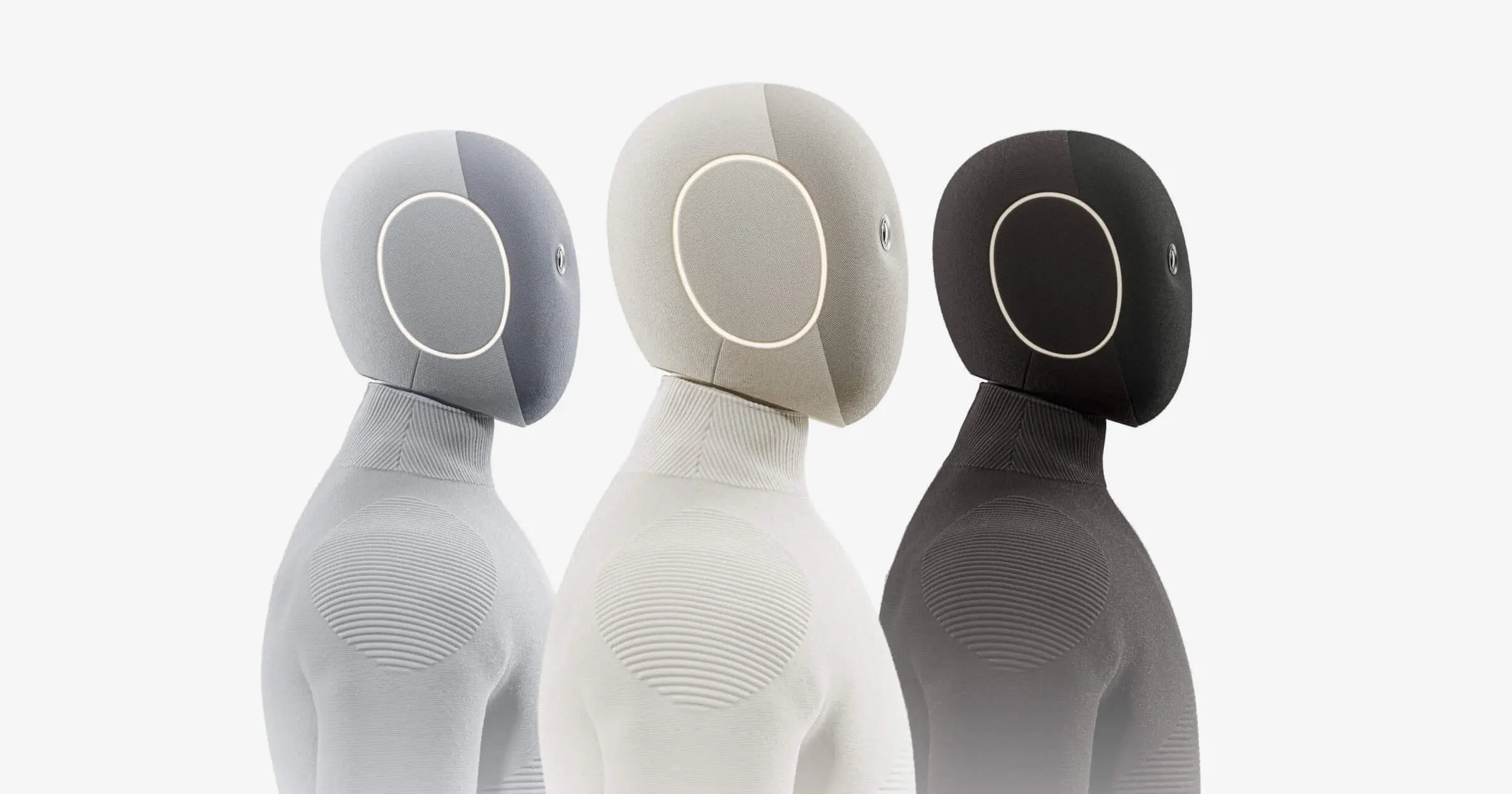
A humanoid robot with a public list price costs between $4,900 (Unitree R1 AIR) and $80,000 (Rainbow Robotics RB-Y1 research version) in October 2026, and only five of the 24 humanoids MEKAWIRE lists as in production carry a published price.
Unitree prices the R1 at $4,900 to $5,900, the G1 from $13,500 and the H2 at $29,900; 1X sells NEO for $20,000 or $499 a month. Figure, Agility, Tesla, UBTech and AgiBot publish no list price for their humanoids.
MEKAWIRE explains what each price buys, what it leaves out and why industrial makers keep prices private.
A humanoid robot you can buy from a public price list costs between $4,900 and $80,000 in October 2026. The cheapest is Unitree's R1 AIR at $4,900; the most expensive is Rainbow Robotics' RB-Y1 research platform at $80,000, with its commercial version at $120,000. Everything in between comes from two companies, Unitree and 1X.
The more telling number is how few makers publish a price at all. MEKAWIRE's robot database holds verified spec sheets for 49 humanoids, 24 of them marked as in production; only five of those 24 have a price on the maker's own page. The best-funded Western names, Figure, Agility Robotics and Tesla, publish none, and neither do China's UBTech and AgiBot. The question this piece answers is what the visible prices buy, and what the silence of the others tells a buyer.
Latest from MEKAWIRE
- Samsung's Lee Jae-yong to inspect RX robot unit as early as next week, paper says
- Agility makes NVIDIA the sole onboard computer for Digit 5, early access in H1 2027
- Mobilint builds an NPU, module and software stack for humanoids, to be tested in LG robots
- Tesla starts Optimus production in Fremont as Q3 net income falls 43%
- Korea plans 1,700 public AI robots across 8 ministries in 2027; Hyundai warns on China
What the five published prices actually buy
Unitree's product pages list the R1 AIR at $4,900 and the R1 at $5,900, both before tax and shipping; the R1 EDU is "contact sales". The R1 stands about 123 cm and weighs about 29 kg. The G1 is priced "from $13.5K" and weighs about 35 kg at 132 cm. The full-size H2, 182 cm and about 70 kg, is listed at $29,900, again with the EDU version priced only on request. 1X's order page offers NEO for $20,000 or as a $499 monthly subscription. Rainbow Robotics announced the RB-Y1, a wheeled two-armed mobile manipulator, on May 7, 2024 at $80,000 for the research platform and $120,000 for the commercial one, VAT excluded.
- R1 AIR
- Unitree (CN)
- 4,900
- Tax and shipping excluded
- about 123 cm / 27 kg
- R1
- Unitree (CN)
- 5,900
- Tax and shipping excluded; EDU on request
- about 123 cm / 29 kg
- G1
- Unitree (CN)
- from 13,500
- Tax and shipping excluded
- 132 cm / about 35 kg
- NEO
- 1X Technologies (US)
- 20,000
- or $499 per month subscription
- 168 cm / 29.9 kg
- H2
- Unitree (CN)
- 29,900
- Tax and shipping excluded; EDU on request
- 182 cm / about 70 kg
- RB-Y1
- Rainbow Robotics (KR)
- 80,000
- Research platform; commercial $120,000, VAT excluded
- 140 cm / 131 kg
Prices from each maker's own product or order page, read on Oct 23, 2026; RB-Y1 from Rainbow Robotics' pre-order release of May 7, 2024. Dimensions from MEKAWIRE's verified spec sheets.
As of Oct 23, 2026
The pattern in the fine print matters as much as the headline price. Unitree's EDU tiers, the versions developers buy for open software access and dexterous hands, are the ones without a number. The entry price is a platform, not a working robot.
Why the price per kilogram of payload runs from $802 to $26,667
Dividing each list price by the rated payload in our spec sheets gives a rough cost of lifting capacity: R1 $2,950 per kg, G1 $6,750, H2 $4,271, NEO $802 and RB-Y1 $26,667. The spread is wide because the robots are built for different jobs. NEO is sold as a household helper with a high lift rating; RB-Y1 is a research tool whose value lies in its arms, sensors and software access, not its strength. Makers also define payload differently (arm payload, lift capacity, rated versus peak), so the figure compares positioning, not engineering.
- NEO
- 20,000
- 24.95
- 802
- R1
- 5,900
- 2
- 2,950
- H2
- 29,900
- 7
- 4,271
- G1
- 13,500
- 2
- 6,750
- RB-Y1
- 80,000
- 3
- 26,667
Method: list price divided by the rated payload in MEKAWIRE's spec sheets. Makers define payload differently (arm payload, lift capacity, rated vs peak), so this compares positioning, not engineering.
As of Oct 23, 2026
MEKAWIRE analysis
A published humanoid price tells you who the buyer is, not what a humanoid costs: makers that sell to labs, schools and homes print a price, makers that sell to factories negotiate.
Every published price belongs to a robot sold to researchers, educators or consumers. Unitree's catalogue is aimed at universities and developers worldwide, RB-Y1 was launched explicitly as a research platform, and NEO is a home robot. The makers chasing factory and logistics contracts sell fleets under multi-year deals where the price includes integration, uptime guarantees and software, and where a list price would anchor negotiations. 1X's subscription makes the same point from the other side: $20,000 divided by $499 is about 40 months, so the monthly plan only pays for itself for a buyer who keeps NEO for more than three years, which shifts risk from the household to 1X.
The strongest counter-argument is that list prices simply follow volume. MEKAWIRE's humanoid shipments explainer counts Chinese makers shipping in the thousands and US makers in the hundreds; once Western makers ship at scale, they may publish too. We think that is partly right, but the industrial buyer will still pay for a service contract, so the first Western list prices are more likely to appear on consumer and research models than on factory humanoids.
Bull case: Unitree's sub-$6,000 R1 and 1X's subscription pull the floor down fast enough that schools, labs and early adopters buy in volume, giving those makers the most real-world data. Bear case: the cheap platforms stay toys for developers, the EDU and hands upgrades carry the real price, and buyers learn that the list price was a fraction of the total cost of a working deployment.
Signals to watch: Rainbow Robotics' third-quarter 2026 report in mid-November 2026 (RB-Y1 revenue share); Tesla's fourth-quarter 2026 results in late January 2027, the first chance for an Optimus price; and CES 2027 in Las Vegas in January 2027, where consumer humanoid makers tend to announce prices.
Related: our explainers on 1X Technologies and NEO, Unitree, Rainbow Robotics and humanoid battery life.
- $20,000 or $499 per month
- from $13,500
- $29,900; H2 EDU on request
- $80,000 research, $120,000 commercial (May 2024)
- Figure, Agility, Tesla, UBTech, AgiBot
- Unitree R1 AIR, $4,900 (tax and shipping excluded)
- 5 of 24 production humanoids in MEKAWIRE's database
- about 40 months (MEKAWIRE)
Why it matters
Price is the question readers and buyers ask first about humanoids, and the public answer is lopsided: only Unitree, 1X and Rainbow Robotics print one. That makes list prices a map of business models. Research, education and consumer sellers publish; fleet sellers to factories and warehouses do not.
For investors, the published prices bracket what a humanoid platform costs to make and sell at small scale. Unitree can sell a 29 kg robot at $5,900 and a 70 kg robot at $29,900 and still report the margins in its STAR filings, which sets a benchmark Western makers will be measured against once they sell outside pilot contracts.
Rival analysis
Unitree covers three price points from one catalogue, which no rival matches. 1X competes on financing rather than headline price, turning a $20,000 robot into a $499 monthly bill. Rainbow Robotics sells a research tool at a premium, consistent with its Samsung-backed position in Korea.
Figure, Agility and Tesla compete for factory and logistics contracts where price is negotiated per deployment. UBTech and AgiBot, despite selling in volume in China, also keep list prices off their sites for their industrial models, which suggests the split is about buyer type, not nationality.
Valuation context
A low list price does not translate into low valuation. Unitree's STAR-market filings show high gross margins on cheap hardware, while Figure and Agility are valued on expected fleet revenue with no public price at all. When a Western maker finally publishes a price, investors will compare it with Unitree's $29,900 full-size H2 as the reference point.
Supply-chain implications
The spread from $4,900 to $80,000 reflects component choices: Unitree builds its own joint motors and reducers in China, while research platforms such as RB-Y1 carry higher-cost arms, sensors and compute. The price of dexterous hands, often sold separately or only in EDU tiers, is the largest hidden item in the published numbers.
Signals to watch
Rainbow Robotics' third-quarter 2026 report in mid-November 2026, for RB-Y1's revenue share. Tesla's fourth-quarter 2026 results in late January 2027, the first chance for an Optimus price. CES 2027 in January 2027, where consumer humanoid makers often announce prices.
Analyst view
Thesis: published humanoid prices identify the buyer, not the cost. Confidence: medium. The evidence is consistent across five makers in three countries, but the sample is small and a single consumer launch from Tesla or Figure with a list price would weaken it.
Questions you should be asking
What share of Unitree's humanoid revenue comes from EDU versions without a list price? How many NEO buyers choose the subscription over the purchase? Would Figure or Agility publish a price for a non-industrial model, and at what level relative to Unitree's H2?