What is Neuromeka? Korea's Indy cobot maker lost more in six months of 2026 than in all of 2025, and is betting on POSCO, a China joint venture and a robot foundry
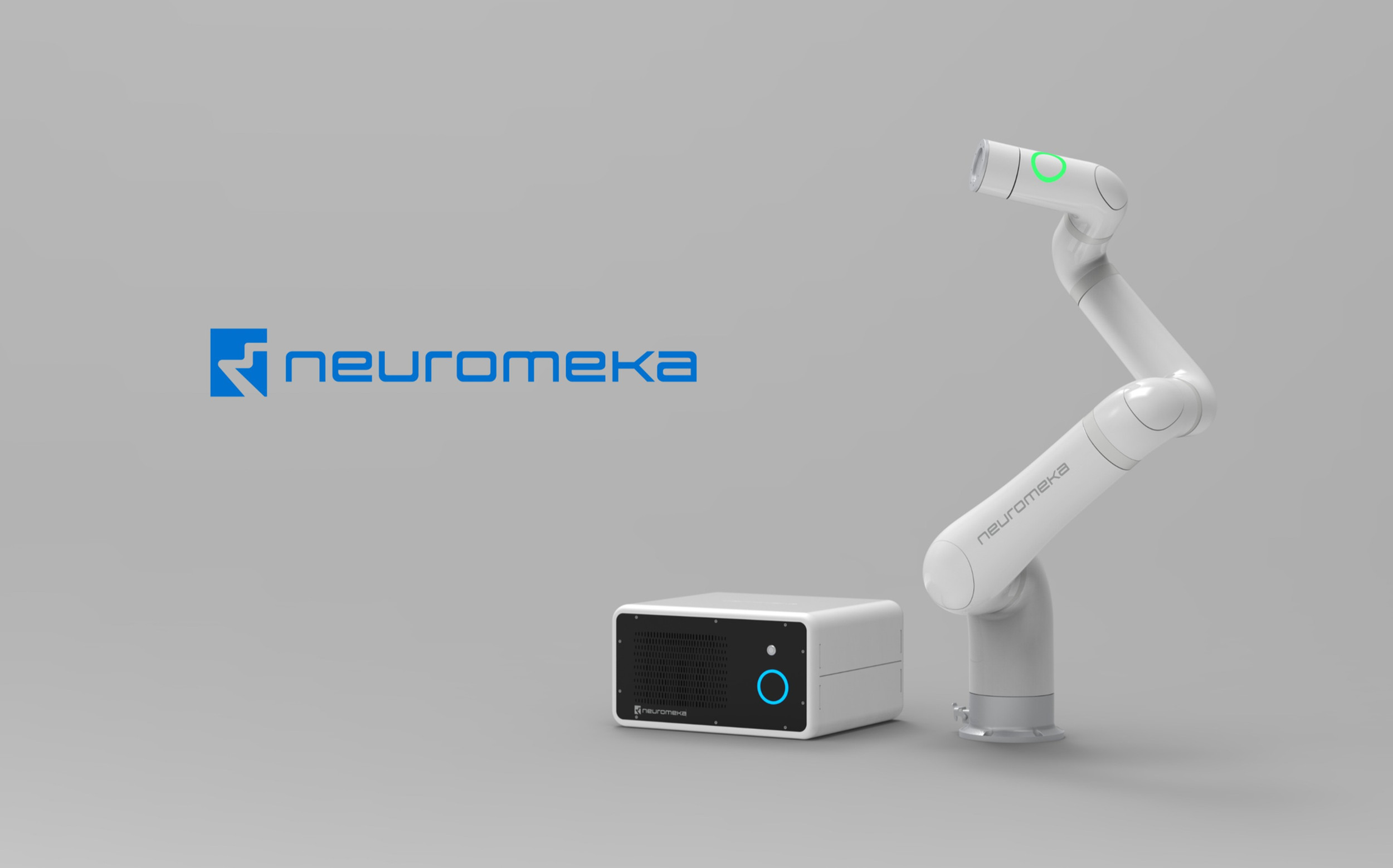
Neuromeka is a KOSDAQ-listed Korean maker of Indy collaborative robots, delta robots and robot components, founded in 2013. Its August 2026 IR Book shows first-half 2026 revenue of KRW 5.81bn and a net loss of KRW 30.27bn, already 138% of its 2025 loss, as it funds a China joint venture, a robot manufacturing foundry and POSCO and state projects with fresh equity.
Neuromeka lost KRW 30.27bn in the first six months of 2026, 38% more than in the whole of 2025, on revenue of KRW 5.81bn. The figures sit on page 28 of the investor book the Seoul cobot maker updated on 14 August, a few weeks after it closed a rights offering first sized at about KRW 150bn. The same deck describes a joint venture in China, a robot 'foundry', strategic money from POSCO Holdings and DN Solutions, and a national welding project.
The gap between those plans and current sales is the story of Neuromeka. This explainer sets out what the company makes, what its numbers show, how it compares with Korea's other listed robot makers, and what has to happen for the strategy to pay.
A cobot company that also sells parts and delta robots
Neuromeka was founded on 14 February 2013 and listed on KOSDAQ in November 2022. Its best-known product is the Indy line of collaborative robots, which it designs and builds itself and sells with collision detection, direct teaching by hand and a tablet teach pendant. It also makes the LASER series of four-axis delta robots for fast picking, mobile robots and vision software, and its IR Book presents a components business in motors, reducers and actuators. The deck lists flat-panel-display robots supplied to Samsung Display since 2021 and a KRW 9.25bn supply contract for an artificial-joint surgical robot, without naming that customer. Applications run from food and beverage service to logistics, welding and smart farms.
Sales shrank while costs stayed
Consolidated revenue fell 25.0% to KRW 18.95bn in 2025 from KRW 25.27bn. Gross margin improved from 16.4% to 18.3% and reached 21.9% in the first half of 2026, but selling and administrative costs of KRW 10.85bn in six months were 1.87 times revenue. The operating loss was KRW 9.58bn for the half, after KRW 14.86bn for 2025.
- Revenue
- 25.27
- 18.95
- 5.81
- Gross margin
- 16.4%
- 18.3%
- 21.9%
- Operating loss
- 19.02
- 14.86
- 9.58
- Financial expenses
- 5.25
- 11.58
- 22.33
- Net loss
- 16.76
- 21.99
- 30.27
- Total equity
- 10.87
- 13.89
- 37.11
- Liabilities / equity
- 776%
- 558%
- 148%
Consolidated figures in KRW million converted to billions, from Neuromeka's IR Book updated 14 Aug 2026. Gross margin = gross profit / revenue; liabilities / equity = total liabilities / total equity at period end.
As of Oct 18, 2026
The bigger hole was below the operating line. Financial expenses were KRW 22.33bn in the half, 2.3 times the operating loss, and they turned a KRW 9.58bn operating loss into a KRW 30.27bn net loss. The IR Book does not break the item down. Equity still rose, from KRW 13.89bn to KRW 37.11bn, because other paid-in capital climbed by KRW 51.9bn, and liabilities fell from 558% of equity to 148%. Current liabilities of KRW 45.15bn still exceeded current assets of KRW 32.90bn at the end of June.
The smallest of Korea's listed robot makers by sales
On 2025 figures Neuromeka is last among the four listed Korean robot makers MEKAWIRE tracks. Robotis grew and made an operating profit, Rainbow Robotics grew to near break-even, and Doosan Robotics lost more than its revenue.
- Robotis
- 38.94
- +29.6%
- +3.36
- +8.6%
- Rainbow Robotics
- 34.12
- +76.4%
- -2.48
- -7.3%
- Doosan Robotics
- 32.98
- -29.6%
- -59.47
- -180.3%
- Neuromeka
- 18.95
- -25.0%
- -14.86
- -78.4%
Disclosed 2025 figures from company filings and IR material, as verified in MEKAWIRE's March 26 and October 18 reports. Ratio = operating profit or loss / revenue.
As of Oct 18, 2026
Neuromeka's loss ratio of 78.4% sits between Doosan's 180.3% and Rainbow's 7.3%, but it has neither Doosan's group balance sheet nor Rainbow's backing from Samsung Electronics, its largest shareholder. That is why the funding route matters.
Paying for the plan with shareholders' money
The board approved the rights offering on 24 April together with a bonus issue of 0.5 new shares per share held. The final price was set at KRW 24,450 on 23 July, existing holders took up about 75.8%, and 773,416 unclaimed shares went to a public subscription on 30 and 31 July. The company said the money would go mainly to production facilities and working capital through 2030, with a smaller part for short-term debt. Strategic partners had already put in KRW 15bn: POSCO Holdings KRW 10bn in December 2024 and DN Solutions KRW 5bn, according to the IR Book.
- Strategic investment
- POSCO Holdings
- 10.0
- Dec 2024
- Supply contract
- POSCO
- 3.0
- Jul 2025
- Strategic investment
- DN Solutions
- 5.0
- not stated
- Supply contract, artificial-joint surgical robot
- not named
- 9.25
- not stated
- National project, AI shipyard welding (total / state)
- Ministry of Science and ICT
- 17.5 / 10.5
- Aug 2026 to Dec 2030
- China JV capital (Neuromeka share not stated)
- LTOM and E-ONG
- about 8.57
- planned
From the IR Book updated 14 Aug 2026 and Neuromeka's newsroom. JV capital is CNY 42.857m as converted in the IR Book.
As of Oct 18, 2026
Three bets: POSCO, China and a foundry
The IR Book frames POSCO Group as a partner at the centre of KRW 20 trillion of production-line automation investment. The two signed an investment MOU in April 2024, opened a joint robotics research centre at Neuromeka's Pohang plant in October 2024 and signed a KRW 3bn supply contract in July 2025. The China plan pairs Neuromeka's control technology with LTOM and E-ONG, which the deck calls the world's largest maker of control boards: shipbuilding welding cells in 2026, an Opti 3 welding product and a humanoid prototype, break-even on KRW 17bn of sales in 2027 and preparation for a Shanghai STAR Market listing from 2028. The third bet is a robot manufacturing foundry that would build hardware platforms for other robot and AI companies. In September Neuromeka reposted on its site a report that it had signed an investment MOU with Pohang City for a KRW 180bn foundry and data centre.
MEKAWIRE analysis
Neuromeka is selling a platform story with a component maker's revenue, and the 2026 rights offering buys it about two years to prove that partners such as POSCO and the China JV turn into orders.
The evidence is in the ratios. Its disclosed strategic money and contracts add up to more than its 2025 revenue, and the state-backed welding project is worth KRW 17.5bn over four and a half years, of which KRW 10.5bn is public money. The strongest counter-argument is that cobot revenue is lumpy and project-driven, so one large POSCO or shipyard rollout could double sales in a year, and gross margin has improved three years running. Bull case: POSCO extends automation work beyond the KRW 3bn contract, the China JV ships welding cells in 2026 and hits its 2027 target, and the foundry gives Korean humanoid start-ups a domestic place to build. Bear case: financial expenses keep swamping operations, the JV stays a slide, and another raise dilutes holders before revenue recovers to 2024 levels.
Three dated signals will settle it: the third-quarter report due by mid-November, which will show whether revenue reaccelerates after the raise; any JV incorporation notice in China before year-end; and the first milestones of the welding project, which started in August.
- Neuromeka was founded on 14 February 2013 in Seoul, listed on KOSDAQ in November 2022 and makes Indy cobots, LASER delta robots, mobile robots, vision software and robot components such as motors, reducers and actuators.
- Consolidated revenue fell 25.0% to KRW 18.95bn in 2025 from KRW 25.27bn in 2024, with an operating loss of KRW 14.86bn, according to the IR Book updated on 14 August 2026.
- First-half 2026 revenue was KRW 5.81bn, the operating loss KRW 9.58bn and the net loss KRW 30.27bn, after KRW 22.33bn of financial expenses.
- Total equity rose from KRW 13.89bn at end-2025 to KRW 37.11bn at end-June 2026, cutting liabilities to equity from 558% to 148%.
- The board approved a rights offering on 24 April 2026, first sized at about KRW 150bn, with a 0.5-for-1 bonus issue; the final price was KRW 24,450 a share and 75.8% of the offering was taken up by existing holders.
- The IR Book lists POSCO Holdings' KRW 10bn strategic investment (December 2024), a KRW 3bn POSCO supply contract (July 2025), a KRW 5bn strategic investment from DN Solutions and a KRW 9.25bn supply contract for an artificial-joint surgical robot.
- A planned China joint venture with LTOM and E-ONG has capital of CNY 42.857m (about KRW 8.57bn), rising to about KRW 30bn cumulatively, and targets break-even on KRW 17bn of sales in 2027 and STAR Market listing preparations from 2028.
- Neuromeka leads a KRW 17.5bn Ministry of Science and ICT project on AI-driven shipyard welding running from August 2026 to December 2030, KRW 10.5bn of it government funded.
Why it matters
Neuromeka is the purest listed play on Korean collaborative robots outside the Doosan and Samsung orbits, and it is where Korea's physical-AI policy meets a small balance sheet. Its numbers show what happens to a mid-sized cobot maker when Chinese arms push prices down: revenue fell a quarter in 2025 and the company turned to partners and shareholders.
The outcome matters for Korea's industrial policy too. Neuromeka leads one of the national physical-AI projects and is pitching a domestic robot foundry; if it struggles, the argument that Korea can build its own robot hardware base without chaebol money weakens.
Rival analysis
Against Korean peers, Robotis has the healthiest profile, with 2025 revenue of KRW 38.94bn and an operating profit of KRW 3.36bn from actuator exports. Rainbow Robotics grew 76.4% to KRW 34.12bn and is backed by Samsung Electronics. Doosan Robotics has a far bigger cash pile but lost KRW 59.47bn in 2025 and has shifted to US packaging cells through ONExia.
Against China, Neuromeka's China JV is an admission that it cannot win on price from Seoul; MEKAWIRE's October 17 comparison showed Dobot's 2025 revenue at RMB 492.2m, many times Neuromeka's. The JV route trades control for access.
Valuation context
MEKAWIRE does not hold a verified market capitalisation for Neuromeka, so no multiple is given here. The rights offering price of KRW 24,450 a share is the latest disclosed price at which new money came in.
What can be measured: KRW 15bn of strategic equity from POSCO Holdings and DN Solutions came before the rights issue, and equity on the balance sheet reached KRW 37.11bn at end-June, before the July offering settled. The second half will show the full effect of the raise.
Supply-chain implications
Neuromeka designs its own arms and controllers and markets motors, reducers and actuators as a component business, which reduces dependence on Japanese reducer makers if the parts reach volume. The China JV would add local production of parts and welding cells in China, with Neuromeka software on top.
The risk is concentration: the largest named customers in the IR Book are POSCO Group and Samsung Display, and one surgical-robot contract worth KRW 9.25bn is with an unnamed buyer.
Signals to watch
1) Q3 2026 quarterly report (due by mid-November): revenue trend after the raise and the size of financial expenses. 2) China JV: incorporation, Neuromeka's stake and first welding-cell shipments in 2026. 3) MSIT welding project milestones and any POSCO contract beyond the KRW 3bn signed in July 2025.
Analyst view
Thesis: Neuromeka's strategy is financed by equity and partners, not by sales, and the next two years decide whether the platform story converts into orders. Confidence: medium. The financial data are the company's own consolidated figures, but the IR Book gives no backlog, no segment split and no breakdown of financial expenses, so the path to the JV's 2027 break-even cannot be checked.
Questions you should be asking
What made up the KRW 22.33bn of financial expenses in the first half, and will they recur? What share of the China JV will Neuromeka own and consolidate? How much of the rights offering went to the Pohang foundry versus working capital, and when does the foundry take its first outside customer?