Teradyne Robotics and Sereact sign partnership after hundreds of UR arms shipped in Europe
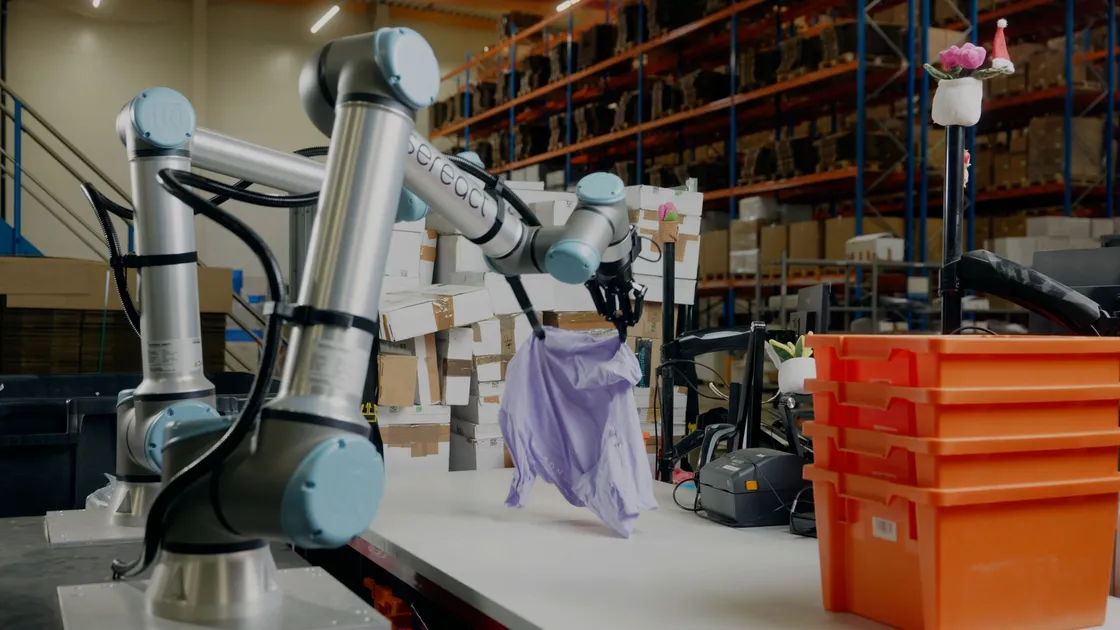
Teradyne Robotics and Sereact said on Oct 21 they have formed an official partnership pairing Sereact's Cortex vision-language-action model with Universal Robots arms, after the two already shipped hundreds of UR robots in dual-arm systems to live customer sites in Europe, including returns handling for Zalando with CEVA Logistics in Greven and Świebodzin. No financial terms were given.
Teradyne Robotics said in a press release on Oct 21 that it has signed an official partnership with Sereact, the Stuttgart physical-AI company, to sell Sereact's Cortex software on Universal Robots arms in retail, logistics and manufacturing. The release says the two have already shipped hundreds of UR robots in dual-arm systems to live customer sites across Europe.
Where the robots already work
The named deployment is returns handling for Zalando, run with CEVA Logistics, at fulfillment centers in Greven, Germany, and Świebodzin, Poland, where the robots process returned fashion items; Teradyne calls it the first phase of a wider European rollout. Other listed applications are store replenishment, piece-picking and sortation, order induction, machine tending, bin consolidation, kitting and packing. Sereact opened a US headquarters in Boston this summer to bring the joint system to North America. No price, volume commitment or exclusivity was disclosed.
One model across tasks
Sereact chief executive Ralf Gulde said every application runs on the same production model without retraining for new items. Cortex is post-trained with reinforcement learning in NVIDIA Isaac Lab and benchmarked on Teradyne hardware before deployment, and Teradyne said it is contributing SimReady OpenUSD assets for UR and MiR robots to NVIDIA's library on Hugging Face. Gulde also tied the returns use case to EU rules banning the destruction of unsold returned goods.
MEKAWIRE analysis
For Universal Robots the deal is a hedge: as AI software decides which robot does the picking, the arm maker wants to be the default body for the leading European model rather than a commodity.
In MEKAWIRE's database Sereact raised a Series B in April 2026, and we reported the Zalando and CEVA go-live on Oct 7. The counter-argument is that the partnership is not exclusive as far as the release says, so Sereact can still run Cortex on other arms. Watch for a US customer of the joint system, a deployment count beyond 'hundreds', and whether MiR mobile robots join the offer.
- Sereact opened a Boston headquarters this summer
- Teradyne Robotics (Universal Robots, MiR) and Sereact
- Sereact Cortex VLA model, post-trained in NVIDIA Isaac Lab
- Oct 21, 2026, Teradyne Robotics release (Universal Robots news centre)
- Financial terms, exclusivity, volume commitments
- Hundreds of UR robots in dual-arm systems shipped to live sites in Europe
- Zalando with CEVA Logistics, Greven (DE) and Świebodzin (PL), returns handling
Why it matters
Cobot makers face margin pressure as low-cost Asian arms improve; owning the integration with a leading AI picking model gives UR a reason to be chosen beyond price. Sereact gets Teradyne's global distributor and integrator network.
Rival analysis
Several AI picking software vendors run on multiple arm brands, so a named partnership gives UR a preferred position rather than a lock-in. General robot-model companies such as Physical Intelligence and Skild AI sell models rather than packaged picking cells.
Signals to watch
First North American customer; Teradyne quarterly commentary on robotics revenue; any extension to MiR mobile robots.
Questions you should be asking
Is the partnership exclusive in any segment? What share of Sereact's deployments already use UR arms? What throughput per hour do returns cells reach?