Construction robots 2026 explained: USD 820M in October, most for self-driving excavators
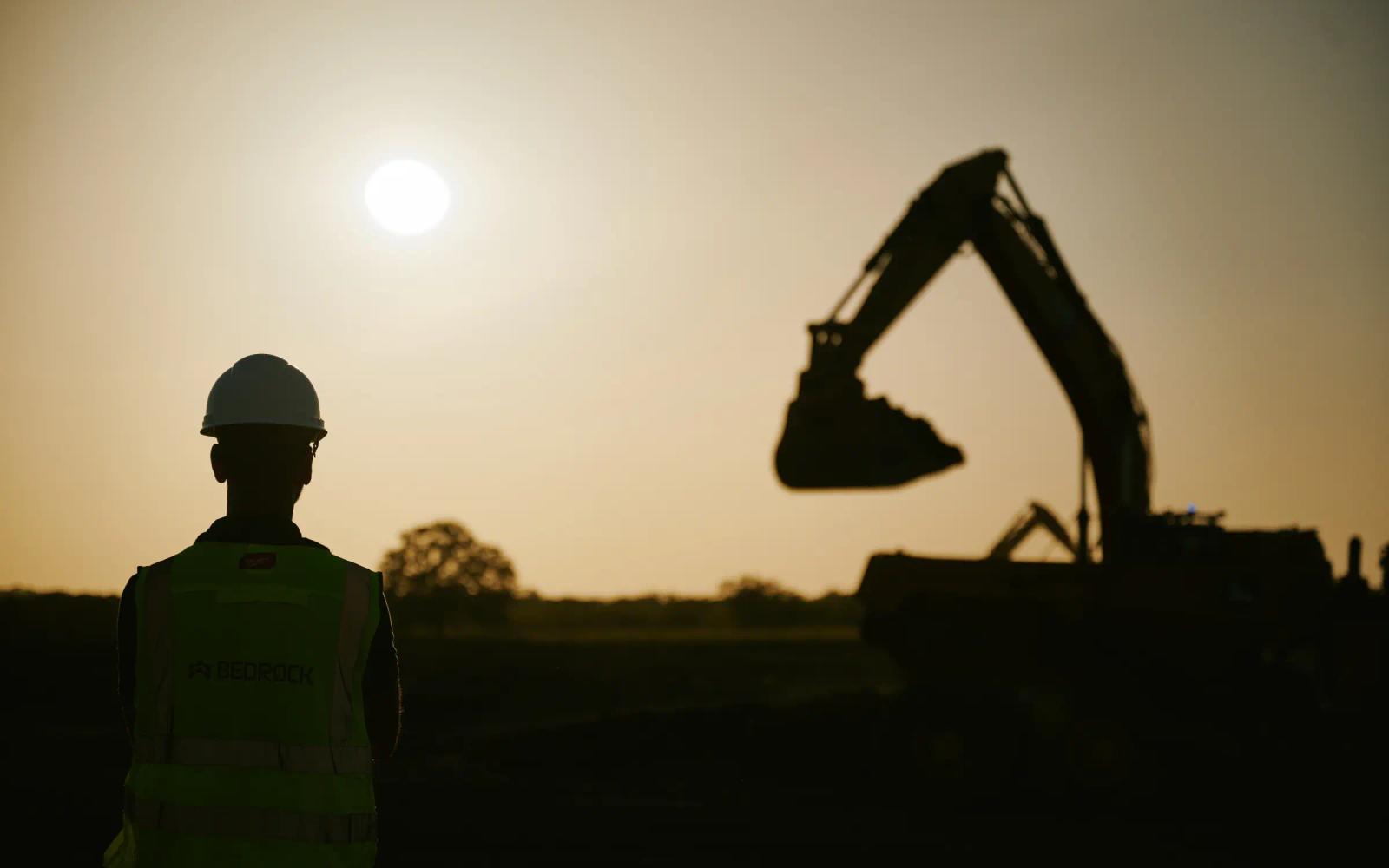
Construction robotics drew USD 1.12 billion in disclosed 2026 rounds in the MEKAWIRE database, and USD 870 million of it, 78%, went to one company: Bedrock Robotics, which retrofits excavators to dig without an operator.
October alone brought USD 820 million across Bedrock, ICON and Origin in 14 days. The money has moved from single-task finishing robots to autonomy kits for heavy machines, while Korea and Japan answer with ministries and contractors rather than venture rounds.
Construction robots in 2026 are mostly a bet on one idea: put autonomy into the heavy machines contractors already own. Of USD 1.12 billion in disclosed construction-robotics rounds that MEKAWIRE has recorded this year, USD 870 million went to Bedrock Robotics, which retrofits excavators so they dig without an operator. October alone brought USD 820 million in 14 days, from Bedrock's USD 600 million Series C, ICON's USD 200 million Series D and Origin's USD 20 million debut.
That concentration is new. The question this explainer answers is why investors now pay for earthmoving autonomy at a scale the first construction-robot wave never reached, and what Korea and Japan are doing instead.
Latest from MEKAWIRE
- Bedrock Robotics raises USD 600M Series C for autonomous excavators
- HD Hyundai XiteSolution wins KRW 6.33bn state project to train autonomous excavators in simulation
- Arbe launches Gryphon 4D radar for ground robots that must see ditches in dust
- Robot brains go on sale and $1.3bn in deals: robotics week of Oct 12 to 18
- Origin raises $20M for OG-1 wall-finishing robots: Accel and Zacua co-lead
The money sits with one excavator company
CapitalG, Alphabet's growth fund, said on Oct 26 that it co-led Bedrock's USD 600 million Series C and that the company has been doing paid autonomous work since August. Outlets put the valuation at USD 4.1 billion; Bedrock has not published that figure, so it stays reported. The round came 264 days after a USD 270 million Series B (Feb 4) and brings Bedrock to about USD 950 million raised in 15 months.
- 2026-10-26
- Bedrock Robotics
- US
- Series C
- 600
- Excavator autonomy retrofit
- 2026-10-15
- Origin
- US
- Venture (unnamed)
- 20
- Wall-finishing robot OG-1
- 2026-10-13
- ICON
- US
- Series D
- 200
- Robotic 3D printing of buildings
- 2026-07-15
- Monumental
- NL
- Series B
- 32
- Bricklaying robots
- 2026-02-04
- Bedrock Robotics
- US
- Series B
- 270
- Excavator autonomy retrofit
- 2025-07-16
- Bedrock Robotics
- US
- Seed and Series A
- 80
- Excavator autonomy retrofit
- 2022-05-10
- Dusty Robotics
- US
- Series B
- 45
- Layout printing robot
- 2022-04-07
- Built Robotics
- US
- Series C
- 64
- Autonomous excavators
- 2021-06-15
- Dusty Robotics
- US
- Series A
- 16.5
- Layout printing robot
- 2021-04-15
- Canvas
- US
- Series B
- 24
- Drywall finishing robot
- 2019-09-19
- Built Robotics
- US
- Series B
- 33
- Autonomous excavators
Disclosed amounts from company, investor or government releases recorded by MEKAWIRE; not a complete census. Bedrock's USD 4.1bn Series C valuation is reported by outlets, not disclosed by the company.
As of Oct 28, 2026
The table shows two eras. Between 2019 and 2022, Built Robotics, Dusty Robotics and Canvas raised USD 182.5 million across five rounds. Bedrock's Series C alone is 3.3 times that whole set. If the money is this lopsided, the next question is what changed in the product.
Why retrofit autonomy beat single-task robots
The first wave built new machines for one trade: Canvas finished drywall, Dusty prints floor layouts, Built automated excavators for general sites. Canvas's core technology went to the access-equipment maker JLG in January 2026, and Built narrowed its focus to solar-farm construction. A single-task robot has to win a subcontractor's work package, one trade at a time.
Bedrock and Xpanner sell the opposite: a kit of sensors, compute and machine control that turns an existing excavator or pile driver into a supervised autonomous one. Xpanner's X1 Piling R6, launched on Oct 27, lets one operator run solar piling that usually needs a crew. The buyer is the equipment owner, the machine is already paid for, and earthmoving is the hours-heavy part of a site schedule. ICON sits between the two models: it builds its own robotic 3D-printing system, Titan, and will use the Series D to start manufacturing it in Austin.
How a retrofit works explains the economics. The kit adds lidar and cameras for perception, GNSS with RTK correction for centimetre positioning, a ruggedised computer that plans each bucket pass, and an electronic interface to the hydraulic valves that an operator would otherwise move with joysticks. The machine keeps its engine and hydraulics; the vendor sells software and supervision. In principle one remote supervisor can watch several machines, which is where the labour saving comes from, and a kit can move to another machine when a project ends. The weak point is the valve interface, which differs by brand and model, so cooperation with the equipment maker decides how fast a kit can spread. That is also why the same October brought government money in Asia for training unmanned machines in simulation.
- 2026 disclosed total
- USD 1,122M
- Sum of the five 2026 rounds in table 1
- Bedrock share of 2026
- 78%
- (270 + 600) / 1,122
- October 2026
- USD 820M in 14 days
- 600 + 200 + 20, Oct 13 to Oct 26
- Bedrock raised to date
- USD 950M in 15 months
- 80 + 270 + 600, Jul 2025 to Oct 2026
- Series C vs 2019-2022 wave
- 3.3x
- 600 / (33 + 64 + 16.5 + 45 + 24)
- 2026 without Bedrock
- USD 252M
- 1,122 minus 870
MEKAWIRE calculations from disclosed rounds only.
As of Oct 28, 2026
MEKAWIRE analysis
We think construction-robot capital has moved from replacing a trade to retrofitting the fleet, because retrofit kits ride on machines contractors already finance and on the scarcest skill on site, the operator.
The evidence is the split above: 78% of 2026 money backs a retrofit company, and the newest entrants (Xpanner, Origin's targeted 150 robots by end-2027) describe deployments in fleets, not pilots. The strongest counter-argument is that one round dominates the sample. Remove Bedrock and 2026 looks like a normal year of USD 252 million, close to ICON plus two small rounds. A single USD 600 million cheque can reflect one investor's conviction more than a market.
Bull case: paid autonomous work since August turns into multi-site contracts, and retrofit kits spread to wheel loaders and dump trucks, making autonomy a line item in equipment fleets. Bear case: site variability, liability rules and union agreements keep autonomy supervised one-to-one, so the economics stay closer to a better remote control than to a robot workforce.
Korea and Japan answer with ministries and contractors
Asia's moves this month came from governments and builders, not venture funds. Korea's land ministry launched a Construction Robotics Innovation Forum on Oct 20 and on Oct 23 listed construction sites among places where inspection robots get regulatory exemptions. HD Hyundai XiteSolution won a KRW 6.33 billion trade-ministry project on Oct 25 to build a digital twin for training unmanned excavators, loaders and dump trucks through 2029. In Japan, Shimizu invested in Noble Machines and plans humanoid site trials from spring 2027.
- Oct 16
- Shimizu (JP)
- Invests in humanoid maker Noble Machines; virtual-site tests by end-2026, site trials from spring 2027
- Not disclosed
- Oct 20
- Korea land ministry
- Construction Robotics Innovation Forum, three panels; first government site-robot support programme
- Not stated
- Oct 23
- Korea land ministry
- Regulatory exemptions for inspection robots on construction sites
- None
- Oct 25
- HD Hyundai XiteSolution (KR)
- Trade-ministry digital twin for unmanned excavators, loaders and dump trucks, to Dec 2029
- KRW 6.33bn project
From the ministries' and companies' own releases.
As of Oct 28, 2026
The contrast matters for equipment makers. HD Hyundai Construction Equipment, Doosan Bobcat, Komatsu and Caterpillar own the machines that retrofit start-ups convert; whether they buy, partner with or compete against those start-ups will decide who captures the autonomy margin.
What would change our view
Three dated signals: Bedrock naming customers and site counts in its next update; Shimizu's virtual-site simulations due by the end of 2026, ahead of spring 2027 field trials; and the first results from Korea's construction-robot support programme. If the next two quarters bring no second large retrofit round and no OEM deal, the October peak will look like one company's moment rather than a sector shift.
- Shimizu invests in humanoid maker Noble Machines, site trials from spring 2027
- Land ministry forum (Oct 20), site-robot exemptions (Oct 23), KRW 6.33bn excavator digital twin (Oct 25)
- USD 820M in 14 days: Bedrock 600M, ICON 200M, Origin 20M
- Most 2026 construction-robot money backs autonomy kits for heavy machines
- USD 870M, 78% of the 2026 total
- USD 182.5M across Built, Dusty and Canvas rounds, 2019 to 2022
- USD 950M in 15 months (Jul 2025 to Oct 2026)
- USD 1.12bn across five rounds (MEKAWIRE database, Oct 28)
Why it matters
Construction is the largest physical industry still run almost entirely by human operators, and the October rounds show where investors think the first scalable autonomy will land: earthmoving and piling, where machines are expensive, operators are scarce and work is repetitive enough to supervise remotely. A retrofit model also changes who the customer is. Instead of persuading a general contractor to adopt a new robot trade by trade, a kit vendor sells to the fleet owner, often an earthworks subcontractor or a rental company, and is paid per machine or per hour.
The risk for readers is to treat one round as a market. Bedrock is 78% of the 2026 total; the rest of the sector raised about USD 252 million, which is in line with earlier years.
Rival analysis
Bedrock (retrofit, excavators, USD 950M raised) competes most directly with Built Robotics, which pioneered autonomous excavators but has narrowed to solar-farm work, and with Xpanner, which targets solar piling and panel lifting with a smaller team and an automation-as-a-service model. ICON is a different bet, building its own printer rather than converting machines, with USD 200M to start Titan manufacturing. Origin and Canvas show the finishing segment: Canvas's technology went to JLG in January 2026, and Origin re-enters with a robot run by its own construction business and a 150-robot target for end-2027.
Incumbent equipment makers are the latent rivals. HD Hyundai is building the training environment for its own unmanned machines with government money, and Shimizu chose a humanoid partner rather than an excavator kit.
Valuation context
The only valuation figure in this segment is Bedrock's reported USD 4.1bn, which outlets put at about 2.3 times the Series B level nine months earlier. The company itself has published neither number, so we treat both as reported. On disclosed capital alone, Bedrock's USD 950M is roughly five times ICON's latest round and more than the whole 2019-2022 construction-robot cohort in our database combined. A valuation of that size needs fleet-level revenue that has not been disclosed; CapitalG says only that paid autonomous work began in August.
Supply-chain implications
Retrofit kits depend on the same stack as autonomous trucks: lidar and cameras, GNSS with RTK correction, ruggedised compute and drive-by-wire interfaces to hydraulic valves. The hydraulic interface is the hard part and is where OEM cooperation matters; machines from Caterpillar, Komatsu, HD Hyundai and Doosan Bobcat each expose different control signals. Korea's digital-twin project is aimed at the training data side, building simulated excavators, loaders and dump trucks so autonomy software can be tested before field time.
Signals to watch
1) Bedrock's next customer or site-count disclosure, the first test of the paid work CapitalG described. 2) Shimizu's virtual-site simulations with Noble Machines by the end of 2026 and field trials from spring 2027. 3) Korea's land ministry follow-up on the legal basis and contract rules promised at the Oct 20 forum. 4) Any OEM deal between a retrofit start-up and an excavator maker.
Analyst view
Thesis: capital has moved from replacing a trade to retrofitting the fleet. Confidence: medium. The direction is supported by both the money and the product launches (Bedrock, Xpanner), but the sample is dominated by one round and no retrofit company has published fleet revenue. We would raise confidence on a second retrofit round above USD 100M from a different company or a disclosed multi-site contract; we would lower it if Bedrock's next update shows supervised operation still needs one person per machine.
Questions you should be asking
For Bedrock: how many machines run autonomously today, and how many operators supervise them? For Xpanner: what share of revenue comes from automation-as-a-service versus kit sales? For HD Hyundai XiteSolution: will the digital twin be opened to outside autonomy developers? For Shimizu: what tasks must a humanoid perform on site to justify a purchase over a retrofit kit?