RoboSense posts its first quarterly profit as lidar sales to robot makers jump to 303,000 units
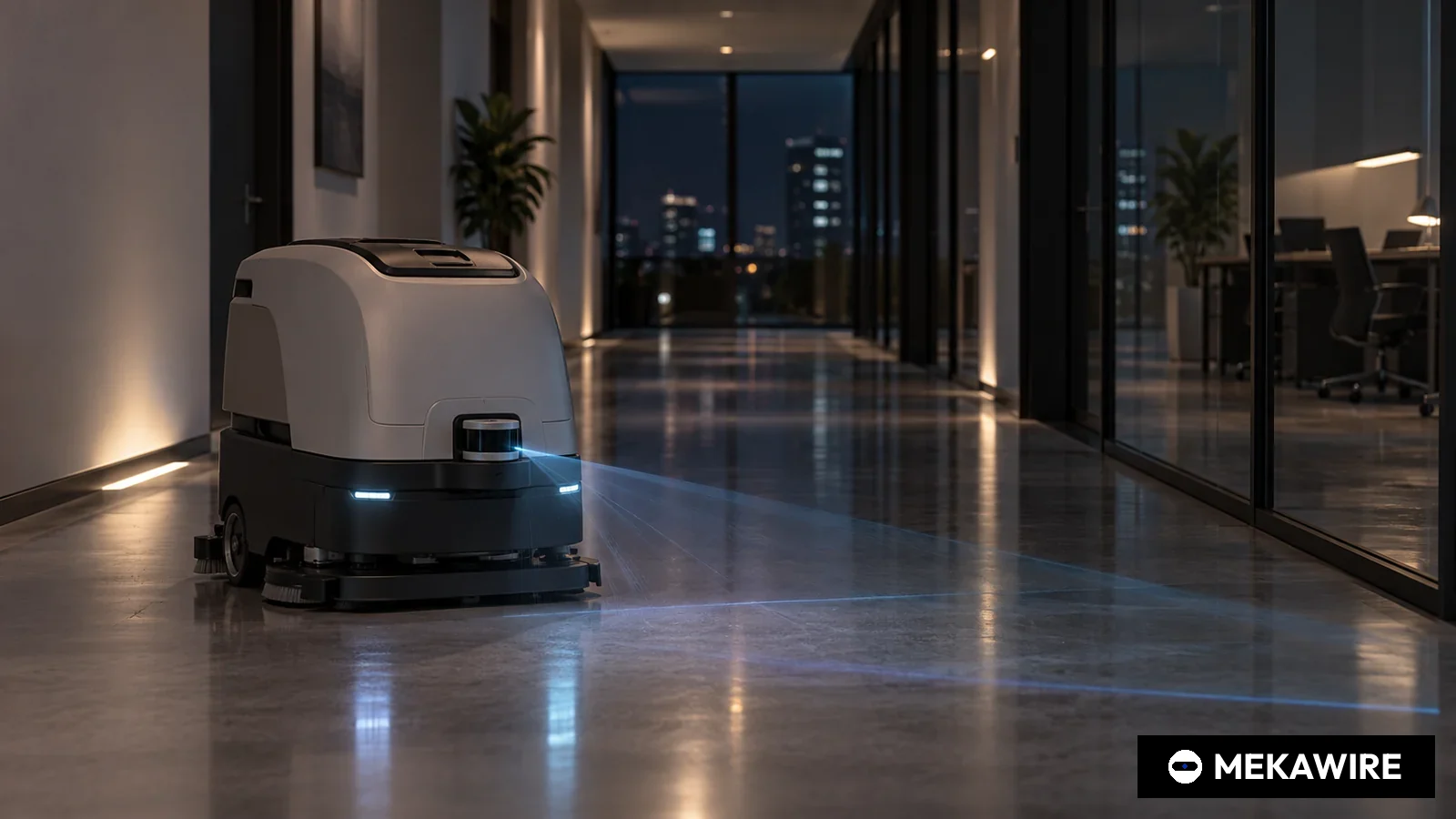
Hong Kong-listed RoboSense earned RMB103.7 million in the fourth quarter of 2025, its first profitable quarter, as robotics revenue more than tripled over the year to RMB709.8 million. Robot lidar shipments rose to about 303,000 units from 24,400, outpacing rival Hesai's 239,273, while revenue from car sensors fell 17.2%.
RoboSense Technology, the Shenzhen lidar maker listed in Hong Kong, said on March 25 that it earned a net profit of RMB103.7 million in the fourth quarter of 2025, the first profitable quarter in its history. In its annual results announcement to the Hong Kong stock exchange, the company credited robot makers rather than carmakers: it sold about 303,000 lidar units for robotics and other non-automotive uses in 2025, up from 24,400 a year earlier.
Full-year revenue rose 17.7% to RMB1.94 billion. Revenue from products for robotics and others climbed to RMB709.8 million from RMB198.5 million, a rise of 257.7%, while revenue from products for advanced driver assistance systems (ADAS) fell 17.2% to RMB1.11 billion. The group gross margin widened to 26.5% from 17.2%. The net loss for the year narrowed by 69.9% to RMB145.0 million, and the non-IFRS adjusted net loss shrank to RMB53.5 million from RMB395.6 million.
The fourth quarter carried the turnaround. Revenue reached RMB750.7 million, up 46.1% from a year earlier, and the quarterly gross margin rose to 28.5% from 22.1%. Robotics revenue for the quarter was RMB346.7 million against RMB65.7 million a year before, on about 221,200 units, an increase of 2,565.1%. In a separate release, RoboSense said quarterly robotics volume was up 523.1% from the third quarter and that robotics made up about 49.0% of product sales in the period.
The mix explains the margin. RoboSense said gross margin on robotics products rose to 39.7% from 34.5%, against 19.1% on ADAS products, up from 13.4%. The average price of a robotics unit dropped to about RMB2,300 from about RMB8,100 as cheaper sensors such as the E1R, Airy and Fairy went into volume, yet that was still above the roughly RMB1,800 the company received for an ADAS unit, down from RMB2,600. ADAS volume grew 17.2% to 609,000 units, taking total shipments to about 912,000.
The filing names a wide customer base. In robotic lawn mowers RoboSense lists Mammotion and an exclusive design win with Navimow, a brand owned by Segway-Ninebot. In unmanned delivery it names Neolix, Zelos, Rino.ai, JD, Meituan, Cainiao, Minieye and Coco Robotics. The company's release claims more than 90% of leading unmanned delivery vehicle companies as users and a 71% share in commercial cleaning robots, and says it works with nearly 50 humanoid and quadruped robot companies including AgiBot, Unitree, EngineAI and Galbot. It has also shown a humanoid fitted with its own Active Camera 1 and 2 vision units and Dexterous Hands.
RoboSense was established in 2014 and has been listed on the Main Board in Hong Kong since January 5, 2024. It reported more than 1,800 staff, research and development spending of RMB646.7 million, up 5.1%, and cash and cash equivalents of RMB2.10 billion at the end of 2025, down from RMB2.84 billion. It declared no dividend. On the car side the company said its mass-production design wins had reached 167 vehicle models.
The nearest comparison is Hesai Group, which reported a day earlier. Hesai said 2025 revenue grew 45.8% to RMB3.03 billion, with a gross margin of 41.8% and GAAP net income of RMB435.9 million, its first profitable year. Hesai shipped 239,273 robotics units in 2025, up 425.8%, including 80,372 in the fourth quarter. Hesai counts robotaxis inside its robotics category, so the figures are not like for like, but on reported numbers RoboSense sold about 2.75 times as many non-automotive units in the quarter. Hesai's showcase was Unitree, which it said used its JT128 lidar in all of the humanoids in China's 2026 Spring Festival Gala.
- RoboSense
- FY2024
- 1648.9
- 544,200
- 24,400
- 4.5
- 17.2
- -481.8
- RoboSense
- FY2025
- 1941
- 912,000
- 303,000
- 33.2
- 26.5
- -145
- RoboSense
- Q4 2025
- 750.7
- No data
- 221,200
- No data
- 28.5
- 103.7
- Hesai
- FY2025
- 3027.6
- 1,620,406
- 239,273
- 14.8
- 41.8
- 435.9
- Hesai
- Q4 2025
- 1000.5
- 631,095
- 80,372
- 12.7
- No data
- 153.2
Figures as disclosed in RoboSense's HKEX annual results announcement and release of March 25, 2026 and Hesai's results release of March 24, 2026; RoboSense total units = ADAS + robotics units; robotics share = robotics units / total units. Hesai's robotics category includes robotaxis, RoboSense's is robotics and others. Net result is IFRS loss or profit for RoboSense and GAAP net income for Hesai. Not estimated.
As of Oct 1, 2026
A lidar measures distance by timing pulses of laser light, building a three-dimensional point cloud of its surroundings. A car lidar needs to see far down the road at speed. A mower, a delivery van or a humanoid mainly needs a wide view of the space close around it, which allows smaller and cheaper designs. RoboSense describes its delivery-vehicle products as digital lidar solutions and said its EM4 and EMX automotive products had also entered large-scale production.
For 2026 the company said it had built annual capacity of 4 million lidar units. It expects robotics revenue to enter another year of significant growth, aims to lead the general robotics market in unit sales again and wants revenue to be balanced between robotics and cars, so that the business no longer relies on a single segment or a few large customers.
The risks are visible in the same numbers. The robotics average price fell by more than 70% in a year, and further cuts could erode the 39.7% margin that made the quarter profitable. The full year was still loss-making, ADAS revenue is shrinking even as units grow, and Hesai is already profitable on a larger revenue base. Customer claims such as the 71% cleaning-robot share come from the company itself.
MEKAWIRE analysis
RoboSense has turned the cheap robot sensor into its profit engine, but its new margin rests on price discipline in a market where it is the one cutting prices fastest.
The evidence is in the segment split. Robotics produced 36.6% of 2025 revenue but carried a gross margin about 20 percentage points above ADAS, and the fourth quarter, when robotics was about half of product sales, was the first in which the company made money. Unit volume grew more than twelvefold while the price per unit fell by about 72%, which means demand is responding to price.
The strongest counter-argument is that mowers and delivery vans are seasonal, concentrated and easy to switch. A fourth quarter with 221,200 robotics units may include stocking orders that do not repeat, and Hesai, with GAAP profits and a 41.8% gross margin, has room to fight on price.
Bull case: humanoid and quadruped makers move from pilot batches to thousands of units, RoboSense's claimed ties with nearly 50 of them convert to volume orders, and the 4 million-unit capacity runs full. Robotics then becomes the larger half of revenue at a margin near 40%, and the company stays profitable through 2026.
Bear case: robotics prices keep falling faster than costs, ADAS revenue continues to shrink, and the fourth-quarter profit proves a one-off. Cash, which fell by RMB738.1 million in 2025, would then become the constraint.
Signals to watch:
- April 2026: RoboSense's first-quarter 2026 lidar shipment update, the first test of whether robotics volume holds after the fourth-quarter peak.
- May 2026: Hesai's first-quarter results against its guidance of RMB650 million to RMB700 million in revenue.
- August 2026: RoboSense interim results, showing whether the robotics gross margin stays near 40% as prices fall.
- HKEX Main Board, 2498, since January 5, 2024
- RMB1.94 billion, up 17.7%
- RMB145.0 million, narrowed 69.9%
- 4 million lidar units
- 26.5% (robotics 39.7%, ADAS 19.1%)
- about 221,200, up 2,565.1% year on year
- RMB103.7 million (first profitable quarter)
- RMB709.8 million, up from RMB198.5 million
- about RMB2,300 per unit, down from RMB8,100
- about 303,000, up from 24,400
Why it matters
RoboSense is the first large lidar supplier whose turn to profit can be traced directly to robots rather than cars. In the fourth quarter of 2025 its robotics revenue of RMB346.7 million was about five times the level of a year earlier, and the quarter's RMB103.7 million net profit followed. For a sensor category that spent a decade waiting for autonomous cars, the volume has arrived from mowers, delivery vans, cleaning machines and, at the margin, humanoids.
The second point is price. The average robotics unit fell to about RMB2,300 in 2025. Sensors at that level change the bill of materials for low-cost robots and make three-dimensional perception a default rather than a premium option, which matters for every robot maker that has been relying on cameras alone to save cost.
Rival analysis
Hesai, which reported on March 24, remains the larger and more profitable company: RMB3.03 billion of revenue, GAAP net income of RMB435.9 million and a 41.8% gross margin. Its ADAS shipments of 1,381,133 units in 2025 dwarf RoboSense's 609,000. In robotics, however, RoboSense reported 303,000 units against Hesai's 239,273, and in the fourth quarter the gap widened to roughly 221,200 against 80,372.
The definitions differ. Hesai counts robotaxis and other autonomous vehicles in its robotics category, while RoboSense reports robotics and others. Hesai also has the more visible humanoid reference after Unitree used its JT128 in the 2026 Spring Festival Gala. RoboSense answers with breadth, naming nearly 50 humanoid and quadruped customers and a claimed 71% share in commercial cleaning robots.
Valuation context
This package does not cite a market value, because none is stated in the primary filings. The fundamentals that any valuation must weigh are clear from them. RoboSense lost RMB145.0 million in 2025 on RMB1.94 billion of revenue, while Hesai made RMB435.9 million on RMB3.03 billion. Investors are therefore paying for the trajectory of the fourth quarter, not for the full year.
Cash and cash equivalents fell by RMB738.1 million during 2025 to RMB2.10 billion. That decline may partly reflect treasury placements rather than operating outflow, and the filing should be read in full before drawing conclusions, but it means the profitable fourth quarter has to be repeated for the balance sheet to stabilise.
Supply-chain implications
RoboSense said it has built capacity for 4 million lidar units a year, more than four times its 2025 shipments of about 912,000. Spare capacity of that scale gives it room to absorb volume swings from seasonal products such as lawn mowers and to quote aggressively for humanoid programmes.
The customer list is concentrated in China's consumer and logistics robot cluster: Mammotion and Segway-Ninebot's Navimow in mowers, Neolix, Zelos, JD, Meituan and Cainiao in delivery, and AgiBot, Unitree, EngineAI and Galbot in humanoids. RoboSense is also moving up the stack with its own Active Camera vision units and Dexterous Hands, which puts it in partial competition with some of the robot makers it supplies.
Signals to watch
The first test comes in April 2026, when RoboSense updates first-quarter shipments. A drop in robotics units from the fourth-quarter level of about 221,200 would suggest year-end stocking; a level near or above it would support the claim of structural demand.
After that, Hesai's first-quarter results in May, measured against its RMB650 million to RMB700 million revenue guidance and its 2026 target of 3 million to 3.5 million units, will show whether the price war in robotics lidar is intensifying. RoboSense's interim results in August will reveal the robotics gross margin after another half-year of price cuts.
Analyst view
Thesis: RoboSense has found a profitable niche in high-volume, low-price robot sensors, and the fourth quarter of 2025 is more likely the start of a trend than a one-off, provided robotics margins hold above 35%.
Confidence: medium. The segment data in the HKEX filing are detailed and consistent, the growth is spread across several robot categories and named customers, and the company has the capacity to keep scaling. Confidence is not high because a single profitable quarter is a thin record, the robotics price fell by about 72% in a year, and several market-share claims are the company's own.
Questions you should be asking
How much of the fourth-quarter robotics volume came from lawn mower makers preparing for the spring season, and how much from delivery and humanoid customers with steadier demand?
What is the gross margin on the newest low-cost sensors such as Airy and Fairy, compared with the 39.7% segment average?
How will RoboSense manage relationships with humanoid makers once it sells its own robot hands and vision units, and does it plan to build or sell a complete robot platform?