Samsung takes 35% of Rainbow Robotics for 267.5 billion won and puts a humanoid office under its CEO
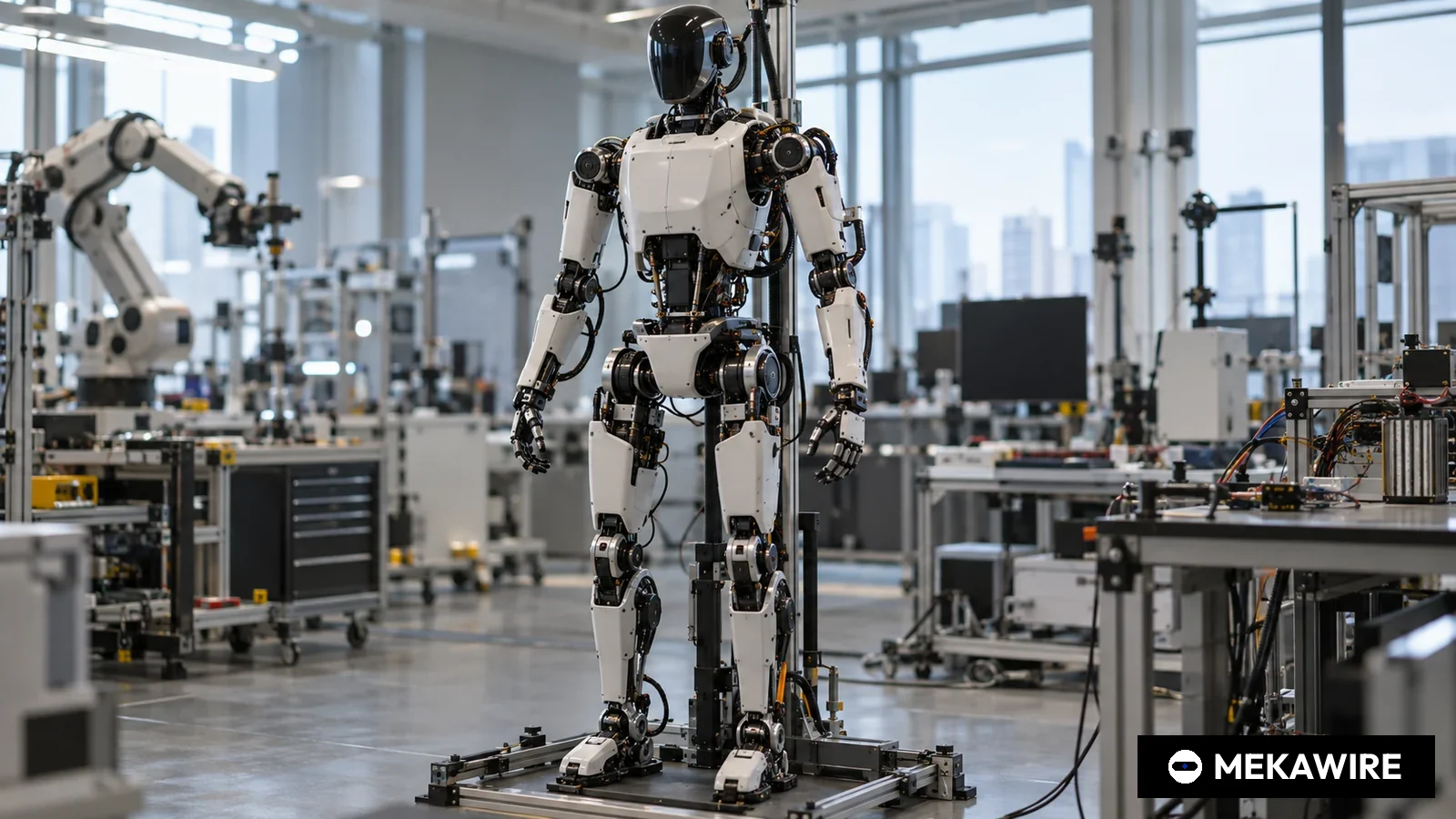
Samsung Electronics exercised a call option on 31 December 2024 to raise its Rainbow Robotics stake from 14.71% to 35.00%, buying 3,935,814 shares from the founding group for 267,462,550,960 won. It also created a Future Robotics Office reporting to the chief executive, led by Rainbow co-founder Oh Jun-ho, and closed the share purchase on 12 March 2025.
Samsung Electronics said on 31 December 2024 that it would exercise a call option to lift its holding in Rainbow Robotics from 14.7% to 35%, making the Korean humanoid pioneer its largest shareholder and a consolidated subsidiary. In the same announcement the company created a Future Robotics Office reporting directly to the chief executive and named Rainbow co-founder Oh Jun-ho, an honorary professor at KAIST, as its head.
The share purchase agreement, signed on 30 December 2024 and filed with the Korea Exchange the next day, covers 3,935,814 Rainbow Robotics shares for a total of 267,462,550,960 won, an average of 67,956 won a share. According to the filing, the price per share follows a formula fixed in the shareholders' agreement the parties signed when Samsung first invested in 2023. Samsung's holding rises from 2,854,136 shares, or 14.71%, to 6,789,950 shares, or 35.00%, and the disclosure states the purchase is paid entirely from Samsung's own funds for the purpose of management participation.
The sellers are the founding group. Under the version of the contract amended in March 2025, Oh sold 2,406,586 shares at 67,471 won each, while Lee Jung-ho, Heo Jung-woo, Lim Jung-soo and Yoon Hye-sun sold at 68,719 won. The original December filing had listed seven sellers, including Oh Su-jung and Oh Erick Soohyung, before the amendment removed them and shifted the volume to Oh and Yoon without changing the total price. Closing depended on government approvals and took place on 12 March 2025, Rainbow Robotics said in its change of largest shareholder filing that day. Oh's personal stake fell from 17.37% to 4.97%.
That closing filing also shows how control was assembled. Counting Lee, Heo and Lim, whom it lists as related parties of the new controlling shareholder, the Samsung side holds 8,076,414 shares, or 41.63%. Oh and six related parties had held 8,517,679 shares, or 43.91%, before the deal. The December disclosure says Samsung may still exercise a call option over the sellers' remaining 4,581,865 shares, with no obligation to do so, and may designate directors after closing; new directors were to be appointed at Rainbow's 14th annual general meeting.
Samsung's newsroom put its 2023 entry price at 86.8 billion won for 14.7%, which brings its disclosed outlay for a 35% stake to about 354.3 billion won. The Future Robotics Office is charged with developing future humanoid robots and the technologies around them. Oh retires from Rainbow to become a Samsung adviser and the office's first head. Samsung also set up a synergy council with Rainbow covering future robot technology, business strategy and market demand, and said Rainbow would gain access to Samsung's global sales network.
Rainbow Robotics was founded in 2011 by researchers from the Humanoid Robot Research Center at KAIST, the Hubo Lab, whose HUBO was Korea's first two-legged walking robot, according to Samsung. It trades on KOSDAQ under code 277810. Samsung said it would put Rainbow's collaborative robots, its dual-arm mobile manipulator and its autonomous mobile robots to work in manufacturing and logistics automation, using AI that learns from operating data and changes in the working environment.
Korea's other industrial groups have taken comparable routes. LG Electronics paid US$60 million in March 2024 for 21% of Bear Robotics, a US service robot maker founded in 2017, with a call option on up to 30% more, and said on 24 January 2025 that it had secured 51%. Hyundai Motor Group closed the purchase of an 80% stake in Boston Dynamics from SoftBank on 21 June 2021 in a deal that valued the US company at US$1.1 billion, according to SoftBank. Doosan Robotics, founded in 2015, is the listed collaborative robot arm of the Doosan group. Abroad, Tesla, Figure AI and Chinese makers such as Unitree are developing humanoids of their own.
- Samsung Electronics
- Rainbow Robotics
- 2011
- 14.71
- 35
- 2025-03-12
- 267.46
- No data
- LG Electronics
- Bear Robotics
- 2017
- 21
- 51
- 2025-01-24
- No data
- 60
- Hyundai Motor Group
- Boston Dynamics
- 1992
- No data
- 80
- 2021-06-21
- No data
- 1100
- Doosan group
- Doosan Robotics
- 2015
- No data
- No data
- No data
- No data
- No data
Samsung figure is the option exercise consideration in the Korea Exchange filing (267,462,550,960 won). LG figure is its March 2024 payment for 21%; the price of the further 30% was not disclosed. Hyundai figure is SoftBank's stated deal valuation of Boston Dynamics, not the price paid. Doosan ownership not verified and left blank. Figures disclosed, not estimated.
As of Oct 1, 2026
The technology Samsung is buying is less about a single robot than about mechanical know-how. A collaborative robot is an arm built to work beside people without a cage; a dual-arm mobile manipulator puts two such arms on a wheeled base so it can move between stations and handle parts with both hands. Rainbow's engineers designed walking humanoids, joints and controllers in-house, which is the hardware discipline a humanoid programme needs. Samsung's stated plan is to pair that with its own AI and software and with data gathered on its factory and logistics floors.
The open questions are cost, people and focus. Samsung paid an average of 67,956 won a share in the option exercise, roughly 2.2 times the about 30,400 won a share implied by its 2023 entry, according to MEKAWIRE calculations from the two disclosed figures. The founders sold most of their stakes, and the founder who designed HUBO moved from Rainbow to Samsung. Rainbow stays listed, so minority shareholders remain, and neither company has published a humanoid product date or revenue target.
The next markers are whether Samsung uses the remaining call option on 4,581,865 shares, which robot models move from Rainbow catalogues into Samsung plants, and when the Future Robotics Office shows a humanoid. Samsung's third quarter 2026 results in late October and Rainbow's third quarter report in November 2026 are the nearest disclosure points.
MEKAWIRE analysis
Samsung bought a hardware team at a formula price, and the deal pays off only if the Future Robotics Office turns that team into factory humanoids faster than LG and Hyundai turn theirs.
The evidence for the thesis sits in the structure. Samsung did not pay a market premium in an auction; it executed a price set in 2023, kept a further option on 4,581,865 shares and moved the founder into a unit that reports to the CEO. That is a talent and control transaction more than a revenue one.
The strongest counter-argument is that 267.5 billion won is small for Samsung and that consolidation alone changes little. Hyundai bought 80% of Boston Dynamics outright years earlier, and LG reached 51% of Bear Robotics within ten months, so Samsung arrives with neither the head start nor an obvious volume customer outside its own plants.
Bull case. Samsung's factories give Rainbow a captive test bed and the data a humanoid needs to learn manipulation, and its sales network puts Rainbow arms in front of global customers. If Oh's office ships a usable humanoid inside Samsung plants, the option on the remaining shares becomes cheap optionality.
Bear case. The founders have cashed out most of their holdings, the price was more than double the 2023 entry, and the humanoid timeline is undisclosed. If integration stalls, Samsung owns a small listed arm maker competing with Doosan Robotics and Chinese rivals on price.
Signals to watch.
- Late October 2026: whether Samsung's third quarter results or call mention robot deployments in its own plants.
- November 2026: Rainbow Robotics' third quarter report for sales to Samsung affiliates and any change in Samsung's 35.00% stake.
- January 2027: whether Samsung shows a Future Robotics Office humanoid at CES 2027.
- 12 March 2025
- Future Robotics Office under the CEO, headed by Oh Jun-ho
- 31 December 2024
- 86.8 billion won for 14.7%
- 67,956 won a share
- 267,462,550,960 won
- 30 December 2024
- 14.71% to 35.00% (41.63% with three related parties)
- 3,935,814
- 4,581,865 shares, no obligation
Why it matters
This is the first time Samsung Electronics has taken control of a robot maker, and it did so by converting a 2023 minority stake into a consolidated subsidiary through a pre-agreed option rather than a contested bid. The filing shows the price was set by formula in the shareholders' agreement, which means Samsung locked in its path to control two years earlier and chose the timing.
The parallel creation of a Future Robotics Office reporting to the CEO matters as much as the stake. It places humanoid development at the top of the organisation rather than inside a product division, and it moves Rainbow's founder into Samsung. For buyers of factory automation, it signals that Samsung intends to be a robot user, maker and seller at once.
Rival analysis
LG Electronics used the same two-step method with Bear Robotics, paying US$60 million for 21% in March 2024 with an option on up to 30% more and reaching 51% in January 2025. The difference is the target. Bear builds service robots for restaurants and venues, while Rainbow brings humanoid and industrial arm engineering. Hyundai Motor Group bought 80% of Boston Dynamics outright in June 2021 at a US$1.1 billion valuation and is the furthest along in placing humanoids in its own plants.
Doosan Robotics remains the domestic pure play in collaborative arms and competes directly with Rainbow's cobot line. Internationally, Samsung enters a field where Tesla, Figure AI and Chinese makers such as Unitree are already building humanoids, which puts the burden on Samsung's AI and manufacturing data to differentiate.
Valuation context
The disclosed figures give two entry points. Samsung paid 86.8 billion won for 2,854,136 shares in 2023, about 30,400 won a share, and 67,956 won a share on average for 3,935,814 shares in the option exercise. The ratio of about 2.2 times is a MEKAWIRE calculation from those disclosures; the 2023 amount is the newsroom's rounded figure.
At 6,789,950 shares for 35.00%, the closing filing implies roughly 19.4 million Rainbow shares outstanding. Samsung's total disclosed outlay is about 354.3 billion won. No valuation multiple on revenue or earnings is used here because those figures were not verified on a primary page for this article.
Supply-chain implications
Rainbow designs its own robot joints and controllers, a capability that grew out of the HUBO humanoid programme. Samsung said it would deploy Rainbow's collaborative robots, dual-arm mobile manipulator and autonomous mobile robots in manufacturing and logistics, which makes Samsung's own plants the first demand channel.
For component suppliers, a Samsung-controlled robot maker raises the prospect of in-group sourcing of semiconductors, sensors and batteries over time, though neither company has announced sourcing changes. Rainbow's access to Samsung's global sales organisation could matter more for volume than any single component decision.
Signals to watch
The first signal is the remaining call option over 4,581,865 shares held by the sellers. Exercising it would push Samsung well above 35%; leaving it unused would suggest the current stake is enough for consolidation and board control.
The second is output from the Future Robotics Office, either a humanoid prototype or a stated timeline. The third is sales to Samsung affiliates in Rainbow's periodic reports, which will show whether captive demand is materialising.
Analyst view
Thesis: Samsung bought engineering depth and control at a pre-agreed price, and value creation now depends on how quickly the Future Robotics Office converts Rainbow's hardware into deployed robots in Samsung plants. Confidence: medium.
Reasons for medium confidence: the deal terms are fully disclosed and the strategic intent is explicit, but no humanoid timeline, revenue target or deployment count has been published, and the founder's move into Samsung leaves Rainbow's own leadership depth untested in public data.
Questions you should be asking
Will Samsung exercise the option on the remaining 4,581,865 shares, and on what timetable? Which Rainbow products will be deployed first in Samsung factories, and in what numbers?
How will the Future Robotics Office divide work with Rainbow's engineering team, and will Samsung designate a majority of Rainbow's board? Will Rainbow keep selling arms to Samsung's competitors?