MIT soft robot crawls 2 metres through the small intestine to take biopsies and spray drugs
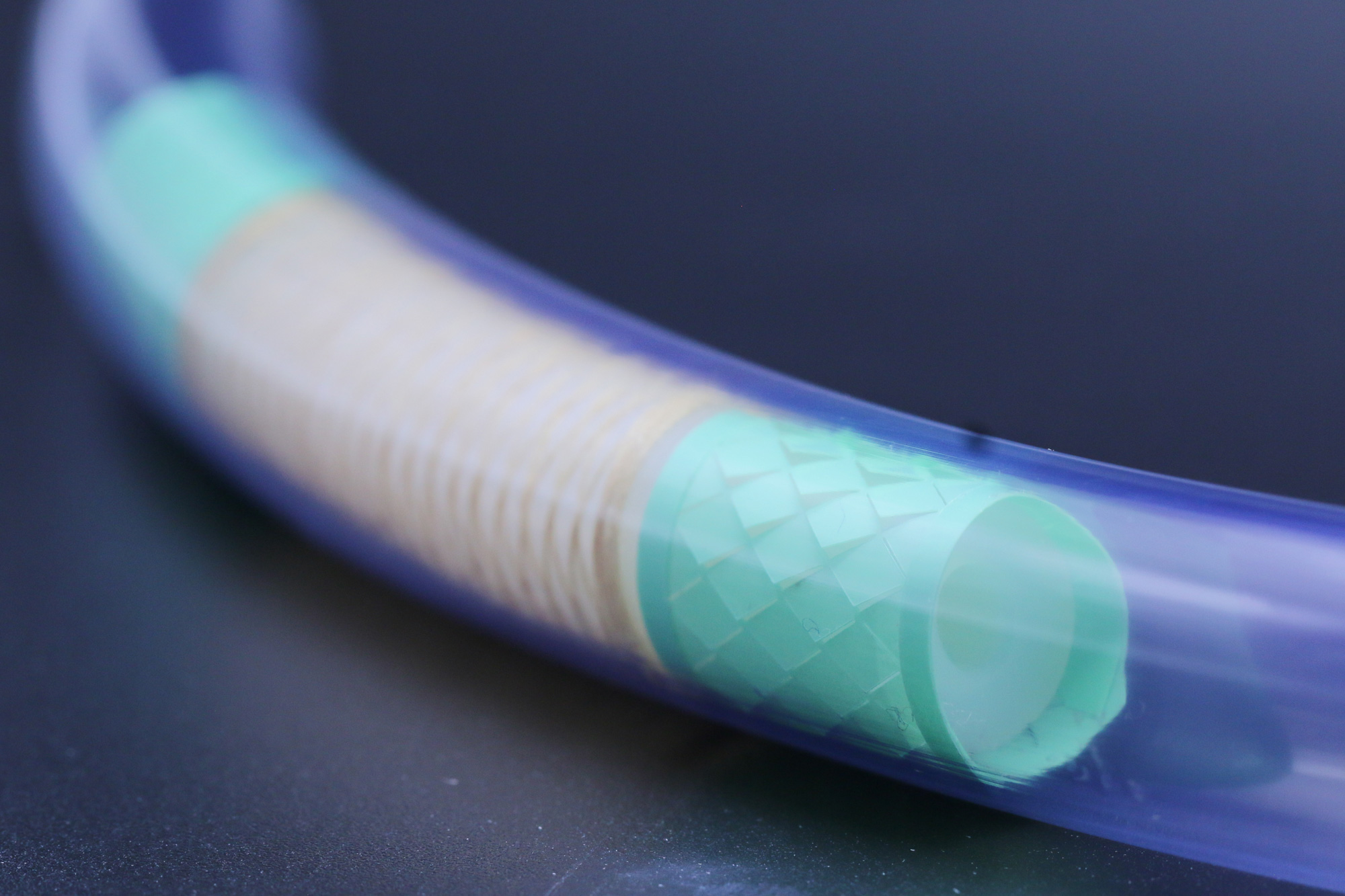
MIT said on Oct 28 that its engineers built a soft, snake-inspired robotic enteroscope that travelled about 6.5 feet (about 2 m) through the small intestine in animal studies and carried a camera, a drug sprayer and clips for biopsies or polyp removal.
The work, led by Giovanni Traverso, appears in Science Robotics. It is tethered, operator-guided and has not been tested in people.
MIT said in a news release on Oct 28 that a team led by Giovanni Traverso has built a soft robotic enteroscope that inches through the small intestine on its own and carries tools for imaging, drug delivery and tissue sampling. In animal studies the robot travelled about six and a half feet, roughly 2 metres, and the team demonstrated its camera, drug sprayer and biopsy clips, according to the release. The study, "Bioinspired soft enteroscopic robot for intestinal locomotion, steering, and intervention", appears in Science Robotics.
The target is a hard organ to reach. The small intestine is 20 to 25 feet long and about an inch wide, and today's main tool, double-balloon enteroscopy, advances a scope by inflating and deflating two balloons in turn, a process MIT calls slow and laborious.
How the robot moves
The tube-shaped robot copies a snake. Each actuator has four air chambers; inflating them in different combinations makes the tube extend or bend in any direction. Balloons in the head and tail segments anchor and release in turn to pull the robot forward. Their sleeves use kirigami cuts that lie flat until the balloon stretches them, when small needle-like scales pop out and grip the slippery lining without overstretching the tissue. An operator steers through tight bends with a handheld controller. The robot is tethered by a cable and is designed to enter through the mouth or the rectum.
The lead authors are Binbin Ying, now at UT Southwestern Medical Center, Ahmad Mujtaba Jebran and Sahab Babaee. Traverso is also a gastroenterologist at Brigham and Women's Hospital. Funders listed include MIT, UT Southwestern and a Samsung Semiconductor fellowship.
Why it matters
By MEKAWIRE's arithmetic, the 2 metres shown in animals cover roughly a quarter to a third of a human small intestine (6.5 feet divided by 20 to 25 feet), so full-length evaluation, the goal Traverso names, is not yet shown. The release gives no speed, procedure time or comparison with balloon enteroscopy, and no clinical timeline. This is the third small-intestine or endoscopy robot MEKAWIRE has covered this month, after the University of Tokyo magnetic capsule with a retractable brush (Oct 5) and Korea's National Core Technology listing for EndoRobotics' roboPera surgical endoscope robot (Oct 6). The Tokyo capsule is built to collect samples and EndoRobotics works in the stomach and colon range of conventional endoscopes; the MIT robot is aimed at steering deep into the small bowel and treating there. The team said it is now working on navigation and further applications. Related: EndoRobotics.
- Science Robotics: Bioinspired soft enteroscopic robot for intestinal locomotion, steering, and intervention
- Camera, drug sprayer, clips for biopsy or polyp removal
- MIT News release, Oct 28, 2026
- Four-chamber pneumatic actuators plus kirigami-textured anchoring balloons
- Speed, procedure time, human testing timeline
- Giovanni Traverso, MIT and Brigham and Women's Hospital
- About 6.5 feet (about 2 m) in animal studies