LG Electronics takes 51% of Bear Robotics and hands it the CLOi service robot business, four weeks after Samsung moved on Rainbow
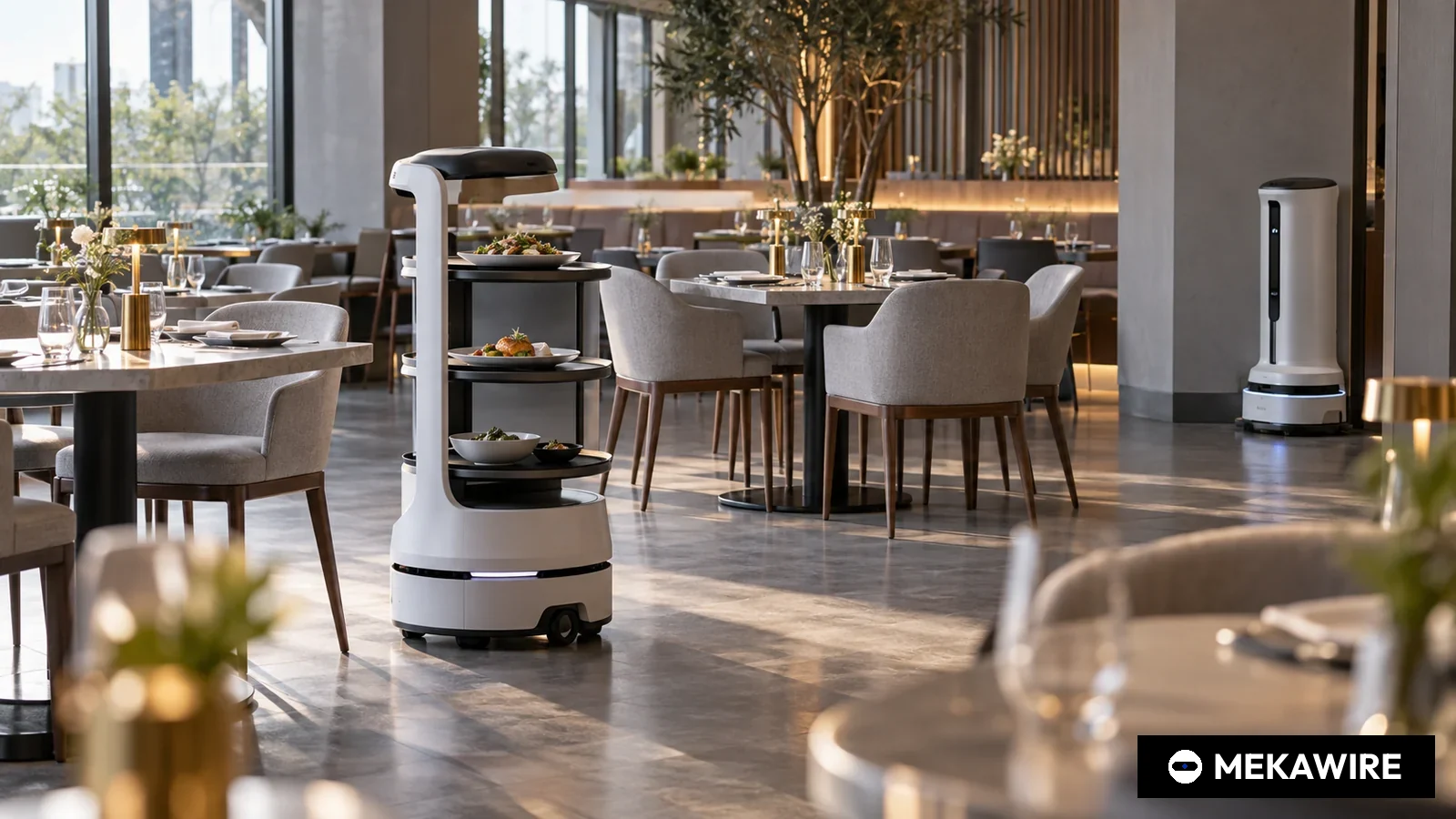
LG Electronics' board voted on 22 January 2025 to exercise a call option for another 30% of Silicon Valley delivery robot maker Bear Robotics, lifting its stake to 51% and making the start-up a subsidiary.
LG will move its CLOi commercial robot unit under Bear and keep chief executive John Ha in charge, but has not said what it paid for the second tranche.
LG Electronics has taken control of Bear Robotics, the Silicon Valley maker of indoor delivery robots, after its board voted on 22 January to exercise a call option over a further 30% of the start-up. The purchase lifts LG's holding to 51% and turns Bear into a subsidiary, the Seoul-based group said on 24 January 2025.
LG first bought into Bear in March 2024, when it paid $60 million for a 21% stake under a stock purchase agreement and negotiated the right to buy up to another 30%. Neither company has disclosed the price of the second tranche, and LG gave no valuation for Bear in its announcement. At the March 2024 price, LG's first payment implied a value of roughly $285.7 million for the whole company, a reference point only, since option terms are often set differently.
The deal changes how LG organises its robot effort. LG said its commercial robot business, built around the LG CLOi range of guide, delivery and service machines, will be transferred to Bear, with John Ha remaining chief executive and his management team staying in place. Home robots and factory robots stay inside LG, and the group said it wants a single software platform that runs commercial, industrial and household machines alike.
Bear was founded in 2017 and sells AI-driven robots that carry food and goods inside restaurants and other buildings in the United States, South Korea and Japan. LG singled out the start-up's software as the asset it wanted: building service robots into a platform, coordinating many robots at once and supervising fleets from the cloud. Ha was previously a senior software engineer and technical lead at Google, according to LG's 2024 announcement. Bear raised $81 million in a Series B round in March 2022.
LG's own robot history goes back to 2017, when it placed guide robots at Incheon International Airport, and it later added delivery and disinfection models, according to the company. It assembles robots at LG Future Park in Gumi. When it first invested in Bear, LG argued that robots needed a standard, open software layer in the way Android served smartphones, and cited projections that the global service robot market would grow from $36.2 billion in 2021 to $103.3 billion in 2026.
The timing is pointed. On 31 December 2024 Samsung Electronics said it would exercise its own call option in Rainbow Robotics, the KAIST humanoid spin-off, raising its holding from 14.7% to 35% to become the largest shareholder and consolidate the company. Samsung had paid 86.8 billion won for the first 14.7% in 2023. Korea's two largest electronics makers have now used the same two-step route, a minority stake with an option to take control, to buy a robot business rather than build one from scratch.
- LG Electronics
- Bear Robotics
- 2017
- 21
- 60,000,000
- USD
- 51
- 2025-01-24
- Samsung Electronics
- Rainbow Robotics
- 2011
- 14.7
- 86,800,000,000
- KRW
- 35
- 2024-12-31
First stakes and payments as disclosed by LG (March 2024) and Samsung (2023). Option exercise prices were not stated in either announcement. Implied 100% value at the first price = first payment / first stake: about USD 285.7 million for Bear and KRW 590.5 billion for Rainbow, a per-share reference only.
As of Jan 24, 2025
In restaurant and hospitality delivery, Bear is up against Chinese makers that have raised more. Keenon Robotics closed a $200 million Series D led by SoftBank Vision Fund 2 in September 2021, and Pudu Robotics has raised a series of Series C extensions, the latest in May 2023 for an undisclosed sum. In the United States, Serve Robotics, which runs sidewalk delivery robots, announced an $80 million registered direct offering on 7 January 2025, and Starship Technologies raised $90 million in February 2024.
- Bear Robotics
- US
- 2017
- LG strategic investment (21%)
- 2024-03-11
- 60,000,000
- Bear Robotics
- US
- 2017
- Series B
- 2022-03-15
- 81,000,000
- Keenon Robotics
- CN
- 2010
- Series D
- 2021-09-15
- 200,000,000
- Pudu Robotics
- CN
- 2016
- Series C4
- 2023-05-08
- No data
- Serve Robotics
- US
- No data
- Registered direct offering
- 2025-01-07
- 80,000,000
- Starship Technologies
- US
- 2014
- Unnamed round
- 2024-02-06
- 90,000,000
- Brain Corp
- US
- 2009
- Series D
- 2020-04-27
- 36,000,000
Amounts as disclosed by each company. Pudu did not disclose its Series C4 amount. The price LG paid on exercising its Bear call option was not disclosed. No estimates.
As of Jan 24, 2025
LG paired the deal with a wider robot plan. At CES 2025 chief executive William Cho said robots were a certain future, and the group described a home hub robot, project name Q9, due out in 2025, that combines voice, sound and image recognition with self-driving and uses Microsoft speech technology, plus a software development kit for outside developers. On the factory side, LG's Production Engineering Research Institute is developing an autonomous vertical articulated robot that uses cameras, radar and lidar to move material, assemble and inspect parts. LG said it is working with Robostar on industrial robots and with Robotis on actuators, and aims to grow its smart factory solutions business to trillion-won scale by 2030.
The technical case rests on fleet software rather than hardware. A wheeled delivery robot that follows a fixed route is now cheap to build; the harder work is routing dozens of machines through a crowded dining room, splitting jobs between them and letting one operator watch a whole site remotely. LG said it would sell the combined line through its B2B network and bundle robots with hotel TVs, digital signage and IT equipment as turnkey packages.
Several questions remain open. LG has not disclosed Bear's revenue, fleet size or the cost of the option, so investors cannot judge what control cost. Folding a large company's robot division into a start-up of about eight years risks culture and product overlap between CLOi and Bear's own robots. And the restaurant robot segment is crowded with lower-priced Chinese competitors.
The next markers are LG's first-quarter 2025 results, the first in which Bear will appear as a subsidiary, the promised 2025 launch of the Q9 home robot, and evidence that a common software platform is shipping across commercial and factory robots before LG's 2030 smart factory deadline.
MEKAWIRE analysis
LG has bought a fleet software team and a distribution channel, and is betting that control of the software layer matters more in service robots than owning the cheapest hardware.
The evidence is in what LG chose to move and what it kept. It handed its own CLOi commercial robots to a much smaller acquired company and kept Bear's chief executive, which suggests LG values Bear's platform and US commercial footprint above its own legacy line. LG's 2024 Android comparison and the plan for a single platform across commercial, industrial and home robots point the same way.
The strongest counter-argument is that restaurant delivery robots are a low-margin, hardware-led niche in which Chinese makers backed by large rounds already set prices. Software differentiation may not be enough when customers buy on unit price, and LG has given no figures to show Bear's fleet is large enough to matter.
Bull case: Bear's fleet software becomes the operating layer for every LG service and factory robot, and LG's B2B channel, which already sells hotel TVs and signage worldwide, pushes bundled robots into hotels and chains faster than independent start-ups can. The 2030 smart factory target gives the software a second, larger market.
Bearish case: integration stalls, CLOi and Bear products overlap, and price competition from Chinese rivals keeps the unit loss-making. In that case LG will have paid an undisclosed sum for a niche business at a time when capital in robotics is moving to humanoids and industrial automation.
Signals to watch:
- LG's results for the quarter to 31 March 2025, the first to consolidate Bear
- The Q9 home hub robot launch promised for 2025
- Progress toward the trillion-won smart factory solutions business LG targets by 2030
- John Ha stays
- 24 January 2025
- 22 January 2025
- 30% via call option
- $60 million for 21% (March 2024)
- LG CLOi commercial robots move under Bear
- 2017, Silicon Valley
- 51%, Bear becomes a subsidiary
- Trillion-won scale by 2030
- Not disclosed
Why it matters
This is the first time LG Electronics has bought outright control of a robot company, and it did so by subordinating its own commercial robot unit to the acquired start-up. For a conglomerate that has made CLOi robots since 2017, that is an admission that its in-house line did not produce a scalable software platform on its own.
It also confirms a pattern in Korean corporate robotics. Samsung's Rainbow Robotics move on 31 December 2024 and LG's Bear move on 24 January 2025 both used an option negotiated at the minority stage, which let the buyers watch the target for a year or more before committing. Expect other Korean groups to copy the structure, because it limits the downside if the technology disappoints.
Rival analysis
In service delivery robots Bear faces Keenon and Pudu from China, which have raised more and compete hard on price, and US players such as Serve Robotics and Starship that work outdoors on sidewalks rather than inside buildings. Bear's differentiation is indoor fleet software and a US commercial presence, now backed by LG's global B2B sales force.
Inside Korea the comparison is Samsung, which bought into a humanoid and cobot maker rather than a service robot company. The two deals point to different bets: Samsung on general-purpose humanoids and manipulation, LG on fleets of task-specific robots running common software, with humanoid ambitions left for later.
Valuation context
LG paid $60 million for 21% in March 2024, which implies about $285.7 million for 100% of Bear at that price ($60 million divided by 0.21). The price for the extra 30% was not in LG's announcement, so the cost of control cannot be calculated from disclosed figures. Option exercise prices are frequently fixed by formula at the original deal and may differ from the March 2024 per-share price.
For reference, Samsung paid 86.8 billion won for 14.7% of Rainbow Robotics in 2023, an implied 590.5 billion won for the whole company at that price. Both buyers paid modestly relative to their balance sheets, which makes these deals capability purchases rather than bets that could move group earnings.
Supply-chain implications
LG assembles robots at LG Future Park in Gumi and said it is working with Robostar on industrial robots and Robotis on actuators. Bringing Bear into the group gives LG a software and fleet control layer that sits on top of that hardware chain, and potentially a way to source Bear robot production through LG facilities.
The open question is component sourcing for low-cost delivery robots, where Chinese suppliers dominate motors, lidar and chassis parts. LG's ability to match Chinese price points will depend on whether it can localise parts through group affiliates or must buy from the same suppliers its rivals use.
Signals to watch
First, LG's first-quarter 2025 financial statements, which should show Bear's consolidation and may reveal the acquisition cost and goodwill. Second, the launch of the Q9 home hub robot, which LG promised for 2025 and which will test whether the shared platform reaches consumer products.
Third, any announcement of large hotel or restaurant chain deployments sold through LG's B2B channel, which would show the distribution thesis working. Fourth, progress toward the trillion-won smart factory business by 2030 with Robostar and Robotis.
Analyst view
Thesis: LG is buying a software platform and US presence for a modest price and using a low-risk two-step structure. The strategic logic is sound, but the target market is small and contested, so the deal's value depends on whether Bear's software spreads to LG's industrial and home robots.
Confidence: medium. The structure and strategic intent are clearly disclosed. Confidence is held back because LG has given no figures on Bear's revenue, fleet size or the option price, and because the restaurant robot segment's economics are not proven at scale.
Questions you should be asking
What did LG pay for the additional 30%, and how will it account for goodwill? How many robots does Bear have in service, and what share of revenue comes from the United States, Korea and Japan?
Will CLOi branded products continue, or will Bear's brand replace them? Which parts of LG's planned common software platform come from Bear's code base, and when will the first industrial robot run it?