Path Robotics raises $300M at $2.45B to take welding AI beyond welding
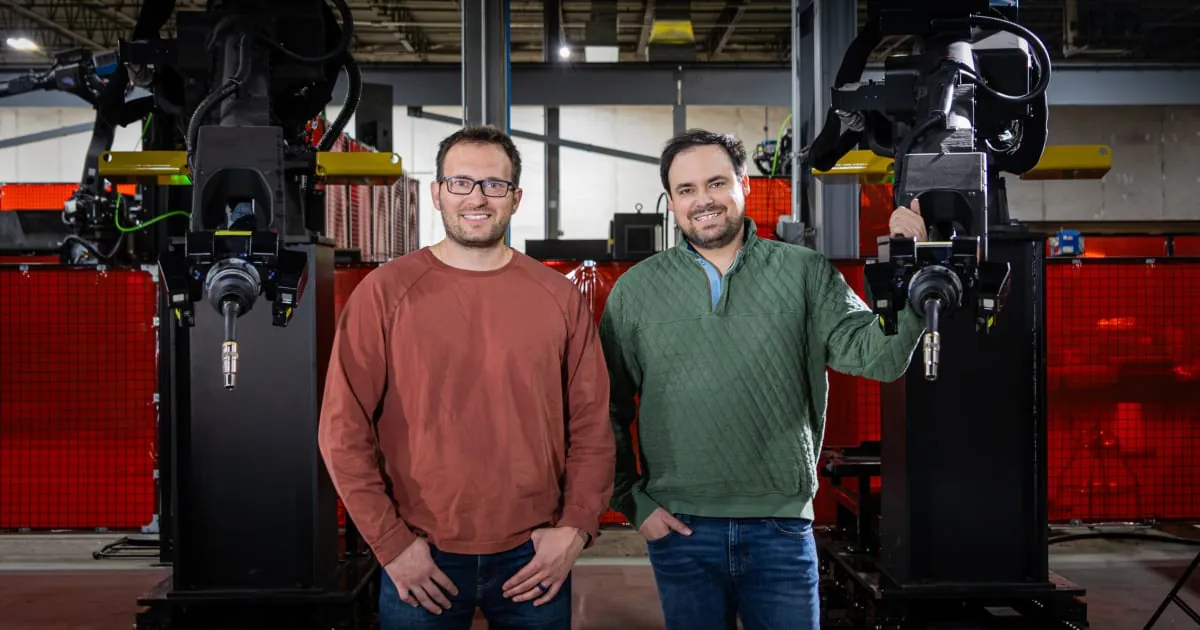
Path Robotics, the Columbus, Ohio maker of AI welding robots, said on Nov 10 it raised a $300 million Series E led by Georgian at a $2.45 billion valuation. The company plans to scale welding with customers and train models for tasks before and after welding.
The round is three times its 2024 Series D and is larger than all its earlier rounds in the MEKAWIRE database combined.
Path Robotics said in a press release on Nov 10 that it closed a $300 million Series E at a $2.45 billion valuation, led by the AI growth-equity firm Georgian. Bloomberg's headline on the same day rounded the figure to $2.5 billion; the release gives $2.45 billion, and we use the release.
Where the money goes
The company says it will scale its welding business with existing customers and invest in data, compute and models for the steps that come before and after welding, so that its software can take on more of the factory. Chief executive Andy Lonsberry said the goal is to automate the entire factory rather than one step. A chart in the release shows annual recurring revenue up 17 times in the last 18 months; the company gives no dollar figure, so the base is unknown.
Two defence-linked customers speak in the release. HII, the largest US military shipbuilder, said it will keep growing the maritime industrial base with Path, building on the performance-based production agreements it signed in August with Path and GrayMatter Robotics, worth up to $900 million across both suppliers. Lockheed Martin Ventures also commented on its work with the company.
The step-up in our data
- May 2021
- Series B
- $56M
- Not in our records
- Nov 2021
- Form D offering
- $100M
- Filing, no lead
- Oct 2024
- Series D
- $100M
- Not in our records
- Nov 10, 2026
- Series E
- $300M at $2.45B
- Georgian
Company releases and SEC filing. Sum of the first three rows: $256M (MEKAWIRE calc.).
As of Nov 14, 2026
Our records hold three earlier financings for Path: a $56 million Series B in May 2021, a $100 million Form D offering in November 2021 and a $100 million Series D in October 2024. Together they come to $256 million, less than this one round (MEKAWIRE calc.). Several outlets put Path's total raised at about $610 million; the release states no total, and the gap to our $556 million suggests rounds we have not verified.
MEKAWIRE analysis
Investors are paying for Path's production data, not its welding robots.
Georgian's partner said as much in the release, pointing to the company's proprietary models and real production data. The bear case is that welding cells are a narrow, project-driven market and that the ARR multiple rests on an undisclosed base. Agile Robots' $500 million round two days later shows the same thesis being priced in Europe at a much larger scale. Signals to watch: an ARR or revenue number, a non-welding product, and HII's first volume orders under the August agreement.
- Georgian
- $300 million, Series E
- $2.45 billion
- 17x in 18 months, base not disclosed
- HII agreements up to $900M with Path and GrayMatter (Aug 2026)
- 3x the $100M of Oct 2024 (MEKAWIRE calc.)
- $256 million across three financings
Why it matters
Path's $300 million Series E funds expansion of its autonomous welding business and model training for tasks before and after welding. The round triples its October 2024 financing and exceeds the $256 million across earlier rounds in MEKAWIRE's database. Reported ARR grew 17x in 18 months, but the undisclosed starting base limits assessment of commercial scale.
Rival analysis
Agile Robots raised $500 million on November 12 and has $720 million in reported funding, compared with Path's $556 million. Agile spans force-sensitive arms, dexterous hands and factory AI, while Path is expanding from welding into adjacent tasks and shipbuilding. Agile's listed relationships include Hitachi and Audi, while Path names HII and Saronic. Revenue, margins and deployment counts are missing, preventing a commercial performance comparison.
Valuation context
Path's $2.45 billion and Agile's $8.5 billion figures are disclosed private-company valuations. The input supplies no public market capitalization for either company. Path's 3x increase refers to round size, and its prior valuation is missing. Absolute ARR and whether the valuation is pre-money or post-money are undisclosed, preventing a revenue-multiple calculation.
Related papers
The input lists Industrial ReMEmbR under Agile Robots, with a title focused on spatiotemporal memory for robot fleets. It also lists papers on tennis-video intelligence and navigation simulation, but supplies no findings or evidence of production use. No Path research papers are supplied, so research-based comparisons remain limited.
Supply-chain implications
Path's shipbuilding relationships with HII and Saronic provide context for its expansion plans. HII's performance-based agreements total up to $900 million across Path and GrayMatter, with Path's allocation undisclosed. Component suppliers, manufacturing capacity, lead times and sourcing dependencies are missing, leaving delivery constraints unassessed.
Signals to watch
Watch for absolute ARR, customer deployment counts and revenue from tasks beyond welding to assess the expansion's commercial progress. For HII, track Path's allocated contract value, performance milestones and realized revenue against the shared $900 million ceiling. Capacity disclosures and delivery timelines would help assess execution against the new funding.
Analyst view
The financing gives Path resources to expand from an established welding focus into adjacent production tasks. The investment case depends on converting reported ARR growth and shipbuilding relationships into repeatable revenue with sustainable economics. Missing ARR, margins, deployment costs and contract allocations leave valuation support and execution efficiency unresolved.
Questions you should be asking
What are current ARR, gross margins and the starting base behind the reported 17x growth? How much of HII's shared agreement ceiling belongs to Path, and which performance conditions determine revenue? Which tasks before and after welding have paying deployments, and what capacity is required to deliver them?