Serve Robotics buys hospital robot maker Diligent for $29 million in stock, taking its sidewalk autonomy indoors
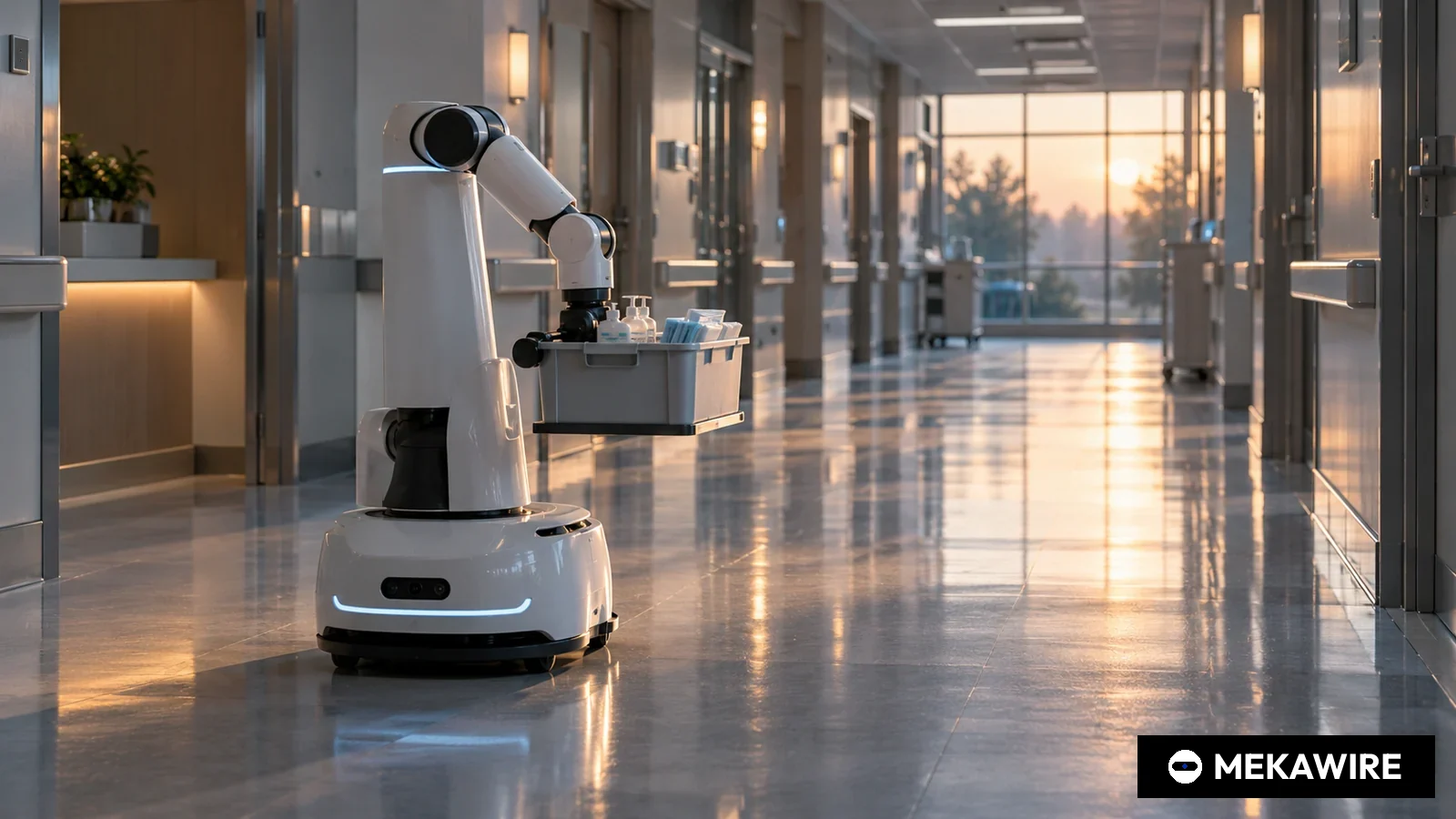
Serve Robotics agreed on January 19, 2026 to acquire Diligent Robotics, maker of the Moxi hospital delivery robot, for Serve common stock valued at $29.0 million including a potential $5.3 million earnout, and closed the deal on January 27.
SEC filings show that a $19.0 million cash payment for Diligent's debt cut the stock actually issued at closing to 32,835 shares.
Serve Robotics, the Nasdaq listed sidewalk delivery company that runs on Uber Eats and DoorDash, said on January 20, 2026 that it had agreed to acquire Diligent Robotics, whose Moxi robot carries medicines, lab samples and supplies through US hospitals. The merger agreement was signed on January 19 and the transaction closed on January 27, according to a Form 8-K that Serve filed with the Securities and Exchange Commission on January 29.
Serve's announcement put the price at $29.0 million in Serve common stock, with up to $5.3 million of that tied to an earnout payable on specified milestones. The 8-K describes the $29.0 million as subject to a net debt adjustment and a net working capital adjustment. In practice the debt adjustment did most of the work. Serve said it paid Diligent about $19.0 million in cash for the debt adjustment, which reduced the stock consideration dollar for dollar, and issued only 32,835 shares at closing, priced at $14.3794, the 10 trading day volume weighted average before signing. At that price the closing shares were worth roughly $472,000. Up to 366,332 further shares can be issued as earnout consideration, and Serve assumed 1,319,151 new restricted stock units held by continuing Diligent employees. Diligent options and warrants were cancelled for no consideration, Serve said.
What Serve bought is an operating fleet rather than a prototype. According to Serve, Moxi is deployed in more than 25 hospital facilities in the United States, nearly 100 robots are in operation and they have completed more than 1.25 million autonomous deliveries. Named customers include Northwestern Medicine, ChristianaCare and Rochester General Hospital. Serve said it expects annual sales of $200,000 to $400,000 per hospital facility, a recurring revenue profile that differs sharply from per delivery fees on food platforms.
Diligent was founded in 2017 by Andrea Thomaz and Vivian Chu and raised more than $100 million from investors including Tiger Global, Canaan and True Ventures, according to Serve. Its disclosed rounds include a $3 million seed in 2019, a $10 million Series A in 2020, a Series B in 2022 and a $25 million round in September 2023. Thomaz continues to lead Diligent, which now operates as a wholly owned Serve subsidiary.
Serve has spent the past year turning itself into a roll up of autonomy assets. Its fourth quarter release on March 11, 2026 listed four acquisitions, namely Vayu Robotics for AI foundation models, Phantom Auto for remote connectivity, Diligent for hospital delivery and Vebu for kitchen automation. Chief executive Ali Kashani said the Diligent deal moves Serve from a robotic delivery company toward a full stack autonomy platform. Serve ended 2025 with 2,000 deployed robots in 20 cities across six metropolitan areas, revenue of $2.7 million, a net loss of $101.4 million and $260 million in cash and marketable securities, and it raised its 2026 revenue guidance to about $26 million.
The technology bet is that one autonomy stack can learn from both environments. Moxi runs on NVIDIA Jetson for onboard compute and was trained with NVIDIA Isaac Sim and Isaac Lab, Serve said. A hospital corridor is slower and more structured than a sidewalk, but it adds elevators, badge doors, crowded nursing stations and strict chain of custody for medicines. Serve argues that pooling data from about 2,000 outdoor robots and roughly 100 indoor ones will improve both.
The competitive field is crowded at both ends. In hospitals, Moxi competes with autonomous carts such as the TUG line from Aethon and with pneumatic tube systems that hospitals already own. On sidewalks, Serve competes with Starship Technologies and Coco. Few rivals have tried to combine the two, which is the core of Serve's pitch to investors.
The first numbers after closing show the scale gap the deal still has to close. Serve reported first quarter 2026 revenue of $3.0 million and a net loss of $49.0 million, with total liquidity of $197.4 million at March 31. It cited a growing hospital pipeline but did not break out Diligent revenue. Serve's own estimate of $200,000 to $400,000 a year per facility implies $5 million to $10 million of annual sales across 25 facilities, a MEKAWIRE calculation that would exceed Serve's entire 2025 revenue of $2.7 million.
MEKAWIRE analysis
Serve issued almost no stock for Diligent at closing but took on an indoor business whose recurring hospital contracts may be worth more to its revenue line in 2026 than its sidewalk fleet.
The filings support the thesis. Of the $29.0 million headline, about $19.0 million was paid in cash under the debt adjustment and only about $472,000 of stock changed hands at closing, so the price was largely the assumption of liabilities plus retention units for staff. Against that, Serve gained 25 hospital sites with annual contract values it puts at $200,000 to $400,000 each.
The strongest counter argument is that hospital robotics has been a slow business for a decade. Diligent raised more than $100 million and reached fewer than 100 robots in eight years, and the debt settled at closing suggests it needed a buyer. Serve is also burning cash, with a $49.0 million first quarter loss.
Bull case. If Serve's per facility estimate holds and the hospital pipeline converts, healthcare could supply a large share of the $26 million revenue guidance. Shared autonomy software would then lower the cost of every new indoor site and give Serve a second market less exposed to food delivery commissions.
Bear case. Hospital sales cycles, integration with elevators and IT systems, and clinical safety reviews could keep Moxi deployments near today's level. Serve would then carry a costly indoor unit while its sidewalk business still needs capital.
Signals to watch.
- Serve's third quarter 2026 results, due in the fourth quarter of 2026, for any separate healthcare revenue disclosure
- Earnout share issuance against the 366,332 share cap, which will reveal whether Diligent hit its milestones
- Full year 2026 revenue in early 2027 against Serve's guidance of about $26 million
- Seed round
- 2019-10-01
- 3,000,000
- Series A
- 2020-03-20
- 10,000,000
- Series B
- 2022-04-11
- No data
- Venture round
- 2023-09-21
- 25,000,000
- Serve headline stock consideration incl. earnout
- 2026-01-19
- 29,000,000
- Maximum earnout
- 2026-01-19
- 5,300,000
- Cash paid for debt adjustment (approx.)
- 2026-01-27
- 19,000,000
- Stock issued at closing (32,835 shares x $14.3794)
- 2026-01-27
- 472,148
Funding rounds from MEKAWIRE verified company data; deal terms from Serve's January 20, 2026 release and Form 8-K of January 29, 2026. Closing stock value is a MEKAWIRE calculation, shares issued x reference price. Series B amount not disclosed as an exact figure.
As of Oct 1, 2026
- Serve Robotics
- US
- No data
- Registered direct offering
- 100,000,000
- 2025-10-10
- Diligent Robotics
- US
- 2017
- Venture round
- 25,000,000
- 2023-09-21
- Bear Robotics
- US
- 2017
- Strategic investment by LG
- 60,000,000
- 2024-03-11
- Pudu Robotics
- CN
- 2016
- Undisclosed round
- No data
- 2026-04-23
Figures as disclosed by the companies and recorded in MEKAWIRE verified company data; — where no exact figure was disclosed.
As of Oct 1, 2026
- Diligent Robotics, maker of the Moxi hospital robot
- January 27, 2026 (Form 8-K filed January 29)
- Serve Robotics (Nasdaq: SERV)
- Up to 366,332 Serve shares
- Revenue $2.7 million, net loss $101.4 million, 2,000 robots
- 25+ US hospital facilities, nearly 100 robots, 1.25 million+ deliveries
- About $19.0 million cash for debt adjustment plus 32,835 shares at $14.3794
- January 19, 2026; announced January 20
- Revenue of about $26 million
- $29.0 million in Serve stock, including up to $5.3 million earnout
Why it matters
The Diligent deal is the clearest example in early 2026 of a listed robotics company using acquisitions to buy revenue quality rather than technology alone. Serve's sidewalk business earns small per delivery fees through Uber Eats and DoorDash and produced only $2.7 million of revenue in 2025 from a fleet of 2,000 robots. Diligent brings contracts that Serve itself values at $200,000 to $400,000 per hospital facility each year, across more than 25 facilities.
The deal also tests the claim, common across physical AI, that a single autonomy stack can generalise across very different environments. If Serve can show cheaper deployments indoors because of data and software from outdoors, the roll up model gains credibility for other delivery and service robot companies.
Rival analysis
In hospital logistics the incumbents are autonomous cart suppliers such as Aethon with its TUG robots and the pneumatic tube and automated guided vehicle systems already installed in large hospitals. Moxi differs by working alongside nurses and moving through the same corridors and elevators as staff. Sidewalk rivals Starship Technologies and Coco have not announced comparable hospital businesses.
Among service robot makers that disclose funding, Diligent's last reported round of $25 million in September 2023 was smaller than LG Electronics' $60 million strategic investment in Bear Robotics in March 2024 and far smaller than Serve's own $100 million registered direct offering in October 2025. Chinese suppliers such as Pudu Robotics compete in hospital and hotel delivery outside the US.
Valuation context
The headline $29.0 million compares with more than $100 million that Diligent raised as a private company, according to Serve. Equity holders therefore exited at well under their invested capital. The 8-K shows that about $19.0 million was paid in cash under the debt adjustment and only 32,835 shares, worth about $472,000 at the $14.3794 reference price, were issued at closing. Remaining value sits in up to 366,332 earnout shares and in 1,319,151 restricted stock units for continuing staff.
For Serve shareholders the dilution at closing was negligible. The economic cost was mainly cash, at a time when Serve reported total liquidity of $197.4 million at March 31, 2026 and a first quarter net loss of $49.0 million.
Supply-chain implications
Moxi runs on NVIDIA Jetson compute and was trained in NVIDIA Isaac Sim and Isaac Lab, according to Serve, which places both of Serve's fleets on the NVIDIA edge and simulation stack. That simplifies software sharing between indoor and outdoor robots but concentrates supplier risk.
Hospital deployments also depend on integration with building systems, including elevators, access control and pharmacy chain of custody processes. These integrations are site specific and slow, which is a cost line that does not shrink simply because the autonomy software is shared.
Signals to watch
First, whether Serve begins to report healthcare revenue or hospital count separately in quarterly results. Second, earnout share issuance against the 366,332 share cap, which will show whether Diligent's milestones were met. Third, whether Serve meets its 2026 revenue guidance of about $26 million and how much of it comes from hospitals.
A further signal is whether Serve uses the Moxi platform outside hospitals, for example in other indoor settings, which would support its full stack autonomy argument.
Analyst view
Thesis. Serve bought a distressed but real indoor business at a low equity price, and the hospital contracts could matter more to 2026 revenue than the sidewalk fleet. Confidence is medium. The deal terms and Moxi footprint are disclosed in SEC filings and company releases, which supports the first half of the thesis. Serve has not broken out Diligent revenue, so the revenue claim rests on Serve's own per facility estimate and is unproven.
The main risk to this view is that Diligent's growth stalled for structural reasons, such as long hospital procurement cycles, that new ownership cannot fix quickly.
Questions you should be asking
How much of the roughly $19.0 million cash payment retired third party debt, and what liabilities remain? What milestones govern the earnout shares? How many Moxi robots and hospital facilities were in service at the end of the second and third quarters of 2026? Does Serve plan a next generation indoor robot or continued use of the current Moxi design?