China humanoid policy 2026 explained: rules and sites, not subsidies
China backs humanoid robots in 2026 with rules, access and targets, not a new central subsidy: six national humanoid standards (Sept 28, effective April 2027), a nine-ministry opinion opening retail and logistics to embodied AI with sandboxes but existing fund channels (Oct 19), and Shanghai's goal of 8,000 humanoids in factories by 2028. Private rounds and listings supply the money.
China's humanoid robot policy in 2026 is built from rules, access and targets rather than a new central subsidy. Beijing published the first six national humanoid standards on Sept 28, nine central departments told retailers and logistics groups on Oct 19 to put embodied AI to work with sandbox pilots but "existing fund channels", and Shanghai set a goal on Oct 12 of placing 8,000 humanoids in factories by 2028. The money behind the industry still comes from private rounds and stock listings. For the market data behind this, see the China market page and our China robotics market explainer.
That combination matters for anyone selling robots into China or competing with Chinese makers abroad. The policy does not pay for robots. It decides who writes the test methods, which sites open to pilots and which cities count units, and those choices shape demand more than a grant would. The rest of this explainer takes each lever in turn, then the numbers the state publishes, and where the gaps are.
- June 2026
- MIIT and SASAC
- Real-scene training special action for humanoids and embodied AI
- Puts robots into real production and service scenes for tests
- Not stated
- Sept 28, 2026
- SAMR, robot standards committee
- GB/T 48317.1 to .5 and GB/T 48316
- First six recommended humanoid standards, effective April 1, 2027
- None
- Oct 12, 2026
- Shanghai government
- New-generation smart manufacturing action
- 4 programmes, 19 tasks; 8,000 humanoids into factories by 2028
- Targets only in the published summary
- Oct 13 (posted Oct 19), 2026
- MOFCOM and 8 departments
- Opinions on technology-driven commerce, 18 measures
- Embodied AI in retail, household services and logistics; sandboxes
- No: existing fund channels, market lending
- Oct 19 and Oct 23, 2026
- NBS and MOFCOM
- Output and platform-sales statistics
- Industrial robots +29.1%; embodied AI robot online sales +22.6%
- n/a
Sources: the government pages listed under Sources; the June special action as described by the Shanghai government on Oct 24. MEKAWIRE classification.
As of Oct 26, 2026
Latest from MEKAWIRE
- Unitree and HongShan launch Shanyu plan to back early embodied-AI startups
- Unitree flags 465x trailing P/E in its second stock-surge notice in a week
- AgiBot will put six G2 robots on a 24-hour convenience-store shift after seven launches
- AgiBot open-sources a physical-reasoning robot dataset, but bars commercial use
- Unitree's G1 humanoid reached 10,000 to 20,000 units built since 2024, founder says
Standards: the first checklist was written by the incumbents
The six documents, GB/T 48317 parts 1 to 5 and GB/T 48316, cover general requirements, perception, decision and planning, motion control, task operation and simulation test platforms, according to the State Administration for Market Regulation's standards database. They are recommended, not mandatory, and take effect on April 1, 2027. MEKAWIRE counted 253 drafting places held by 123 organisations. Unitree, UBTech and Xiaomi's robot unit sit on all six; AgiBot, Galbot, Fourier and Leju sit on none, as we reported on Oct 19.
Voluntary standards in China tend to become the reference for procurement and certification. A buyer at a state-owned plant has a checklist from April, ahead of the unpublished international humanoid draft ISO 25785-1 described in our safety standards explainer. Writing the rulebook is one lever. Opening the sites where robots are bought is the next.
Demand: nine ministries open shops and warehouses, but not the budget
The Opinions on Accelerating Technology-Driven Commerce, document Shangjianhan [2026] No. 551, carry 18 measures signed by the commerce ministry, the industry ministry, the development and reform commission, the central bank, the market regulator and four other bodies. Measure 10 asks for embodied AI in commerce, household services and commercial logistics. Measure 15 allows stress tests and sandbox pilots "within a controllable range". Measure 17 creates job titles such as logistics robot application technician. Measure 18 pays through existing channels and asks banks to lend on market terms (our report).
The industry ministry and the state asset regulator added a demand tool of their own in June: a special action that puts humanoids and embodied AI into real production and service scenes for training, the Shanghai government wrote on Oct 24. The first event under it opened in Shanghai on Oct 23, with more than 800 teams, over 1,000 robots, 23 events in nine tracks and black-box tests in which materials and fault points change at random. Top-three teams can be linked directly with the site owners, the city said. That is procurement by audition, and it leads to the city that put a number on it.
Local targets: Shanghai counts humanoids into factories
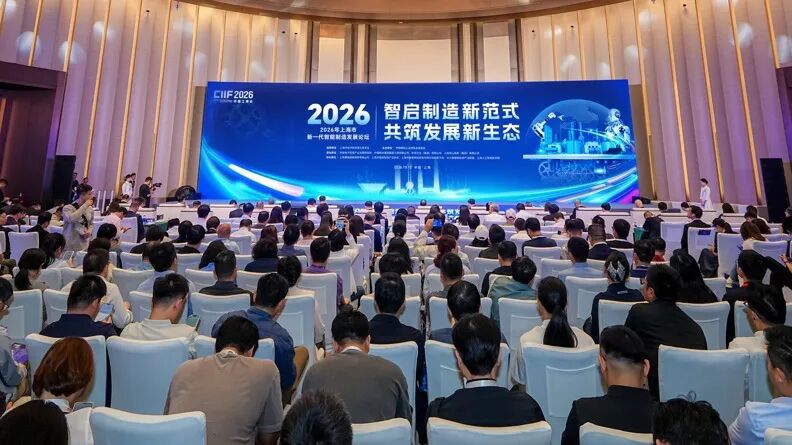
Shanghai launched its new-generation smart manufacturing action at the opening of the China International Industry Fair on Oct 12. The city government's summary lists four programmes and 19 key tasks, and for 2028 it sets the targets in the second table: 8,000 humanoids placed in factories, industrial robot density of 600 per 10,000 workers, 500 advanced-level smart factories and an AI-enabled smart equipment industry above RMB 200bn.
- Humanoid robots placed in factories
- 8,000
- Industrial robot density
- 600 per 10,000 workers
- Advanced-level smart factories
- 500
- AI application scenarios in manufacturing
- More than 2,000
- Vertical large models / industrial agents
- 10 / 300
- AI-enabled smart manufacturing equipment
- Above RMB 200bn
- Smart manufacturing system integration
- RMB 100bn
Source: Shanghai Municipal People's Government, Oct 13, 2026. The published summary gives no budget and no definition of a humanoid.
As of Oct 26, 2026
Scale matters here. The International Federation of Robotics counted about 7,000 full-size humanoids sold worldwide in 2025, as our shipments explainer records, so one city's factory target is 1.14 times last year's global full-size sales (8,000 divided by 7,000, MEKAWIRE). It is 7.4 times the 1,079 humanoids UBTech reported for all of 2025. The summary does not define a humanoid, say who pays or split the 8,000 by year, so the target is a count, not an order book. Counting requires data, and that is where the state is weakest.
Measurement: what the official numbers can and cannot show
The National Bureau of Statistics reported 794,781 industrial robots made from January to September, up 29.1%, while service robot output fell 17.8% year on year in September (our report). Neither line separates humanoids. The commerce ministry said on Oct 23 that embodied AI robot sales on major e-commerce platforms rose 22.6% in nine months, without units, values or a definition (our report). The 40,000-unit first-half humanoid output figure attributed to an industry ministry official has not appeared in a document MEKAWIRE could open.
- Industrial robot output, Jan to Sep 2026
- 794,781 sets, +29.1%
- NBS, Oct 19
- Humanoids not broken out
- Service robot output, Sept 2026
- 1,658,178 sets, -17.8% YoY
- NBS, Oct 19
- Humanoids not broken out
- Embodied AI robot sales on key platforms, Jan to Sep
- +22.6% YoY
- MOFCOM, Oct 23
- Growth rate only, no units, no definition
- Humanoid output, H1 2026
- Above 40,000 (reported)
- MIIT official at SCIO briefing, per outlets
- Transcript not opened; unconfirmed
- Full-size humanoids sold worldwide, 2025
- About 7,000
- IFR
- Counts machines taller than 140 cm only
MEKAWIRE compilation from the cited releases and our earlier reports. Disclosed figures, not estimates.
As of Oct 26, 2026
At the national level, the industry ministry's equipment department told the Shanghai forum on Oct 12 that China had more than 56,000 basic-level, 13,000 advanced-level and 500 excellence-level smart factories by mid-2026, and that AI covers more than 70% of business scenarios in the 15 leading-level plants. The factory base is counted carefully. The humanoids meant to work in it are not.
Capital: private rounds and listings fund the build-out
Our database holds 27 China robotics capital events in 2026. Only five disclose an amount, together USD 1,280m, led by D-Robotics' USD 400m Series C. The rest are listings and undisclosed rounds: Unitree on the STAR Market in August and seven robot and robot-component companies on the Hong Kong main board between March and September, the pattern our robot IPO explainer describes. None of the rows is a government grant. The postponement of Changzhou Microintelligence's Hong Kong offering on Oct 25 (our report) shows the limit of that channel when markets turn.
- D-Robotics
- Series C
- 400
- 2026-09-17
- Spirit AI
- Round
- 280
- 2026-02-25
- LimX Dynamics
- Series B
- 200
- 2026-02-02
- EngineAI
- Series B
- 200
- 2026-04-10
- LimX Dynamics
- Pre-IPO
- 200
- 2026-07-14
- Unitree Robotics
- STAR Market IPO
- n/d
- 2026-08-18
- Seven others (Estun, Huayan, Rokae, Mech-Mind, Excelland, Direct Drive Tech, Camsense)
- Hong Kong IPOs
- n/d in table
- Mar to Sep 2026
MEKAWIRE database, verified rows, as of Oct 26, 2026: 27 China capital events in 2026, 5 with a disclosed amount, together USD 1,280m. n/d = not disclosed in our row. No round in the table is a government grant.
As of Oct 26, 2026
MEKAWIRE analysis
China's 2026 humanoid policy pays in access, rules and targets rather than central cash: Beijing writes the standards and opens shops, warehouses and factories to pilots, cities such as Shanghai set deployment counts, and capital markets supply the money.
The evidence is consistent across documents. The nine-ministry text funds through existing channels; the standards are voluntary but written by the companies most likely to certify first; the Shanghai summary sets counts without a budget; and the capital in our database is private or listed. The strongest counter-argument is that "existing channels" in China are large, and city and district funds may carry subsidies the published summaries do not show. MEKAWIRE has not seen such a document for humanoids, and would change its view if Shanghai publishes per-unit support for the 8,000.
For foreign makers the second-order effect is the important one. A buyer in China will judge a humanoid against GB/T 48317 and against site tests run by local rivals, while the US FCC Covered List pushes the other way for Chinese hardware abroad. The two markets are drifting toward separate rulebooks.
Bull case: sandboxes and audition-style competitions turn into repeat factory and logistics orders, the drafters certify first, and Shanghai's 8,000 becomes a template for other cities. Bear case: the units counted are small display and education machines, service robot demand keeps falling, and pilots stay pilots once the listing window narrows.
Signals to watch: the National Bureau of Statistics October release in mid-November, for whether service robot output turns positive; any Shanghai implementation rules that define a humanoid or attach money to the 8,000 target; and the first certification scheme referencing GB/T 48317 before April 1, 2027. The open question is how many of those robots will be bought by a factory rather than placed in one.
- 8,000 is 1.14x the about 7,000 full-size humanoids sold worldwide in 2025 (IFR; MEKAWIRE calculation)
- 27 China capital events in 2026 in our DB, 5 disclosed amounts, USD 1,280m; none is a grant
- NBS does not break out humanoids; MOFCOM gives growth (+22.6%) without units
- 123 organisations; Unitree, UBTech, Xiaomi on all six; AgiBot, Galbot, Fourier, Leju on none
- Six recommended humanoid standards (GB/T 48317.1 to .5, GB/T 48316), issued Sept 28, effective April 1, 2027
- Rules, access and targets, no new central subsidy
- 8,000 humanoids in factories and robot density 600 per 10,000 workers by 2028
- 18 measures; embodied AI in retail, household services and logistics; sandboxes; existing fund channels
Why it matters
China is the largest robot market and now the most active rule-maker for humanoids. Investors and foreign makers need to know whether Chinese humanoid demand is being bought by the state or opened up by it, because the answer decides whether volumes last after the first pilots.
The documents of September and October 2026 answer it more clearly than the headlines: standards, sandboxes, site access and city targets, with money left to banks, private investors and stock exchanges.
Rival analysis
Unitree, UBTech and Xiaomi's robot unit gain most from the standards because they drafted all six. AgiBot, Galbot, Fourier and Leju, absent from the drafting lists, have to win through site tests such as the Shanghai competition instead. Foreign makers face both: a domestic checklist written by Chinese incumbents and audition-style procurement run with local site owners.
The venture-funded challengers still have the capital: Spirit AI, LimX Dynamics and EngineAI raised USD 200m or more each this year in our database.
Valuation context
Policy that opens demand without paying for it makes listing markets the price setter. Unitree's STAR listing and seven Hong Kong robot listings in 2026 carried the sector's valuations, and the Oct 25 postponement of Changzhou Microintelligence's offering shows how quickly that channel can close. A Shanghai rule that attaches per-unit support to the 8,000 target would be the first direct public price signal.
Supply-chain implications
Factory deployment targets pull on actuators, reducers, controllers and vision modules made in the Yangtze River Delta, where Shanghai's equipment target (above RMB 200bn) sits. D-Robotics' USD 400m round is a bet on domestic robot compute. Standards on perception and motion control will in time define test methods for these components too.
Signals to watch
1) NBS October output release, mid-November: service robot growth. 2) Shanghai implementation rules for the 2028 action: definition of a humanoid, funding per unit. 3) First certification scheme or tender citing GB/T 48317, before April 1, 2027. 4) Orders announced by top-three teams of the Oct 23 skills competition.
Analyst view
Thesis: China pays in access, rules and targets, not central cash. Confidence: medium. The texts we read are consistent, but city and district budgets are not fully public, and a published per-unit subsidy in Shanghai or another city would move our view toward a state-funded demand model.
Questions you should be asking
How will Shanghai count a humanoid placed in a factory, and who verifies it? Will GB/T 48317 be referenced in certification before it takes effect? Do the platform sales behind MOFCOM's +22.6% include consumer toys? Which of the absent challengers will join the next drafting round?